掠れ (Kasure) — Why the Dry Stroke Is the Most Honest Mark a Brush Can Make
There is a moment in every brushstroke when the ink begins to run out.
The brush is still moving. The hand has not stopped. But the ink thins, and the white of the paper starts to show through — not as a gap, but as a presence. A trace of the speed and pressure and intention that was there in that fraction of a second.
In Japanese calligraphy, that moment has a name.
掠れ — kasure. The dry stroke.
And far from being a mistake, it is considered one of the most expressive qualities a brushstroke can carry.
What Kasure Is
Kasure happens at the intersection of speed, pressure, and ink load.

When a calligrapher moves the brush quickly — or when the ink on the brush begins to thin toward the end of a stroke — the bristles cannot deposit ink evenly across every fiber of the paper. Some areas receive full coverage. Others receive almost none. The result is a stroke that is simultaneously dense and sparse, solid and dissolving.
It looks, from a distance, like texture. Up close, it looks like breath.
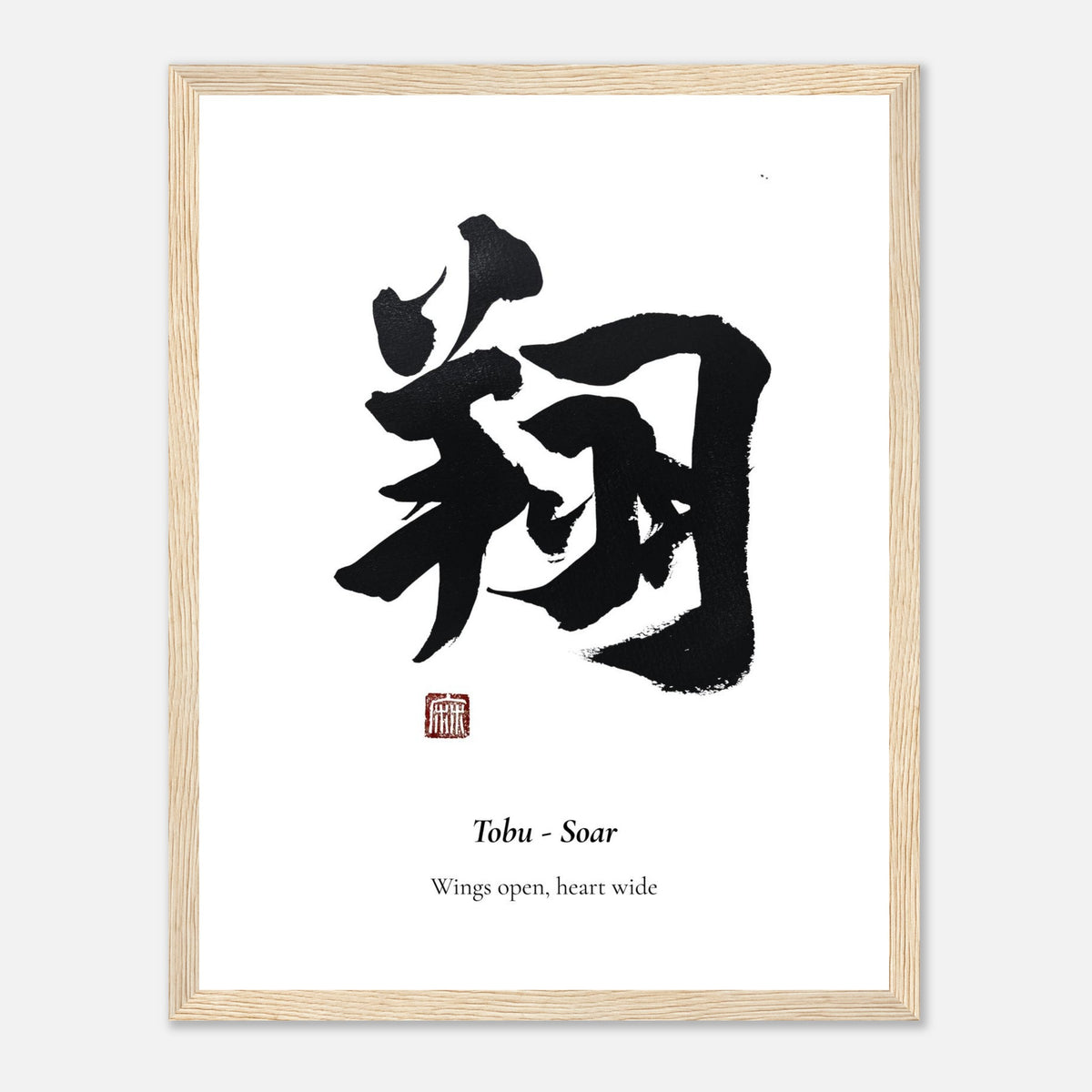
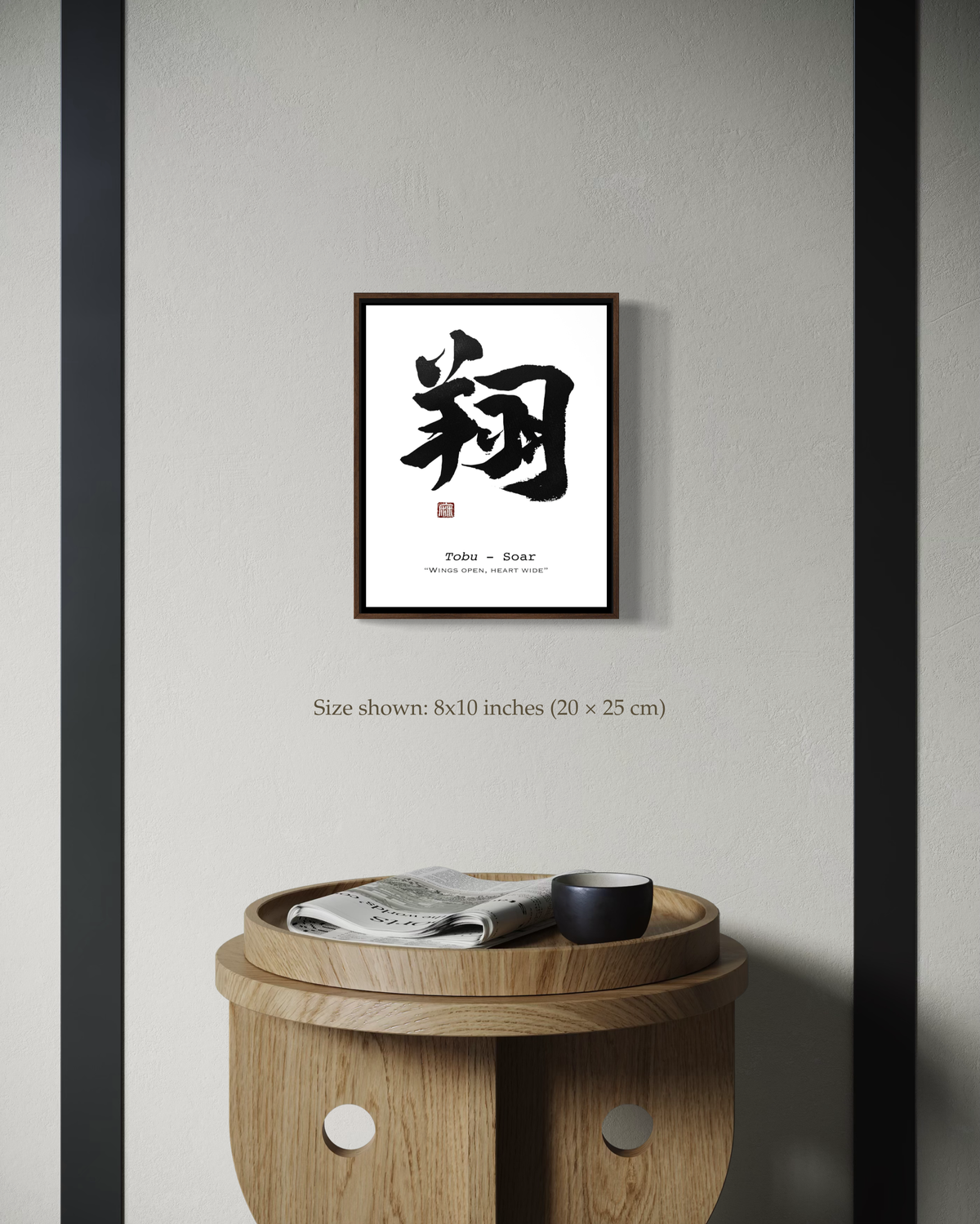
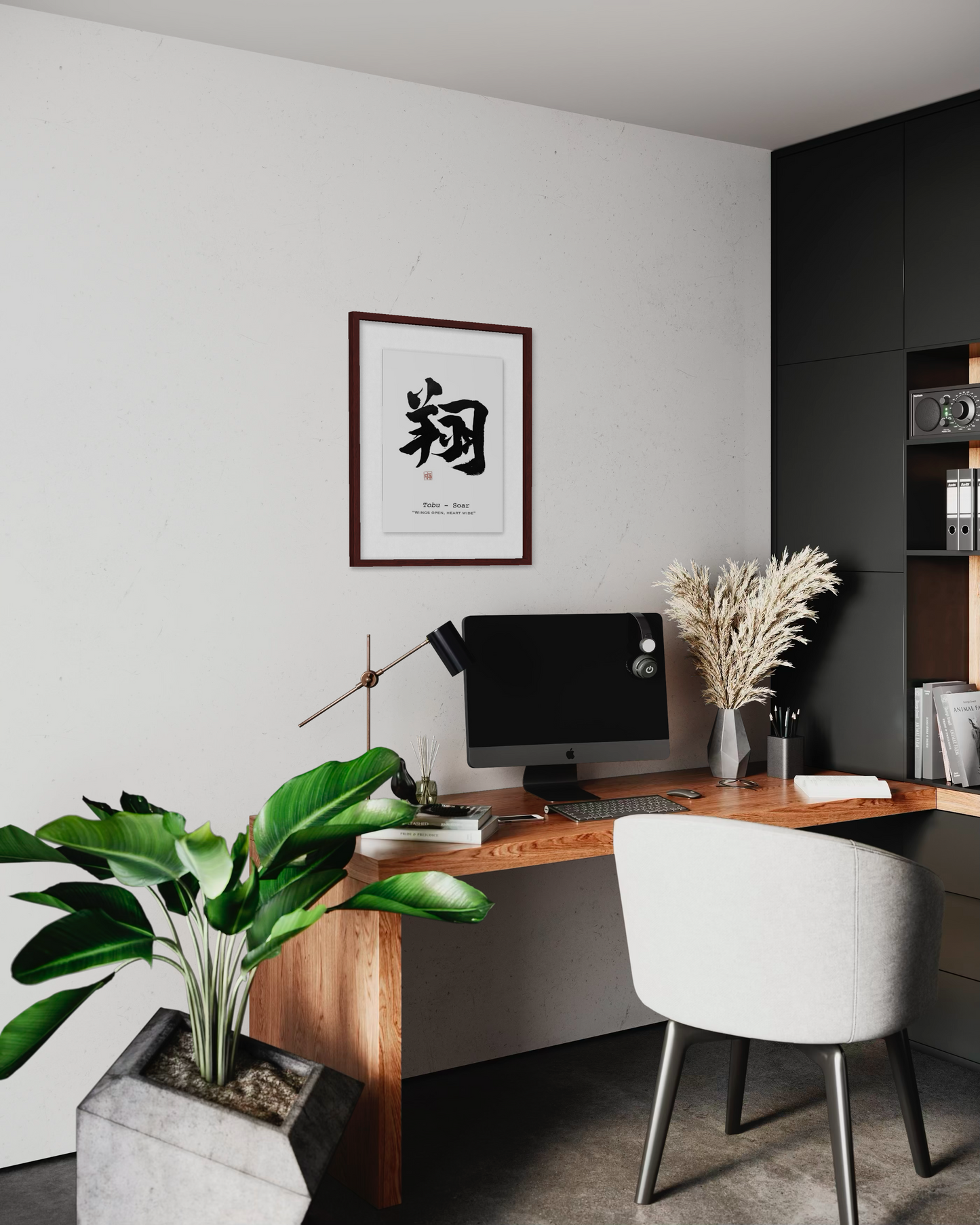
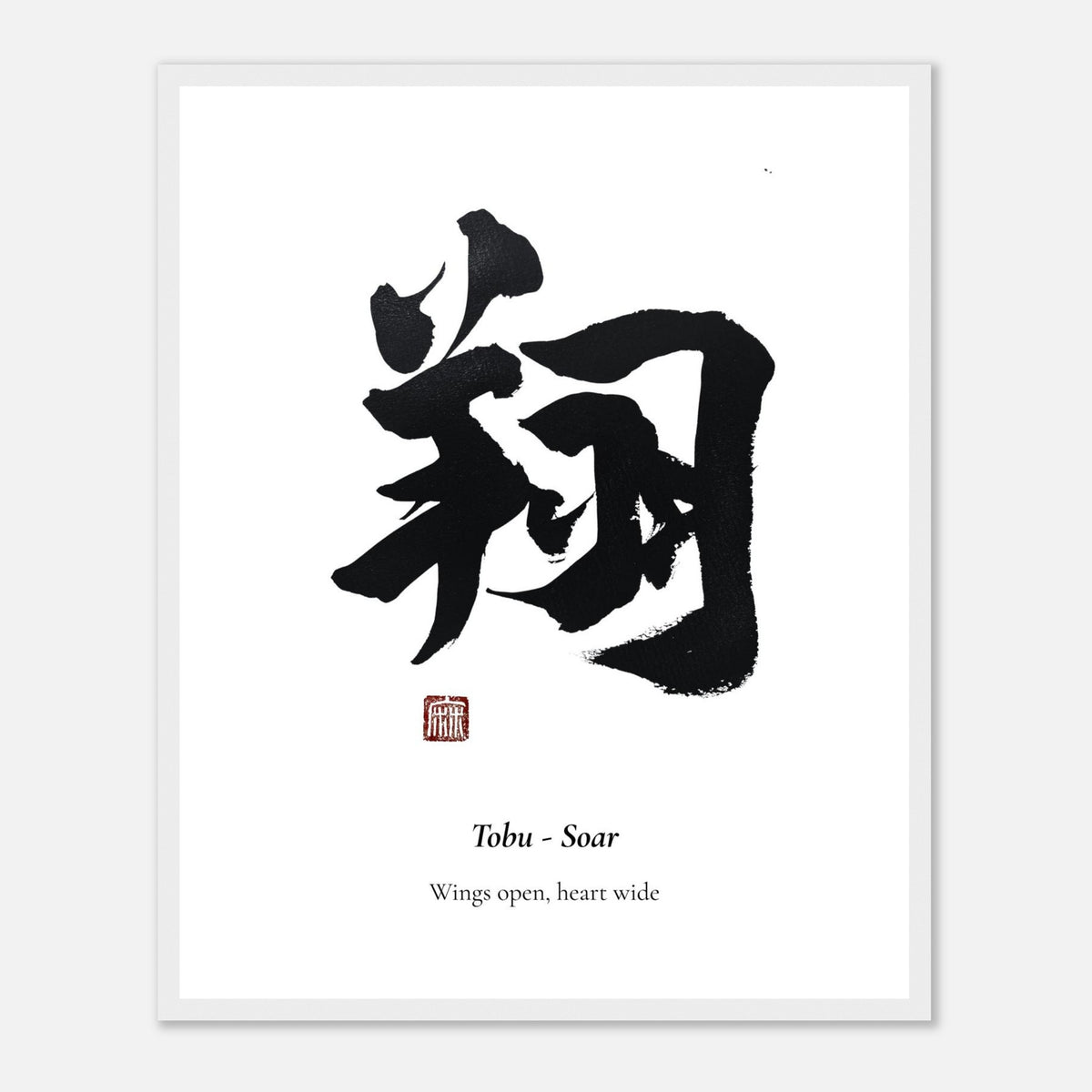
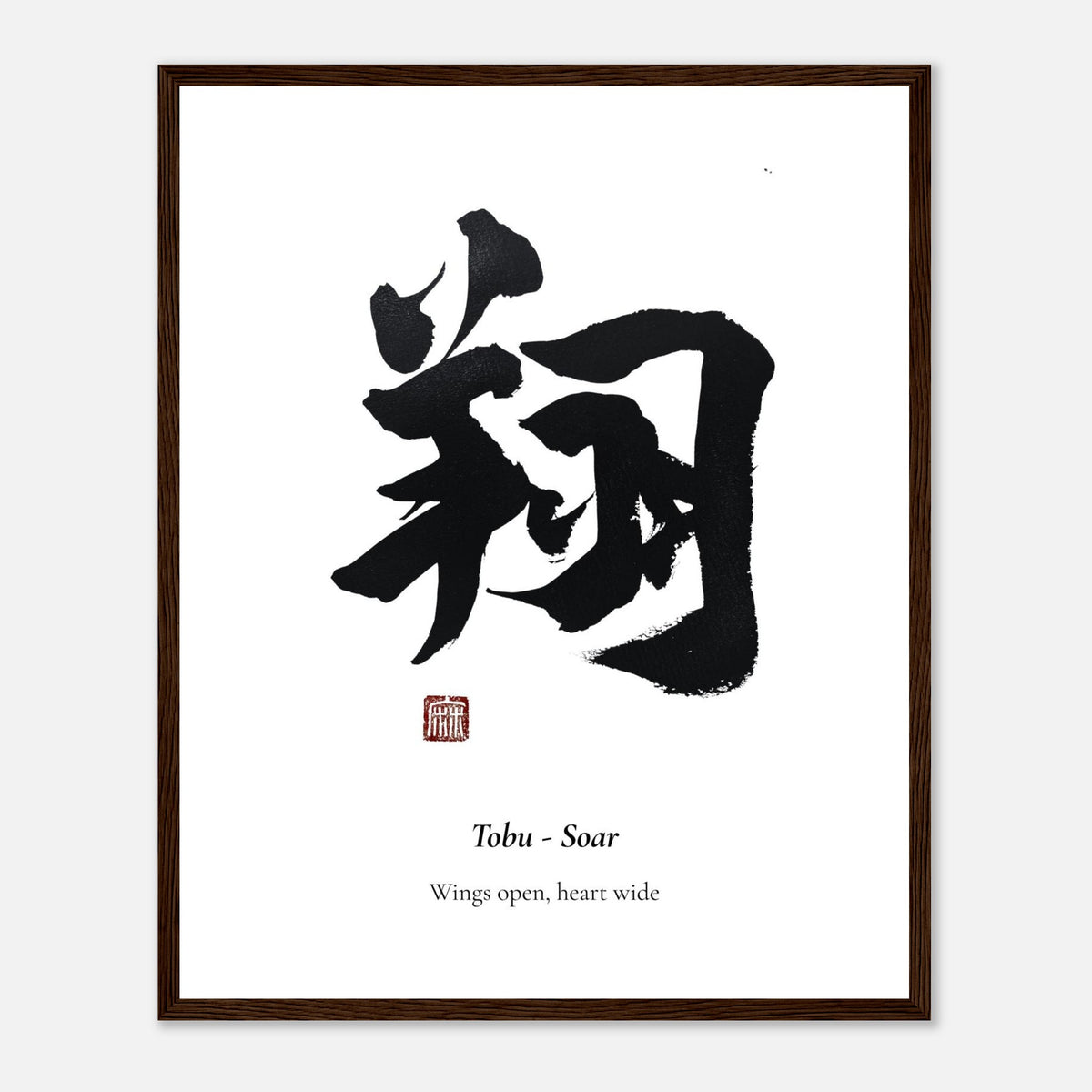
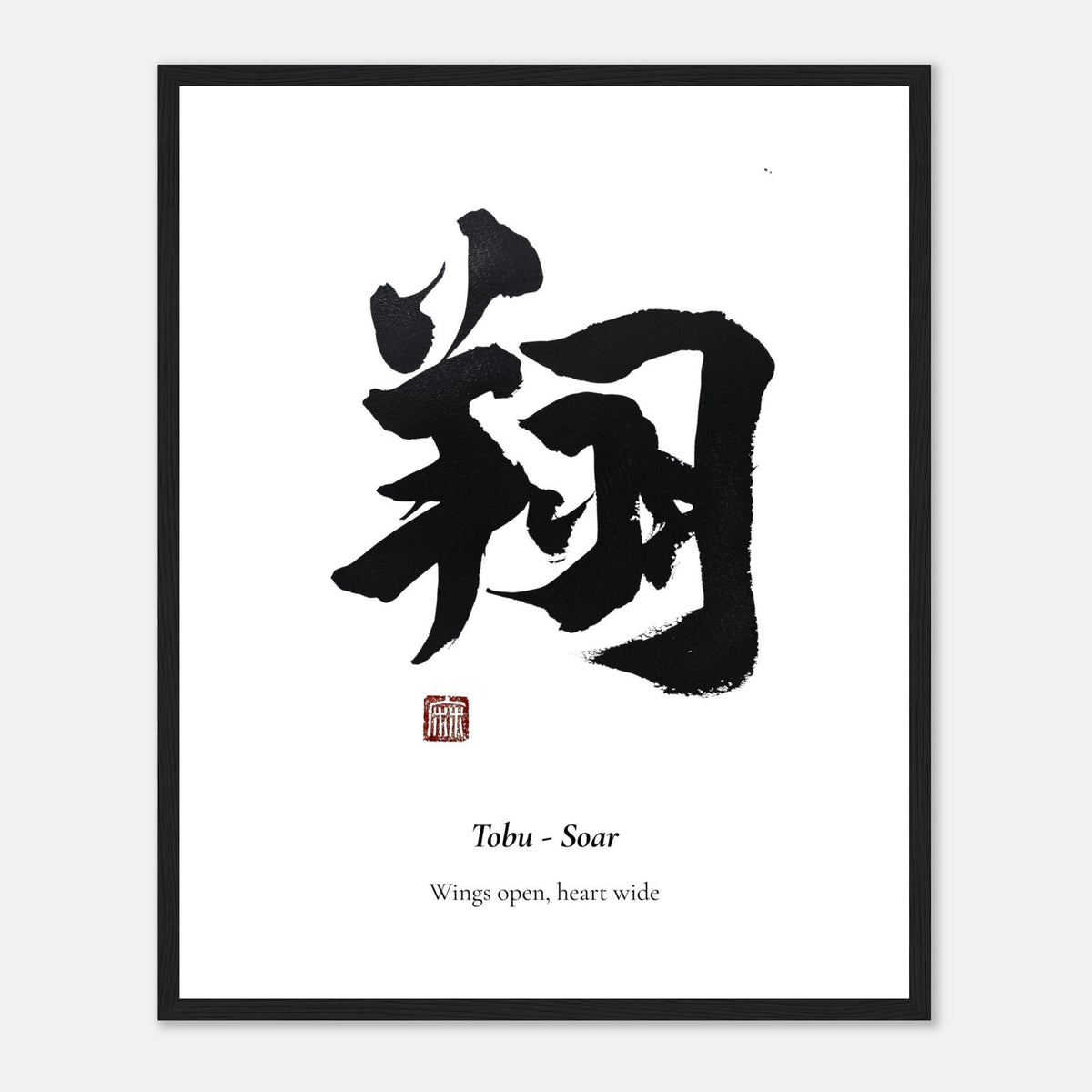
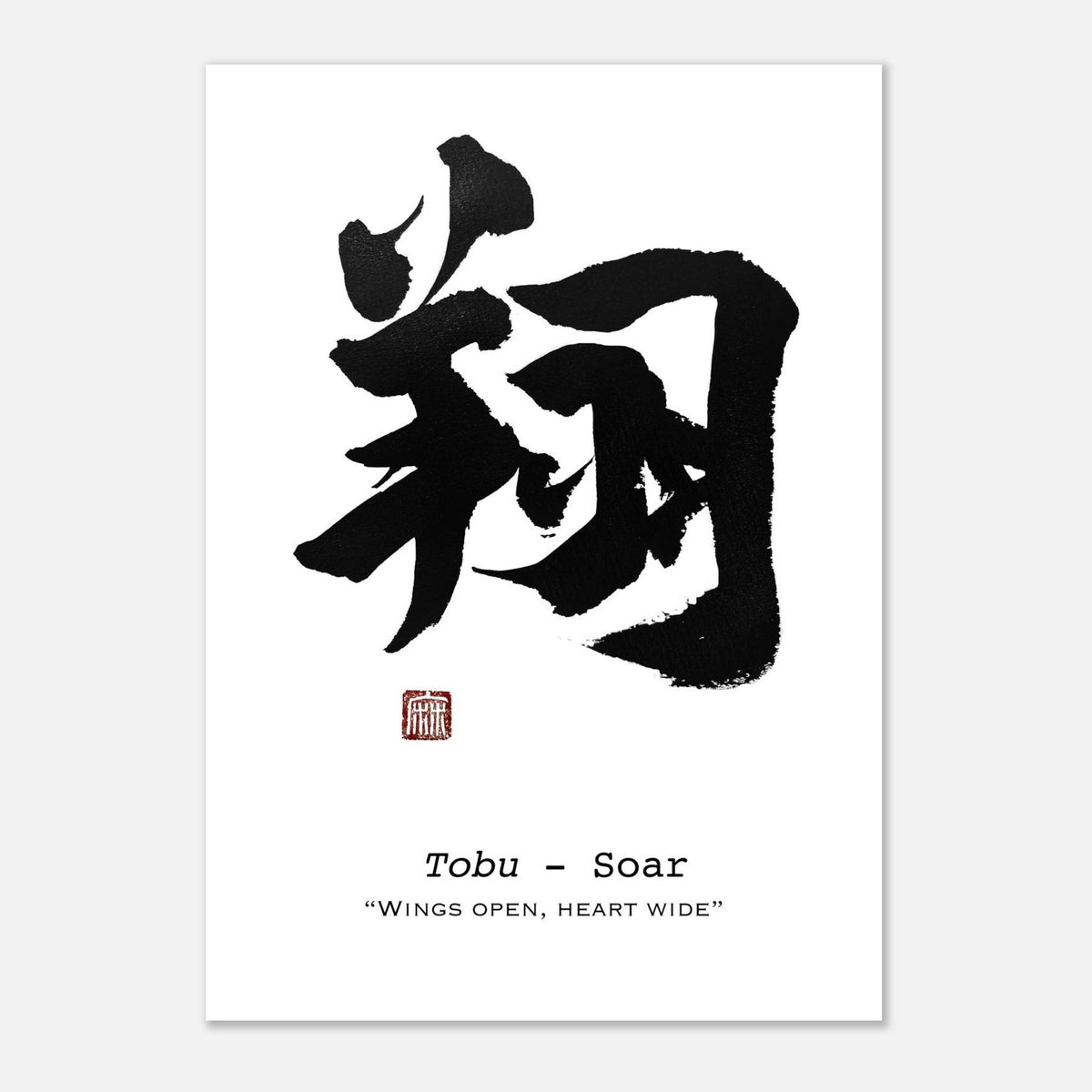
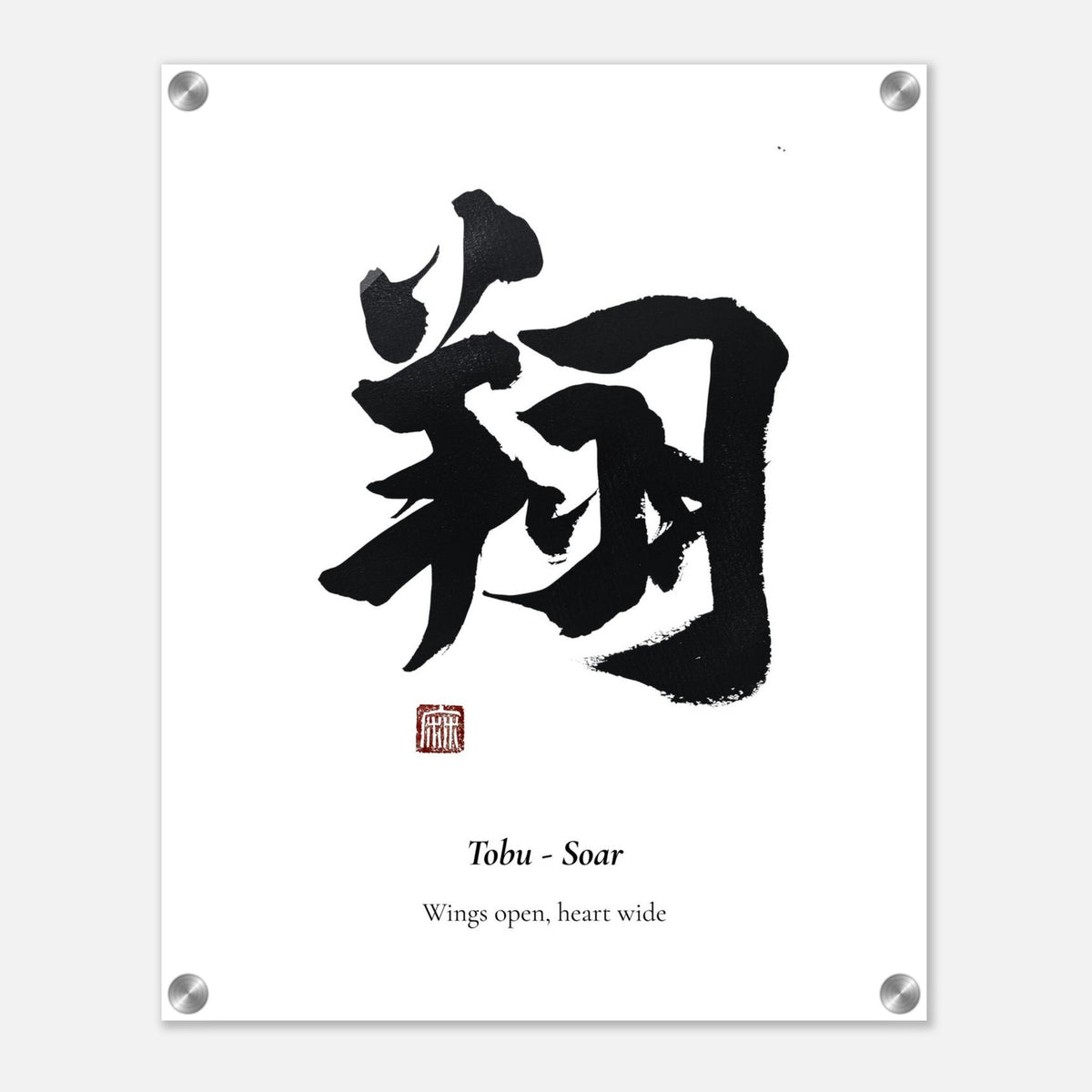
The character 翔 (Tobu — to soar) is one of the most kasure-prone characters in Japanese calligraphy. The stroke demands speed. The brush has to commit fully and release quickly. There is no way to write it slowly and have it look right. The kasure that results is not incidental — it is inseparable from the meaning of the character itself.

Something that soars cannot hold on too tightly.
Why Traditional Calligraphers Value It
In the Western tradition, a mark that runs out of ink midway through would typically be considered a failure. You would start again. You would correct it.
In Japanese Shodō, the relationship to imperfection is fundamentally different.
The brushstroke is understood as a record of a moment — not just a visual outcome. It captures the state of the artist's mind, the quality of their breath, the speed of their movement, the exact weight of their hand at that instant. A stroke made with too much hesitation looks hesitant. A stroke made with fear looks afraid. A stroke made with full presence and commitment — even if the ink runs thin — looks alive.
Kasure is evidence of that aliveness.
It tells you that the brush was moving. That a real hand made this mark. That there was a moment — unrepeatable, already gone — in which this stroke existed in the air before it existed on paper.
Master calligraphers do not avoid kasure. They cultivate the conditions in which it can arise naturally — a certain brush load, a certain speed, a certain quality of release — and then they allow it to happen without interference.
The dry stroke cannot be manufactured. It can only be allowed.
How Modern Reproduction Destroys It
Most calligraphy prints available today — even those marketed as authentic or hand-drawn — have had their kasure smoothed out long before they reach your wall.
The process usually looks something like this: an original brushwork piece is photographed or scanned, then processed in editing software to increase contrast, sharpen edges, and make the black blacker and the white whiter. The result is cleaner. More legible. More immediately impressive on a small screen thumbnail.
And completely flat.
The kasure — those delicate, irreplaceable areas where the ink thins and the paper breathes — are the first casualty of that process. They exist in a tonal range that editing software interprets as noise to be removed. So they are removed.
What remains is a calligraphy print that looks like calligraphy but carries none of its presence. The stroke is there. The character is legible. But the moment is gone.
At BrushForma, the reproduction process is built around preserving what most processes discard.
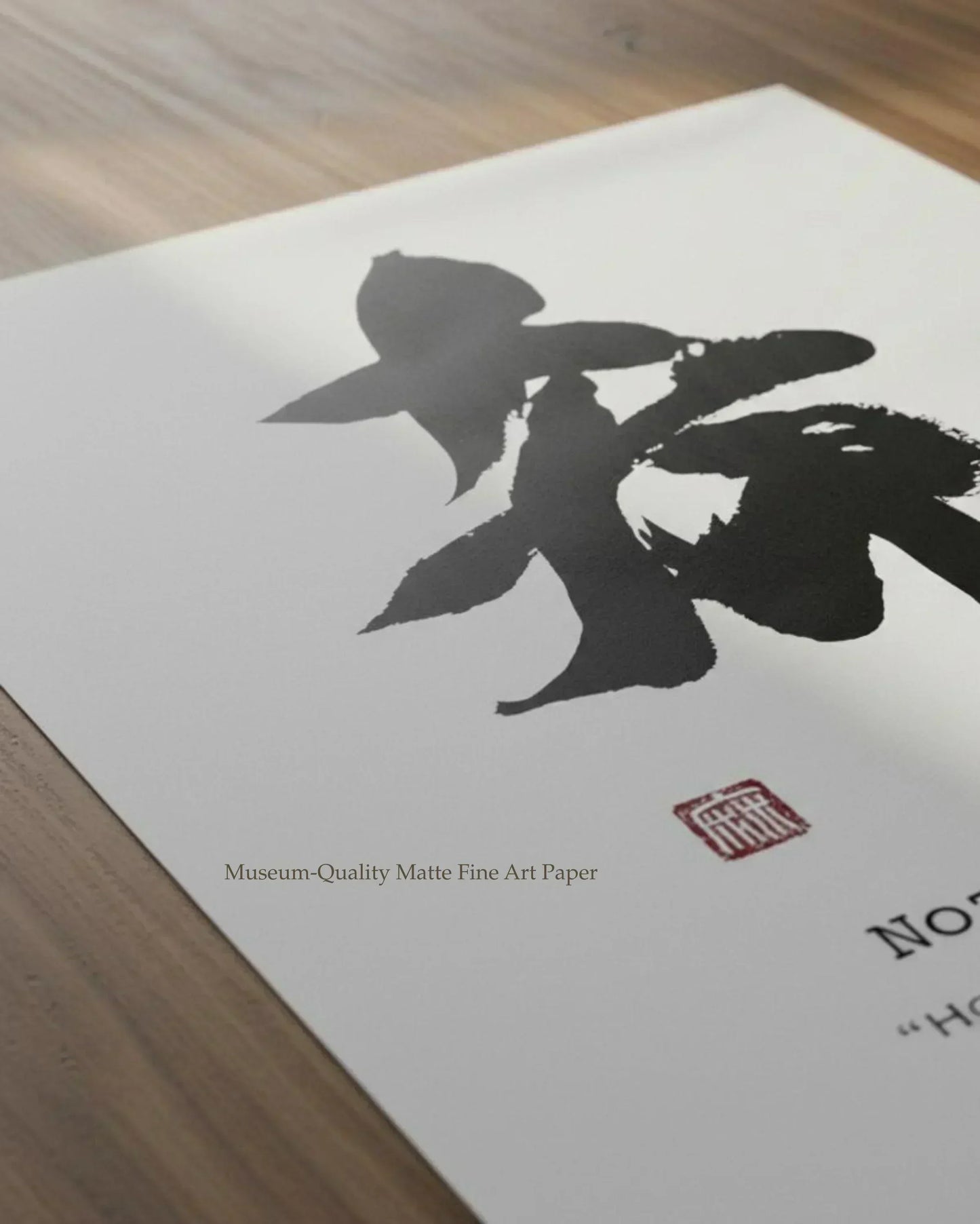
The original brushwork is reproduced at high resolution with color profiles calibrated to maintain the full tonal range of the sumi ink — including the pale, almost-there areas where kasure lives. The archival matte paper is chosen partly for how it receives ink: with a slight texture that mirrors the way Japanese paper accepts a brushstroke, so the printed kasure sits in the surface rather than floating on top of it.
Nothing is sharpened. Nothing is corrected. Nothing is made more perfect than it was.
What arrives on your wall is as close as a print can come to the original moment of the stroke.
How to See It in Your Own Print
If you have a BrushForma print — or if you are looking at one on the product page — here is what to look for.
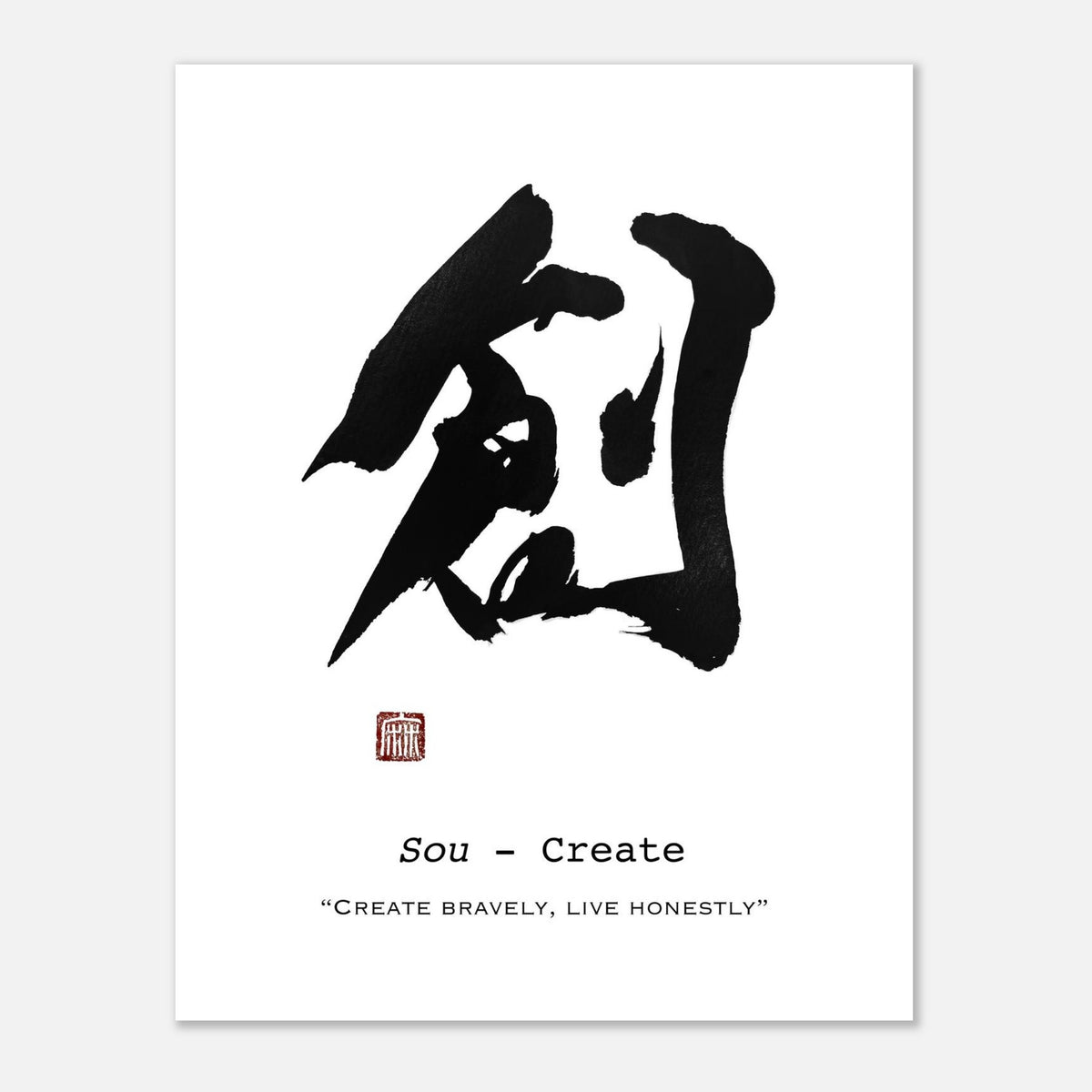
Find the edges of the main stroke. Not the center, where the ink is densest, but the outer edges — where the bristles of the brush were beginning to leave the paper.
Look for areas where the black thins into grey, then into almost-white. Where the stroke seems to dissolve rather than end. Where the paper and the ink exist in the same space at the same time.
That is kasure.
In some pieces it is subtle — a slight feathering at the end of a vertical stroke. In others it is dramatic — the entire trailing edge of a fast horizontal movement dissolving into the paper. In 翔 (Tobu), you can see it clearly in the main diagonal stroke, where the brush accelerated through the movement and the ink simply could not keep pace.
Once you see it, you cannot unsee it. And once you understand what it means — that this happened once, in a specific moment, and was preserved exactly as it was — the print holds differently in your hands.
Two prints to look closely at

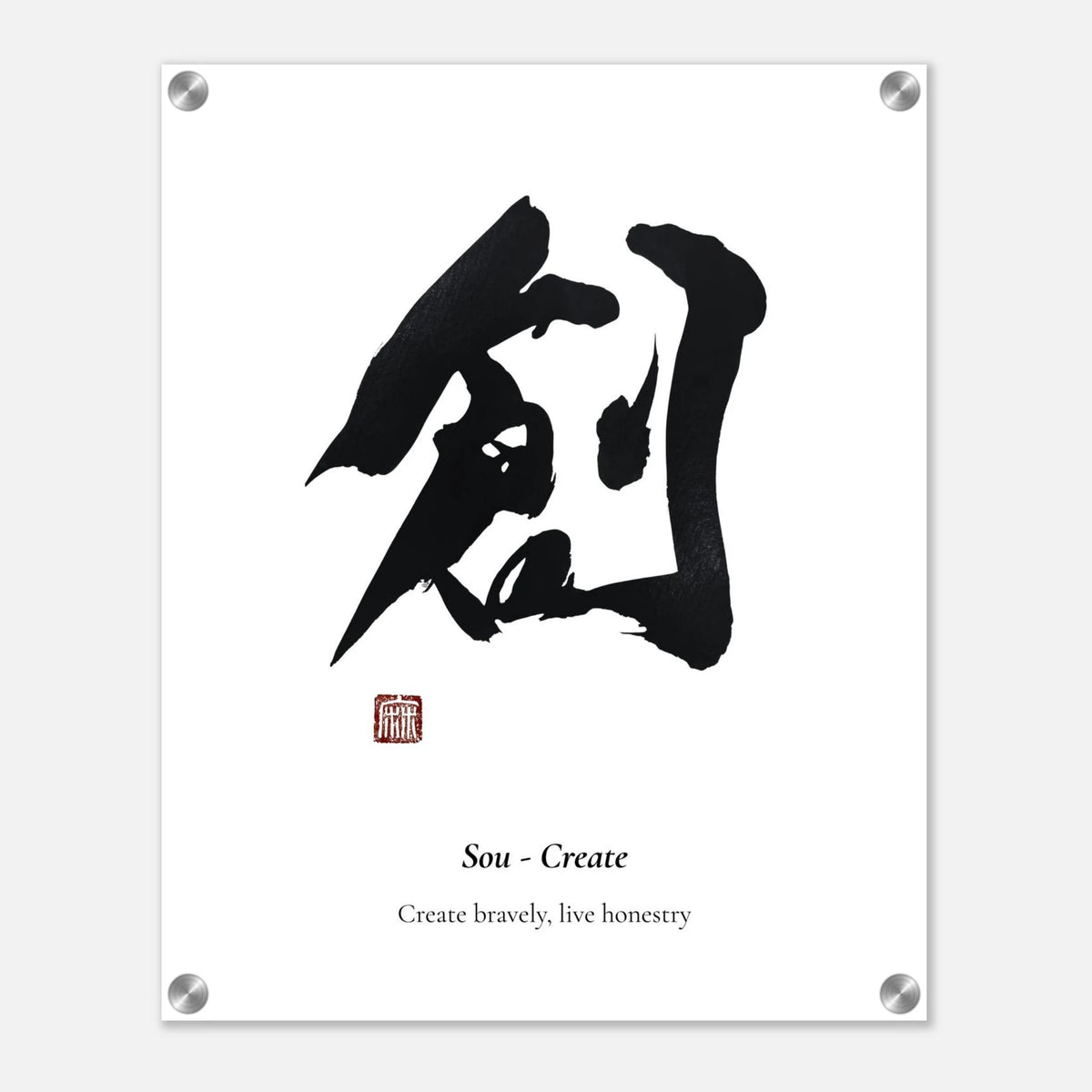
In the 翔 Tobu (Soar) print, follow the longer strokes to where they finish. Look for where the ink thins and the paper begins to show through, as if the brush were already lifting away.

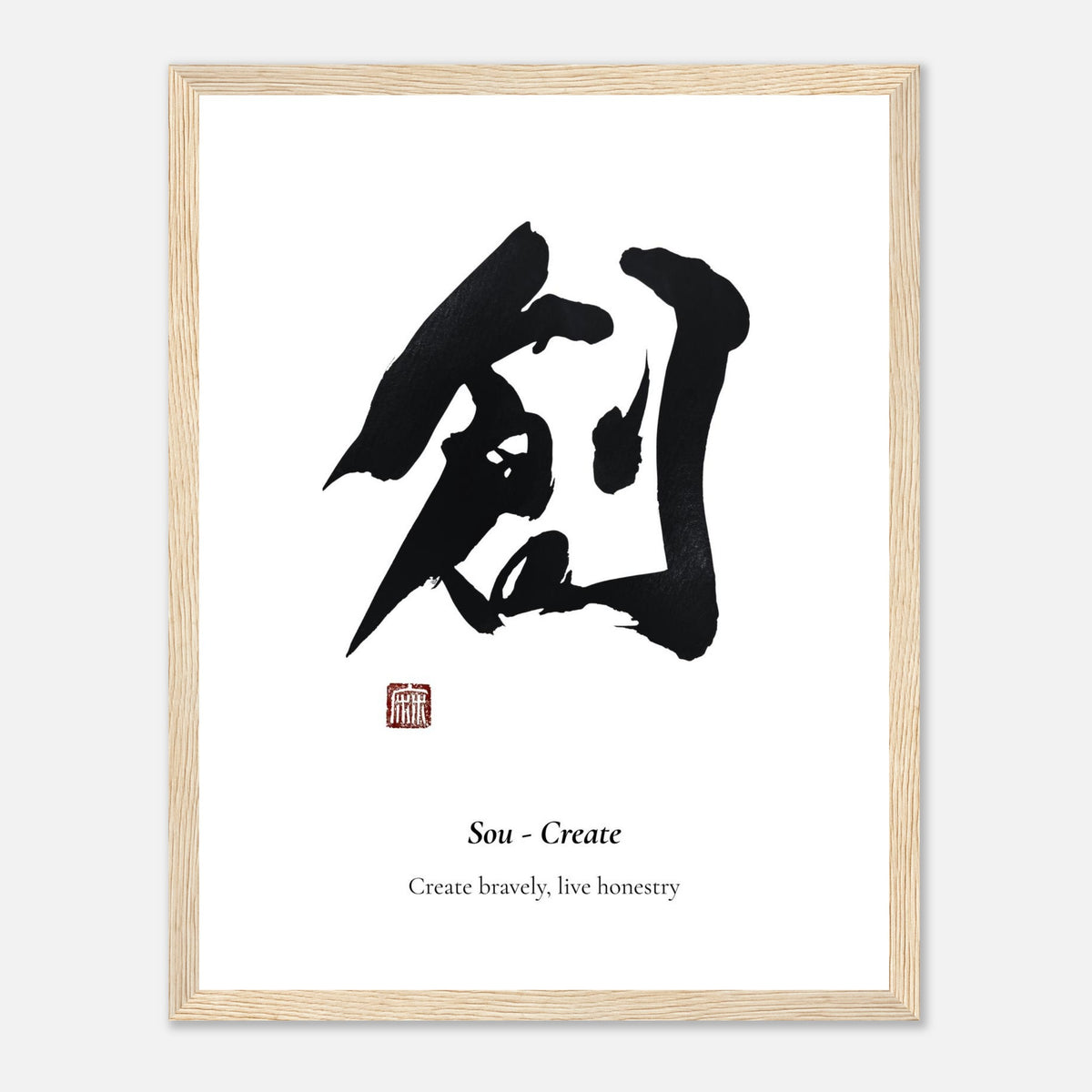
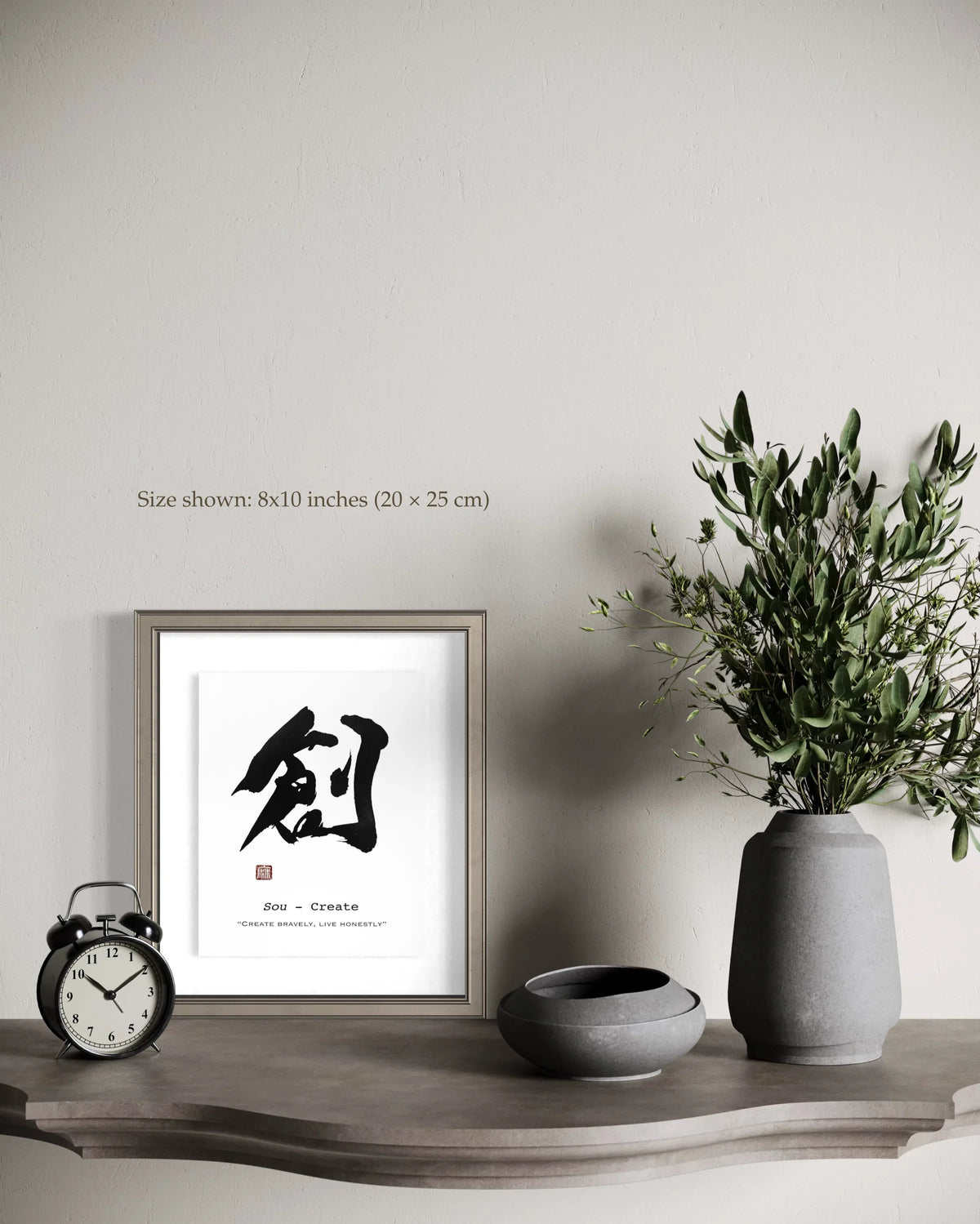
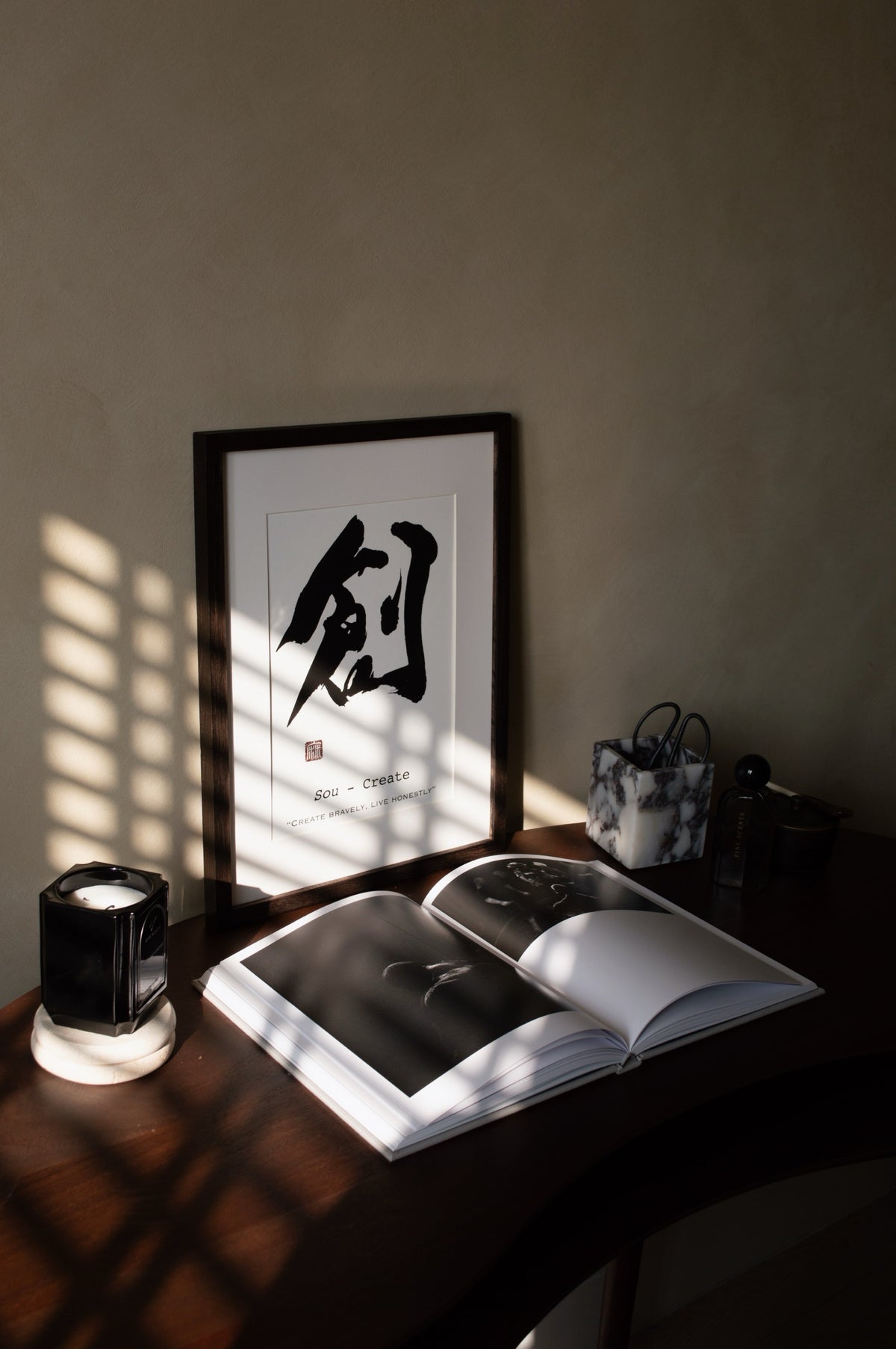
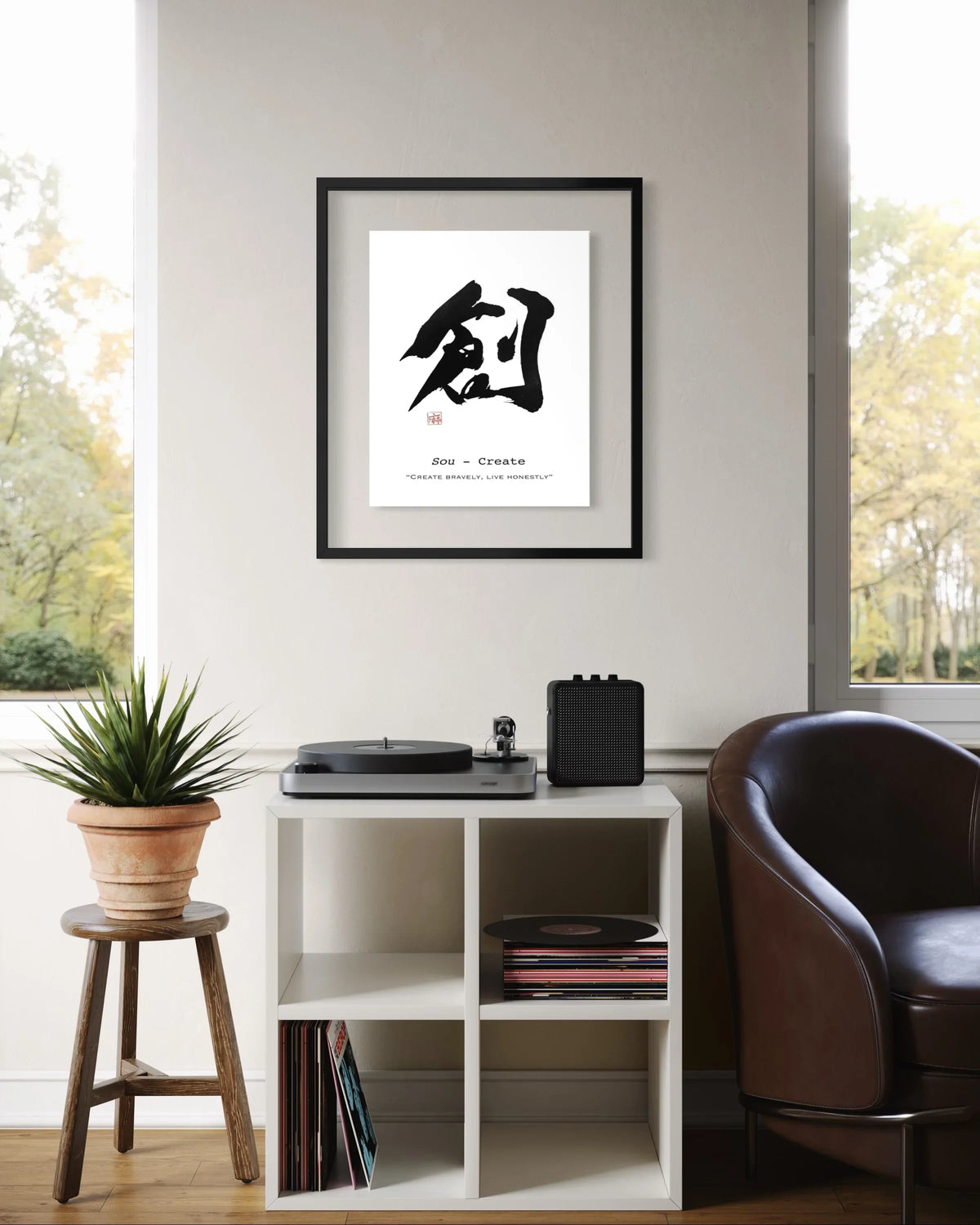
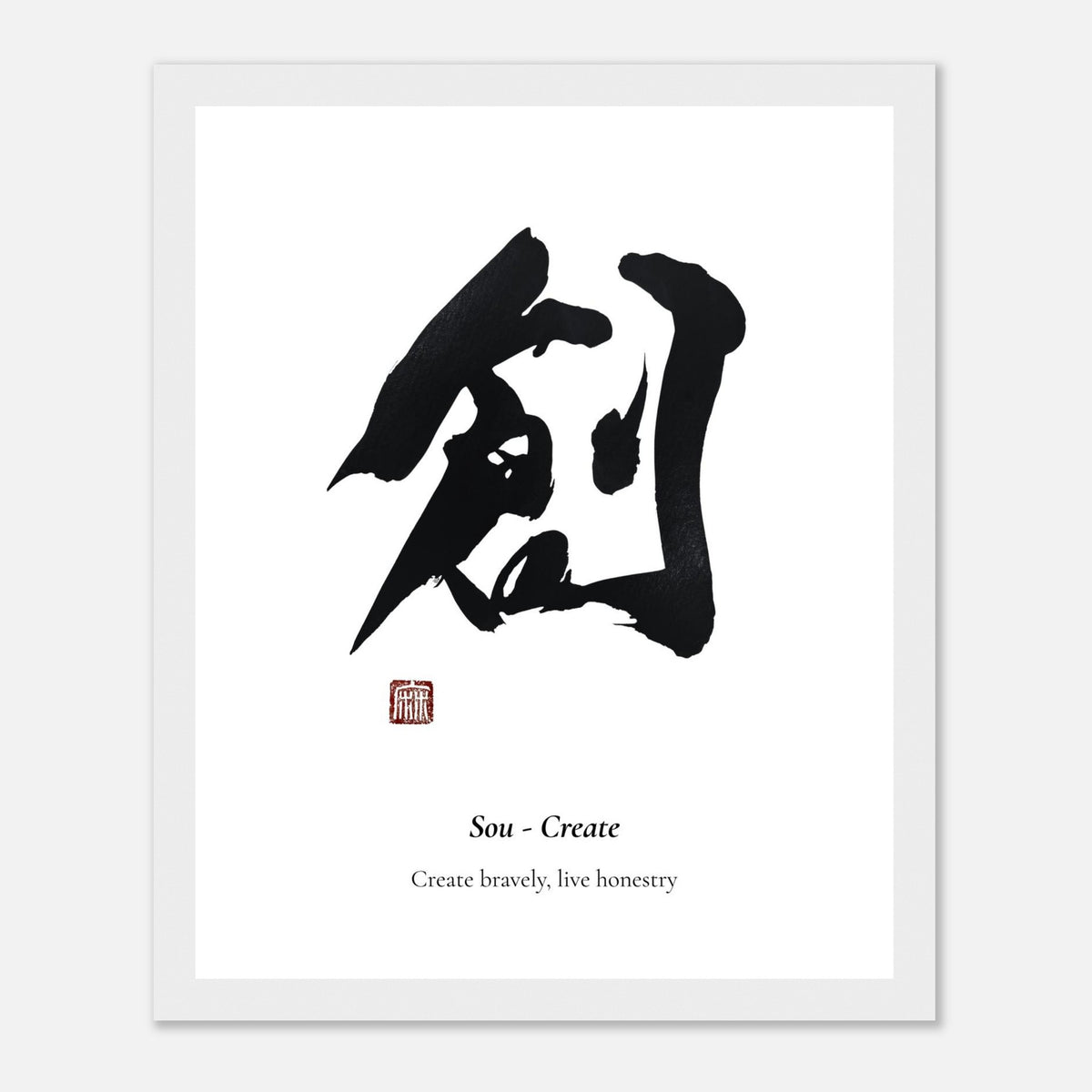
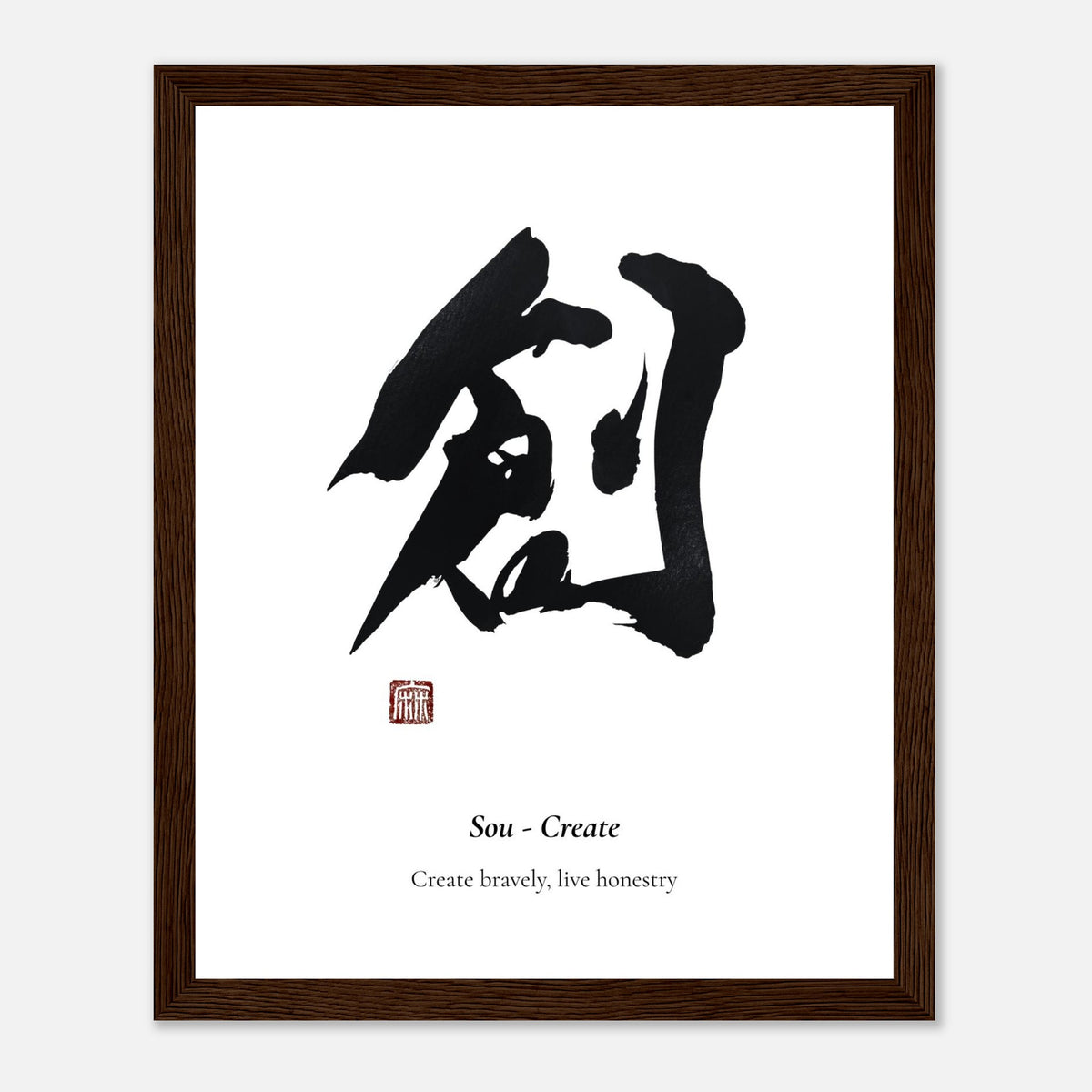
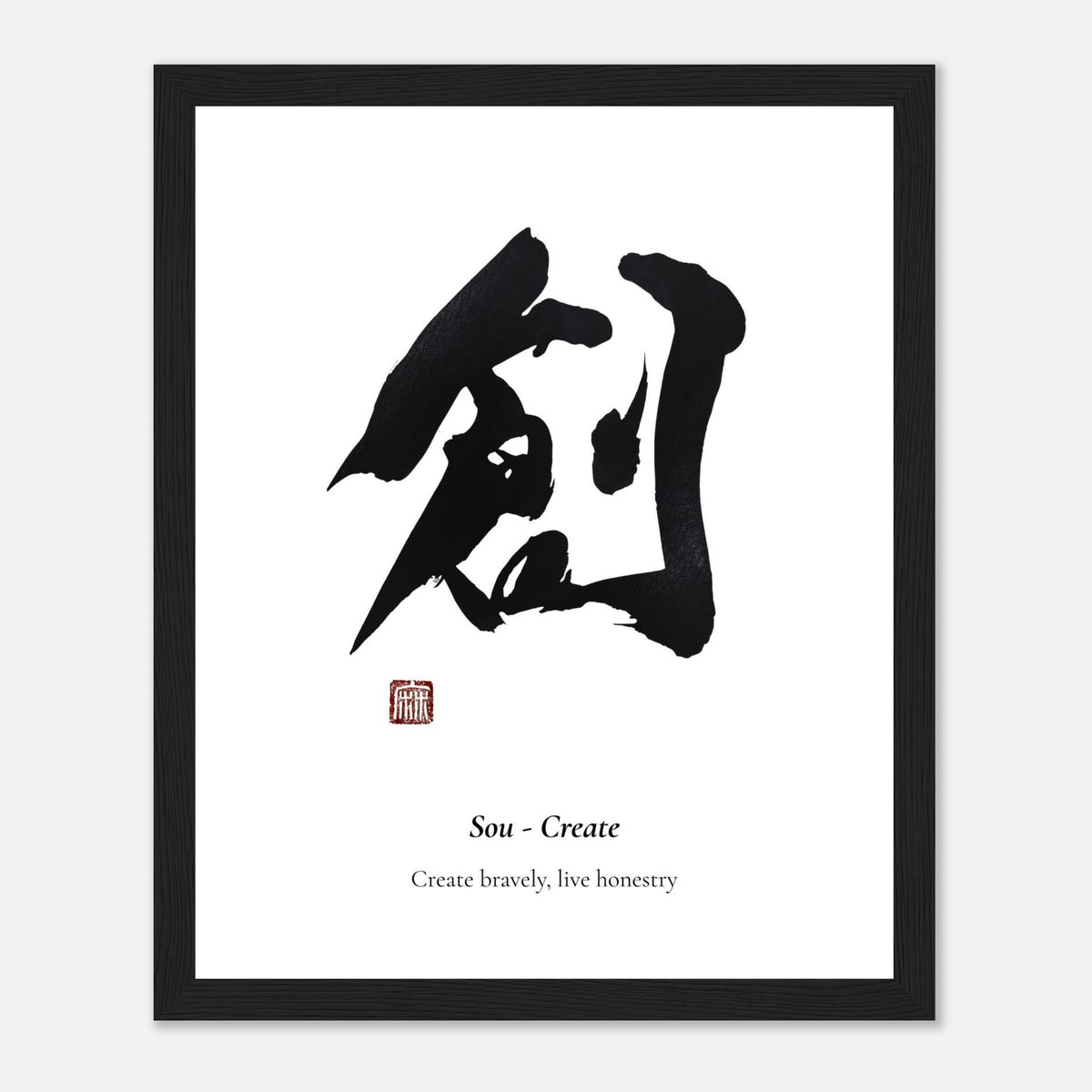
In the 創 Sou (Create) print, look along the edges of each stroke rather than the centre. Where the brush moved quickly, you may find the black softening into grey, a quiet trace of the moment the character was made.
Kasure and Wabi-Sabi
It would be easy to connect kasure to wabi-sabi and leave it there. Both involve imperfection. Both involve the acceptance of transience. The connection is real.
But kasure is more specific than wabi-sabi, and worth understanding on its own terms.
Wabi-sabi is a philosophy of finding beauty in things that are aged, worn, incomplete, or imperfect. It asks us to accept and appreciate what time and use leave behind.
Kasure is something slightly different. It is not about age or wear. It is about the irreversibility of a single moment of making.
The dry stroke is not beautiful because it is imperfect. It is beautiful because it is true. It records exactly what happened — the speed, the pressure, the ink load, the quality of attention — without any revision or correction. It is honest in the way that only something made in real time can be honest.
In a world where most visual content is endlessly editable, endlessly refineable, endlessly optimised for the reaction it will produce — kasure is a different kind of object entirely.
It is a mark that happened once. It cannot be improved. It can only be lived with.
At BrushForma, every Contemporary Print is reproduced to preserve the kasure of the original brushwork. Nothing is corrected. Nothing is smoothed. What you receive is the stroke as it was made — dry edges, thinning ink, and all.