What Is Japanese Calligraphy?
A Quiet Art of Meaning, Movement, and Intention
Japanese calligraphy is more than beautiful writing. It is an art form rooted in mindfulness, balance, and meaning—where each stroke reflects not only language, but the state of the mind that created it.
In a world that moves quickly, Japanese calligraphy invites us to slow down.
This is why it continues to resonate today—not only as a traditional art, but as a form of modern expression and a source of calm in contemporary living spaces.
The Origins of Japanese Calligraphy
Japanese calligraphy, known as 書道 (Shodō), literally translates to “the way of writing.”
It originated from Chinese calligraphy and was introduced to Japan around the 5th century. Over time, it evolved into a uniquely Japanese practice—deeply influenced by Zen philosophy, simplicity, and respect for space.
Unlike Western handwriting, which prioritizes uniformity and precision, Japanese calligraphy values expression. Variations in thickness, rhythm, and flow are not mistakes—they are the soul of the work.
Each piece captures a moment in time.
More Than Words: The Meaning Behind Each Stroke
In Japanese calligraphy, how something is written matters just as much as what is written.
The brush responds instantly to the artist’s breath, pressure, and movement. There is no erasing or correcting. Every stroke is final—making the process an exercise in presence and acceptance.
This is why calligraphy is often practiced as a form of meditation.
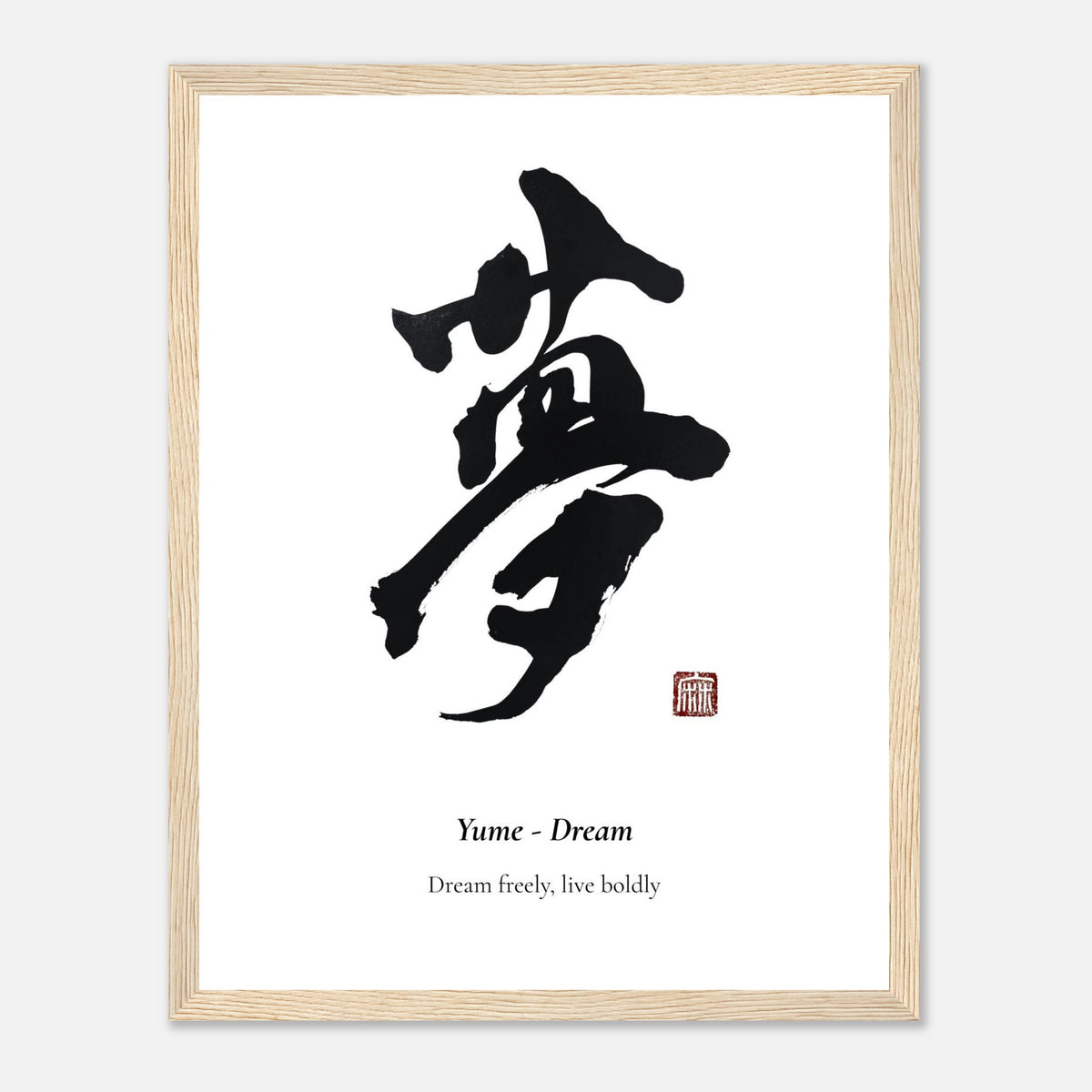
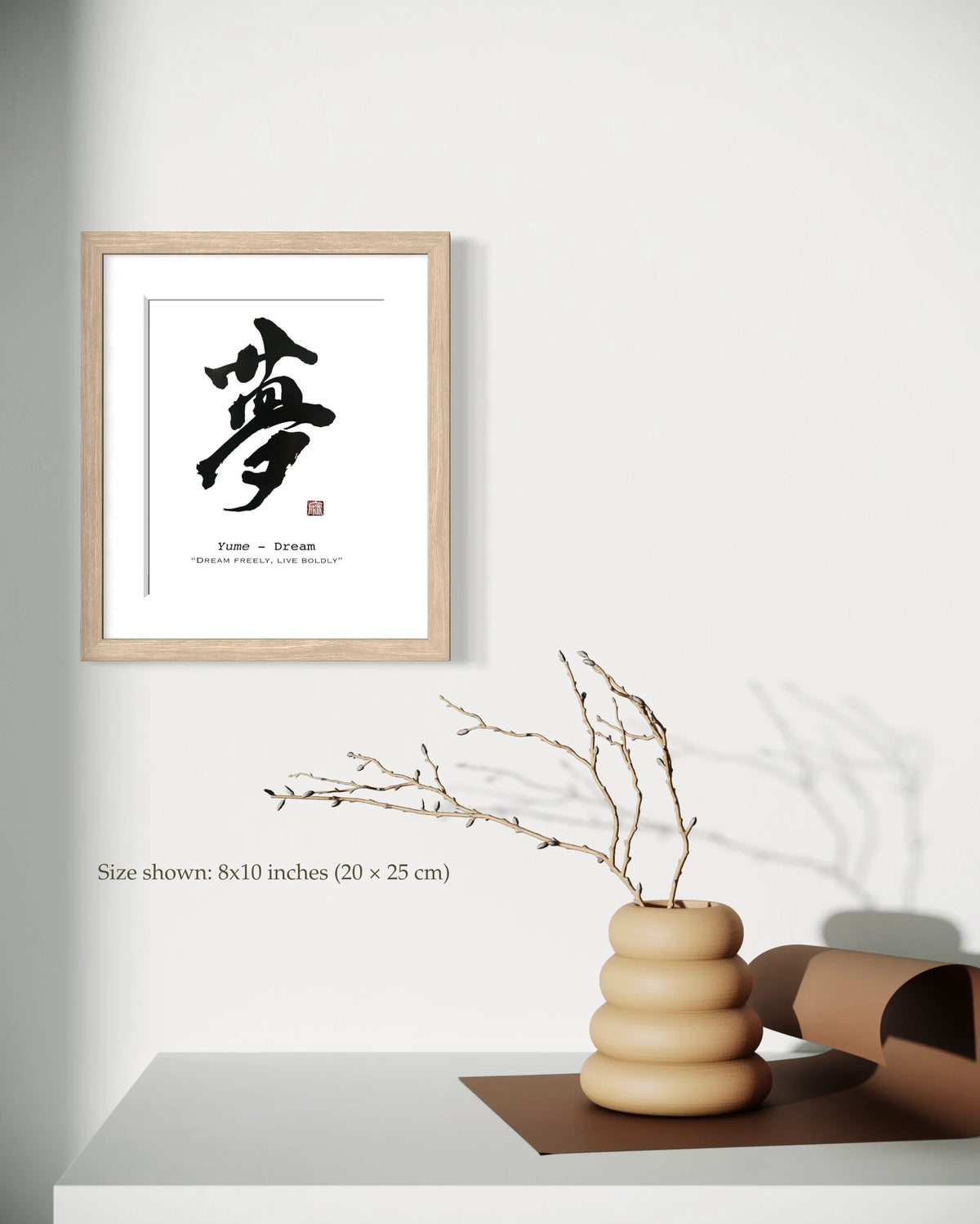
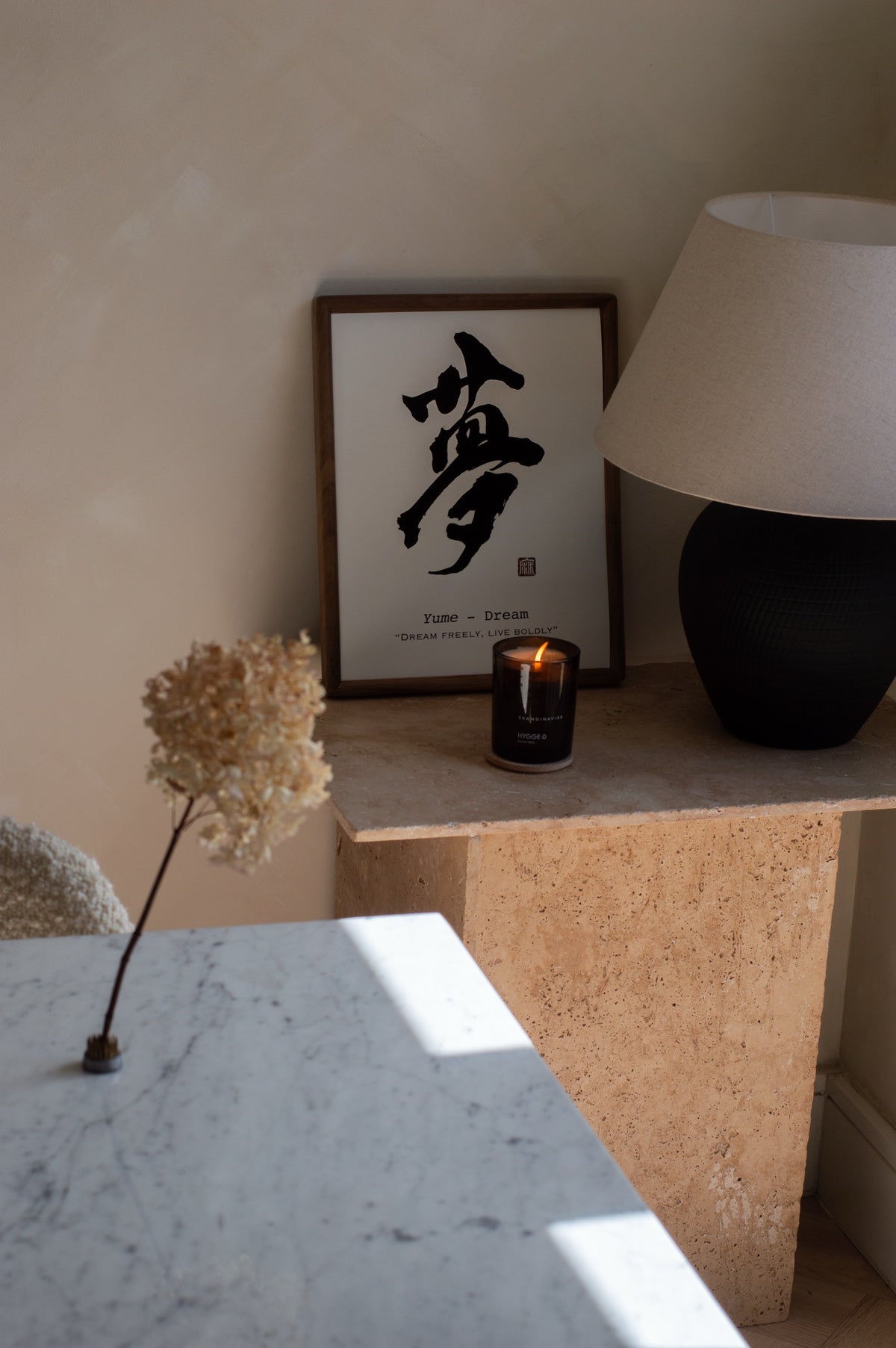
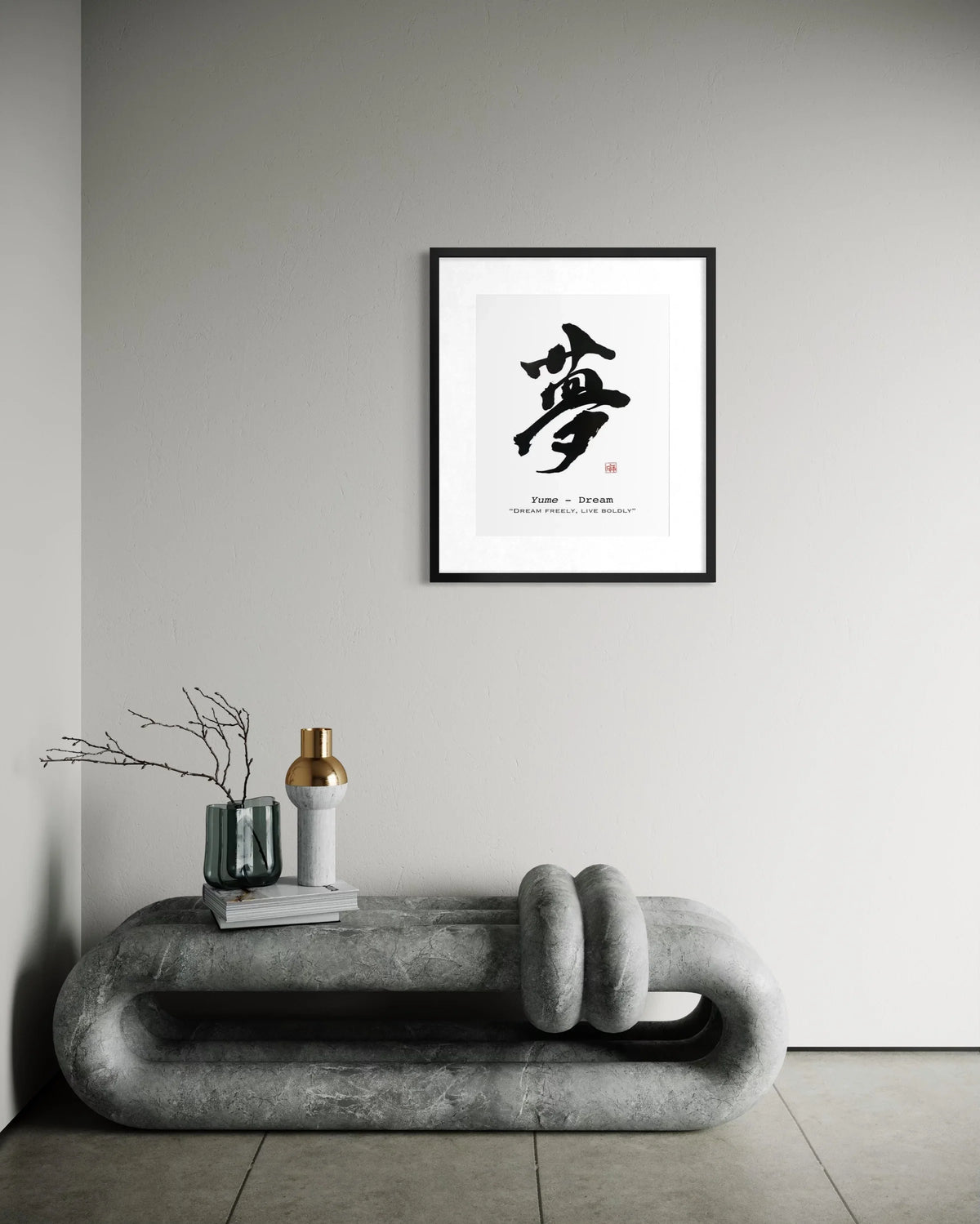
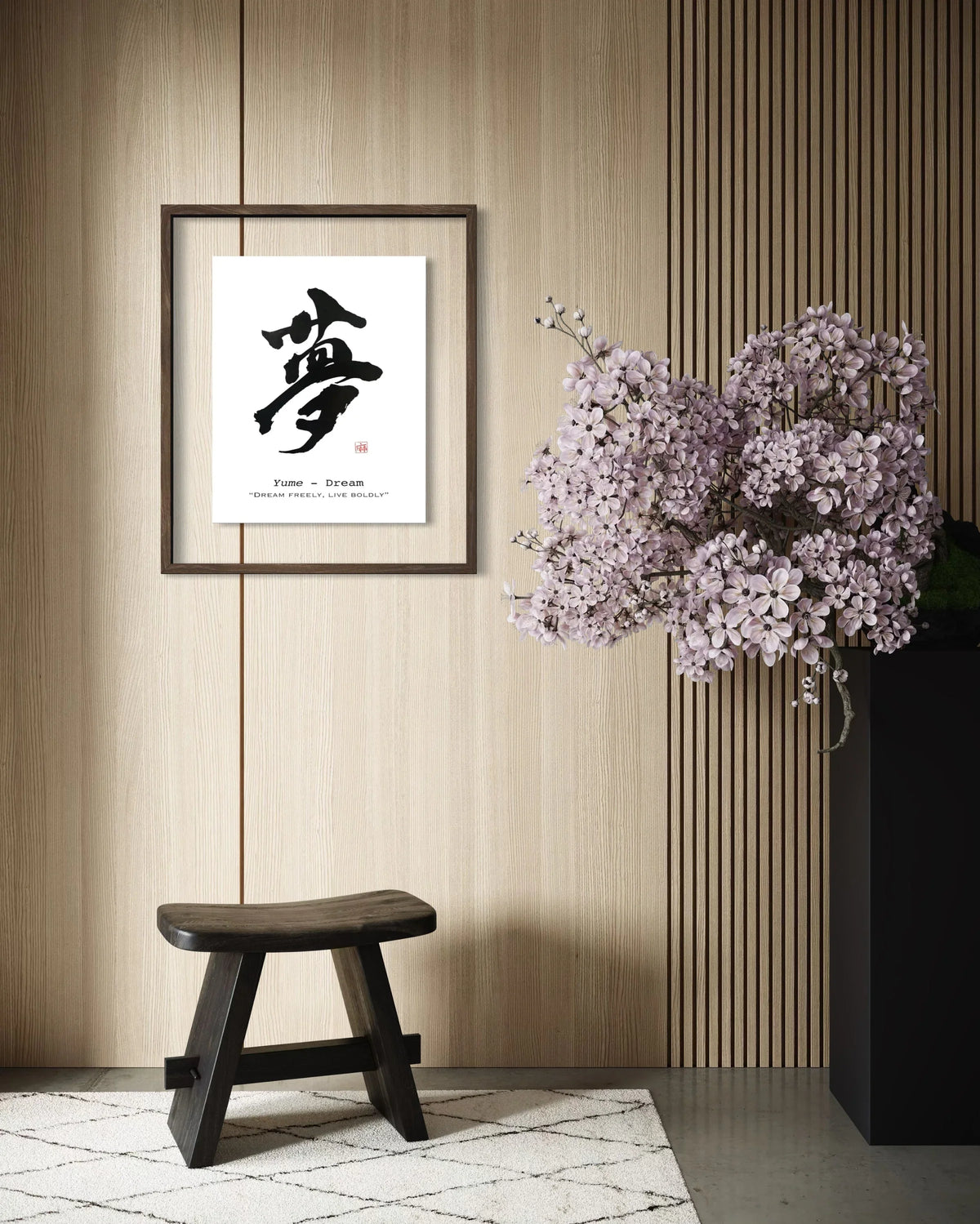
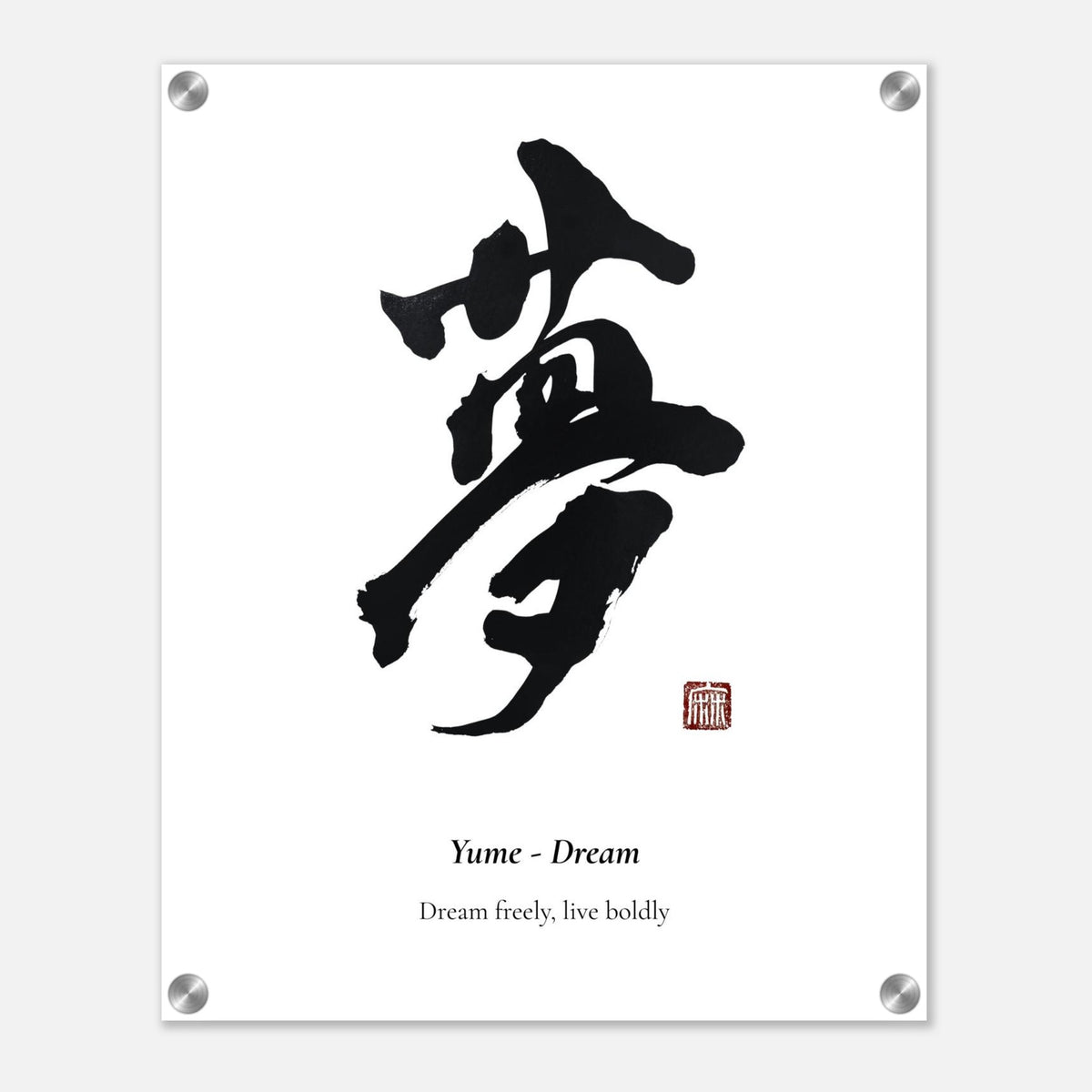
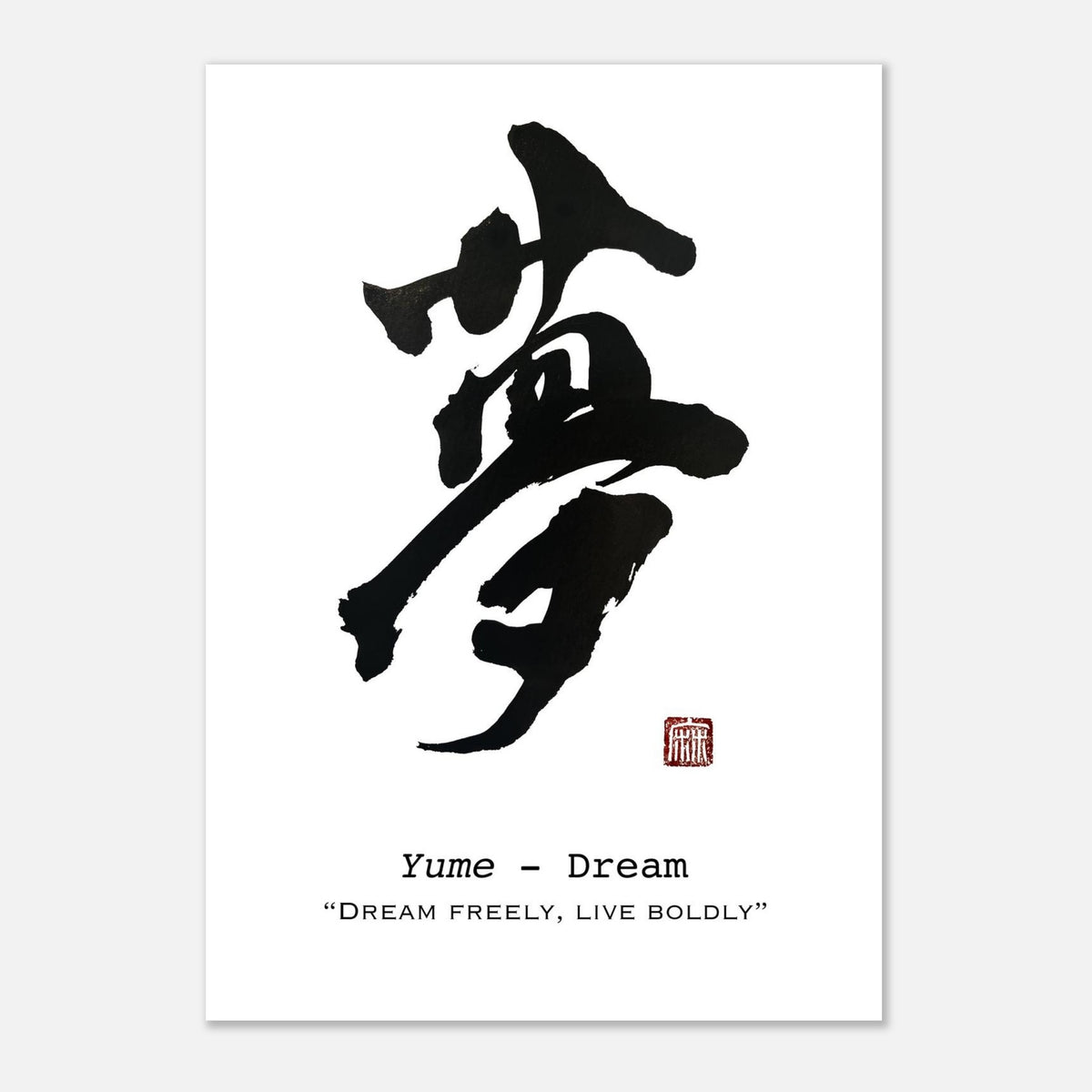
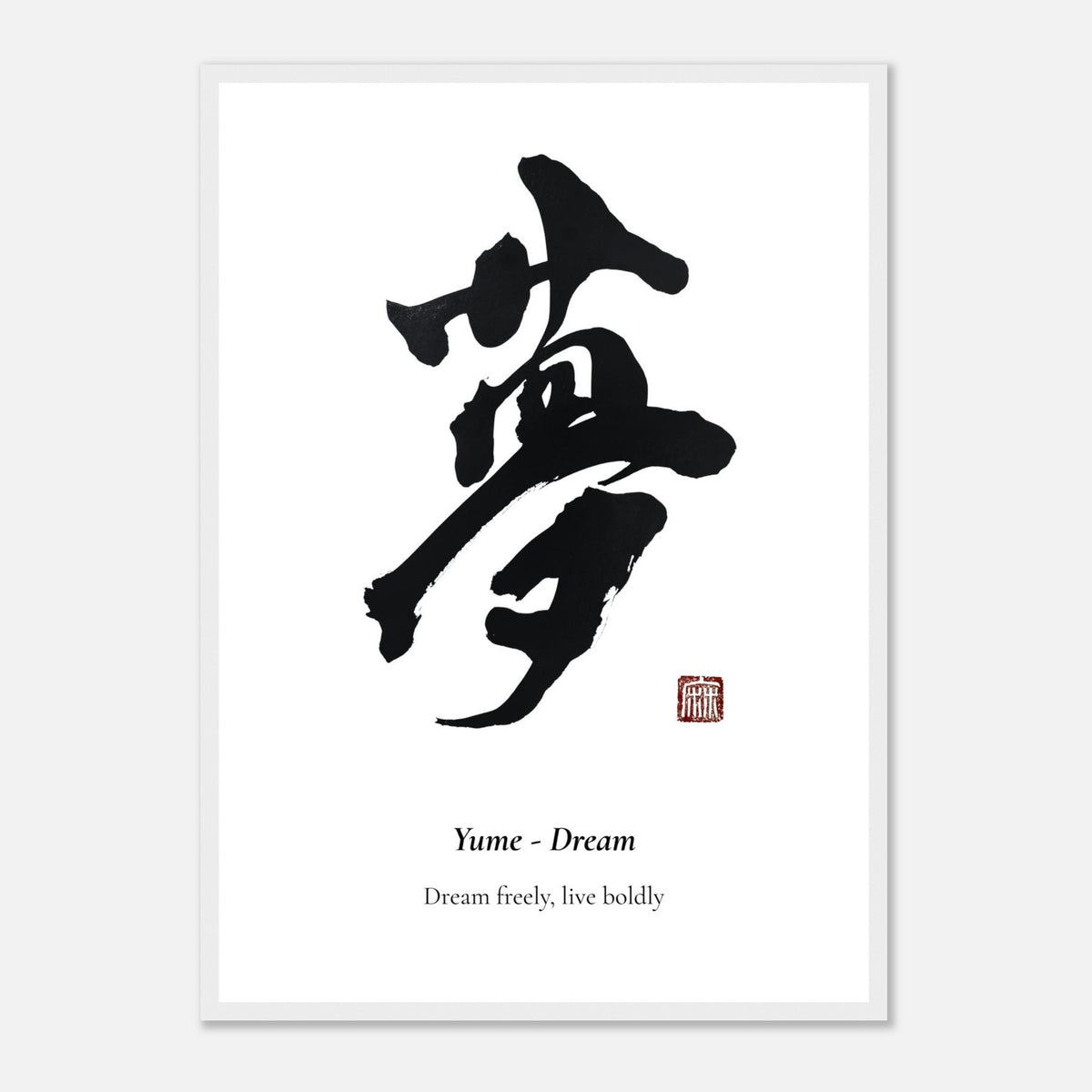
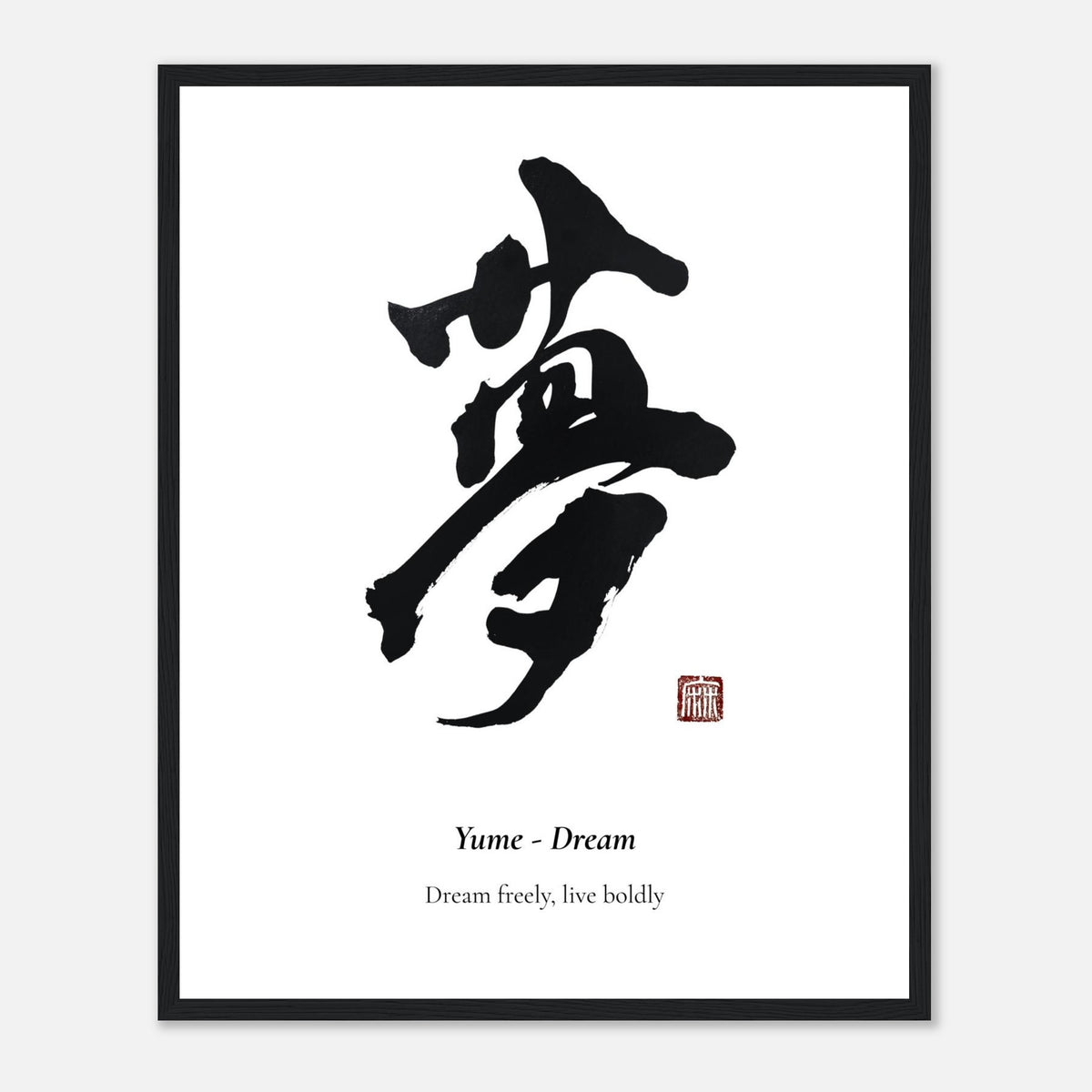
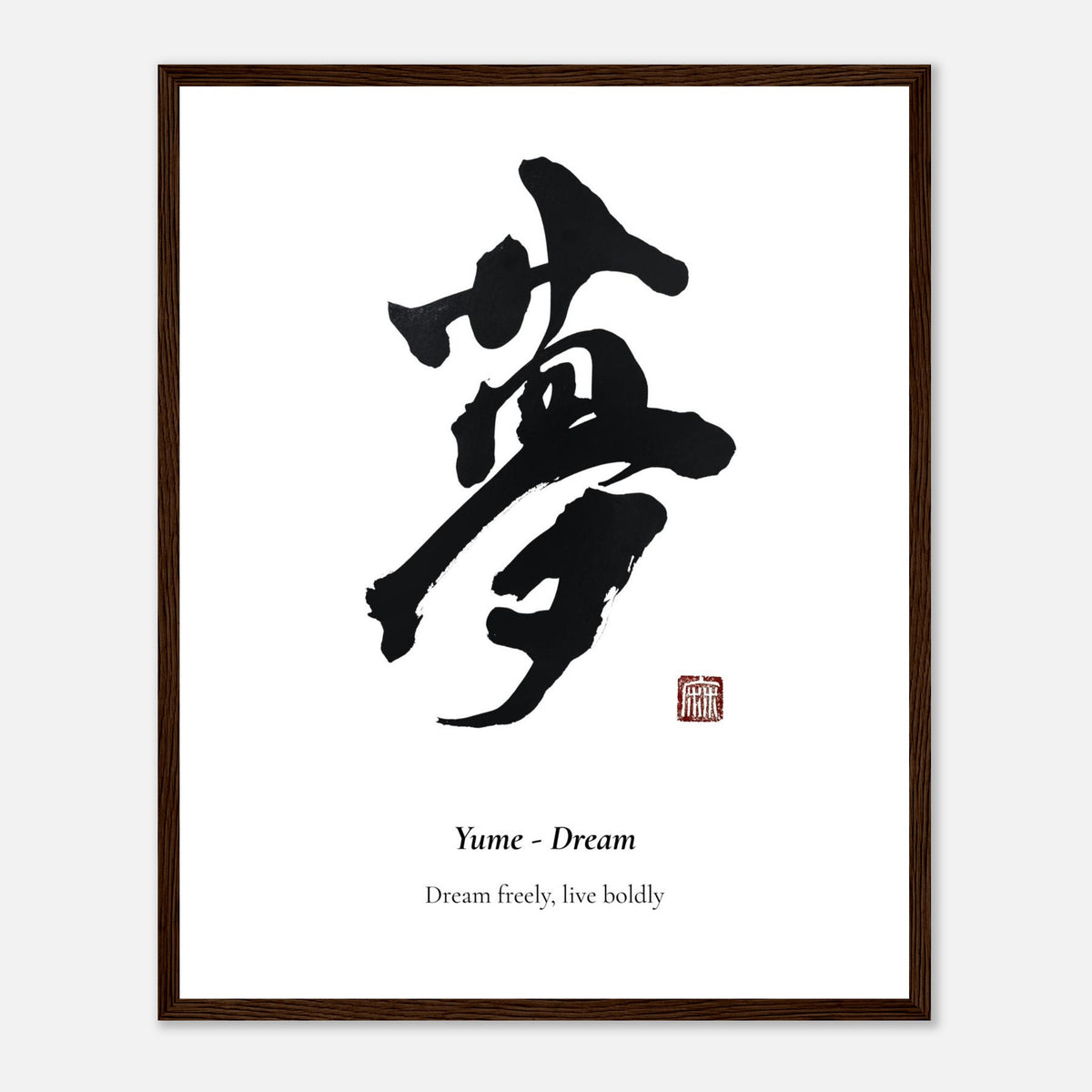
Common characters seen in calligraphy art—such as love (愛), dream (夢), or quiet (静)—carry emotional depth that goes far beyond their literal translation. When displayed as art, they become reminders of values, intentions, and inner states.
The Tools of Japanese Calligraphy
Traditional Japanese calligraphy uses only a few essential tools:
- Brush (筆 / fude): Made from natural animal hair, capable of creating both bold and delicate lines
- Ink (墨 / sumi): Ground by hand from an ink stick, encouraging a slow, mindful preparation
- Paper (和紙 / washi): Often handmade, absorbent, and beautifully imperfect
- Ink stone (硯 / suzuri): Used to grind ink with water
This simplicity reinforces the philosophy behind calligraphy: fewer tools, deeper focus.
Why Japanese Calligraphy Still Matters Today
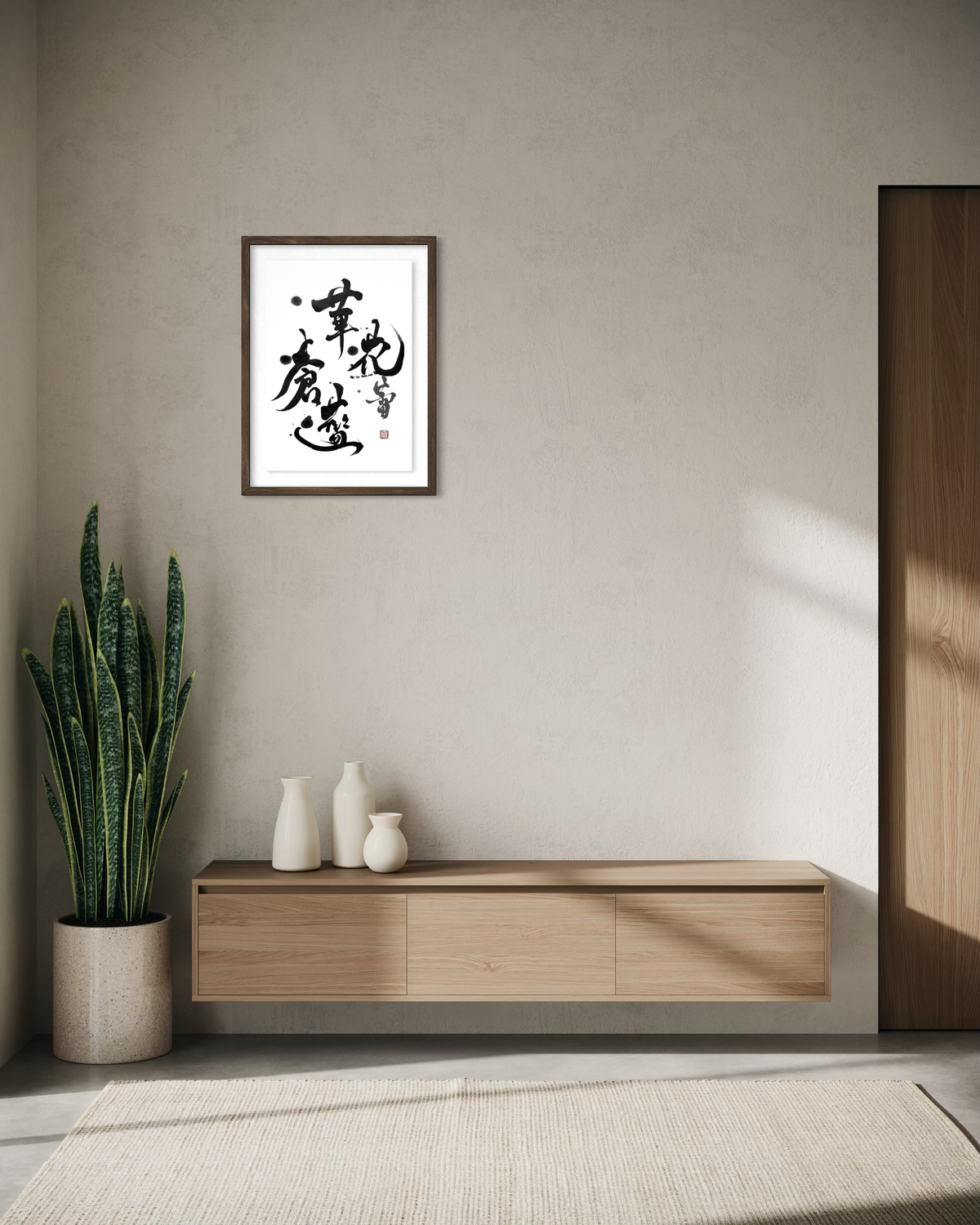
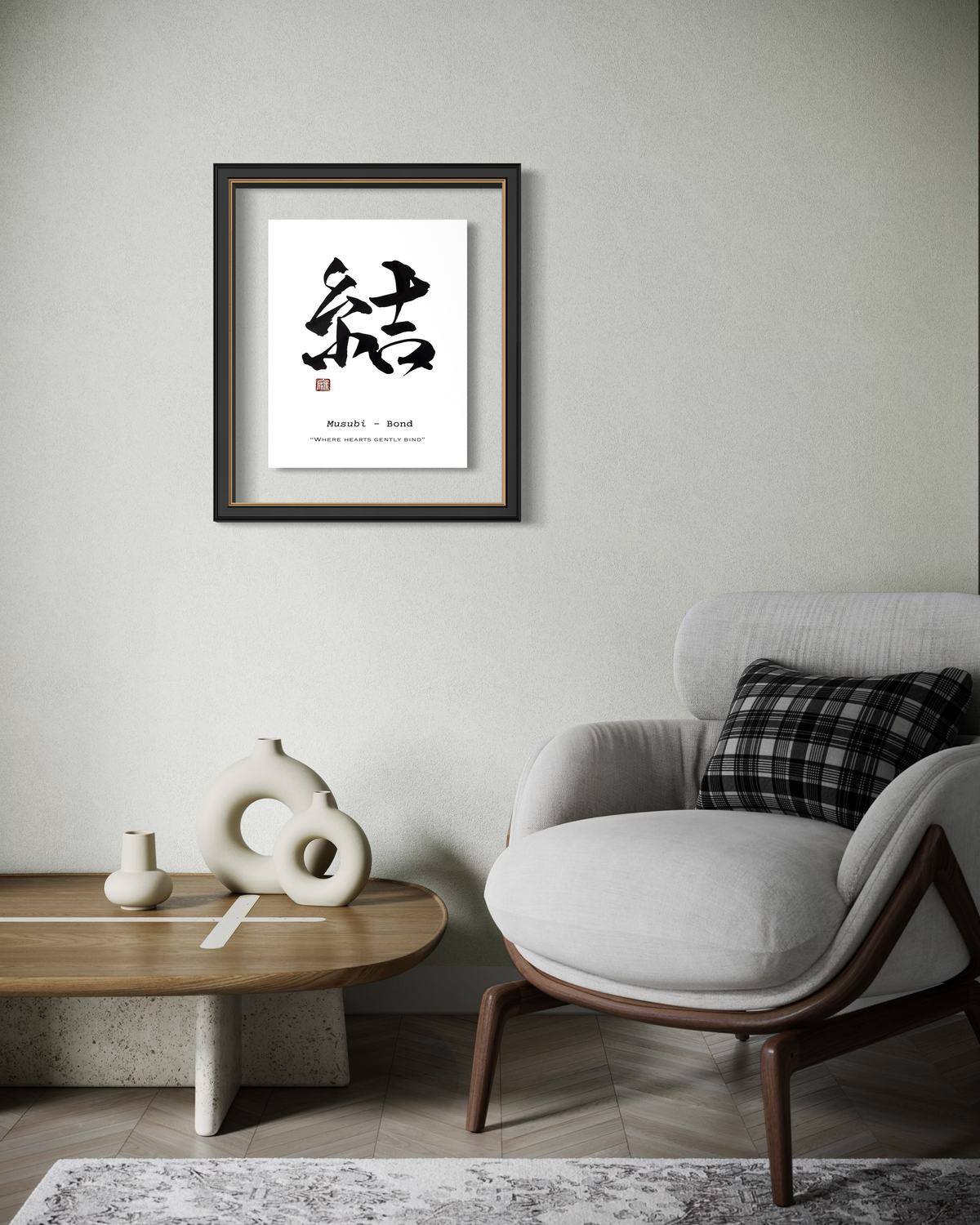
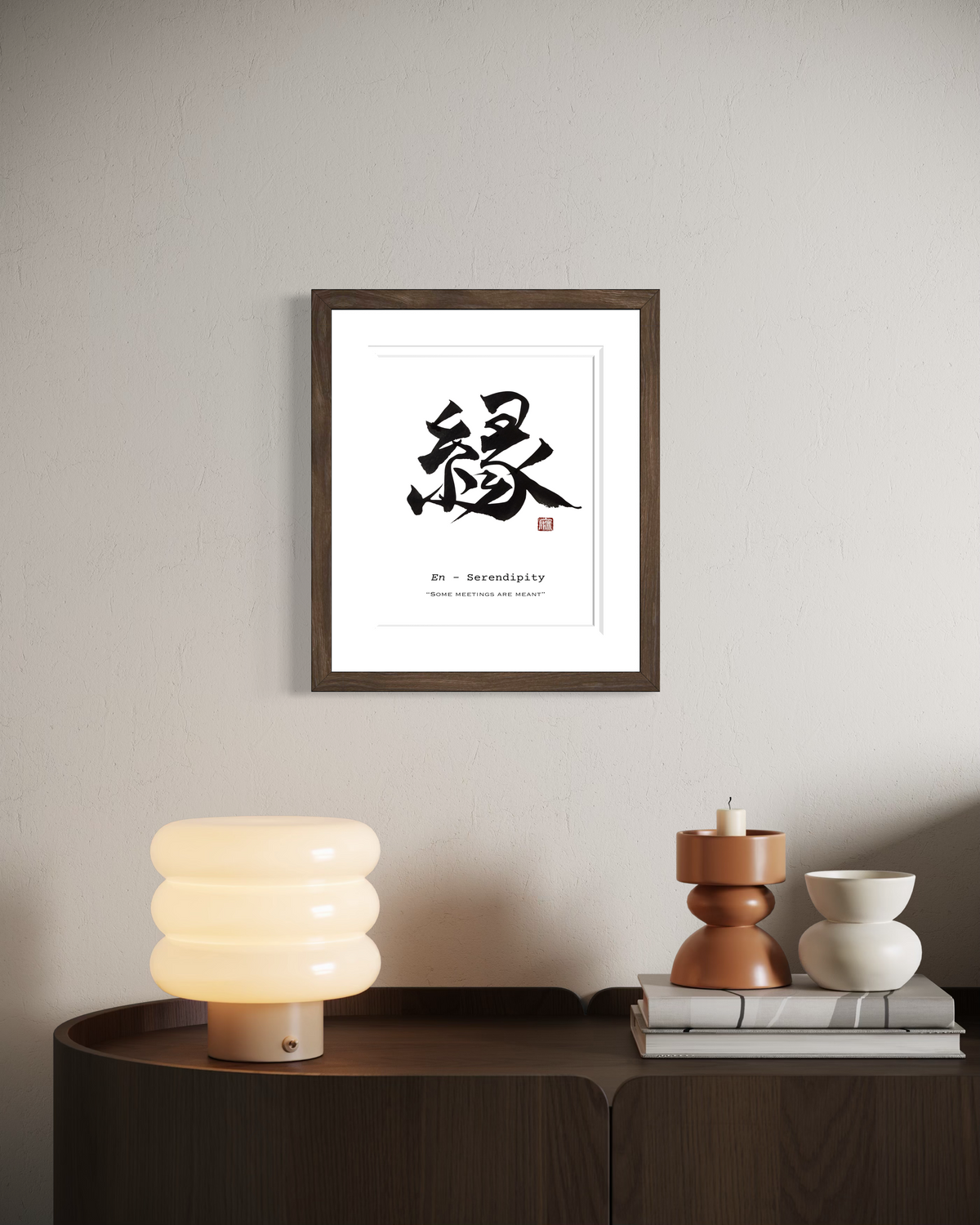
In modern interiors, Japanese calligraphy has found new life as wall art—especially in minimalist and Japandi-inspired spaces.
Its appeal lies in:
- Timeless simplicity
- Emotional meaning without visual noise
- Balance between tradition and modern design
A single character, placed thoughtfully, can transform a space. It doesn’t demand attention—it invites reflection.
This is why Japanese calligraphy pairs so naturally with calm homes, intentional living, and slow design.
Japanese Calligraphy as Wall Art
When displayed as art, calligraphy becomes more than decoration. It becomes a quiet anchor.
Unlike mass-produced typography or trend-driven prints, calligraphy holds an authenticity that cannot be replicated. Every piece carries subtle variations—evidence of the human hand behind it.
At BrushForma, our calligraphy-inspired designs are created with this philosophy in mind: honoring tradition while fitting seamlessly into modern life.

If you would like to follow one piece from brush to paper to print, we share the process in how our Japanese calligraphy is made. And because each character carries a meaning, many people choose one as a gift, such as the 愛 Ai (Love) print; our guide to meaningful Japanese gifts walks through what each character means.
A Living Art Form
Japanese calligraphy is not frozen in the past. It continues to evolve—bridging culture, design, and mindfulness.
Whether you encounter it in a traditional studio, a modern home, or a quiet corner of your day, calligraphy offers the same invitation:
Pause. Breathe. Be present.
FAQ: Japanese Calligraphy
What does Japanese calligraphy mean?
Japanese calligraphy, or Shodō (書道), literally means "the way of writing." But beyond the literal translation, it refers to the practice of brushing a single character or phrase with such presence that the ink itself carries meaning—not just the word, but the breath, rhythm, and intention behind it.
What are common Japanese calligraphy words and their meanings?
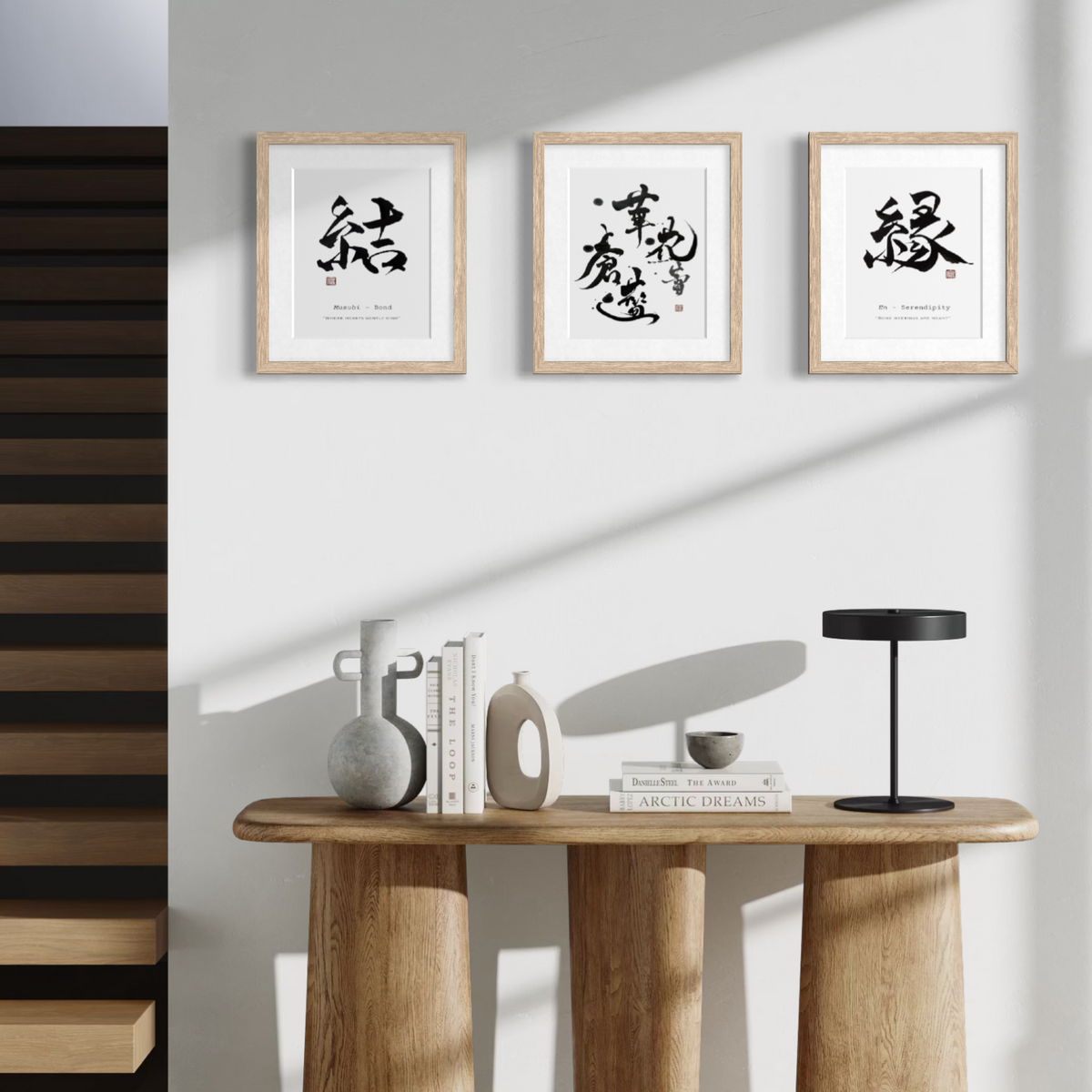
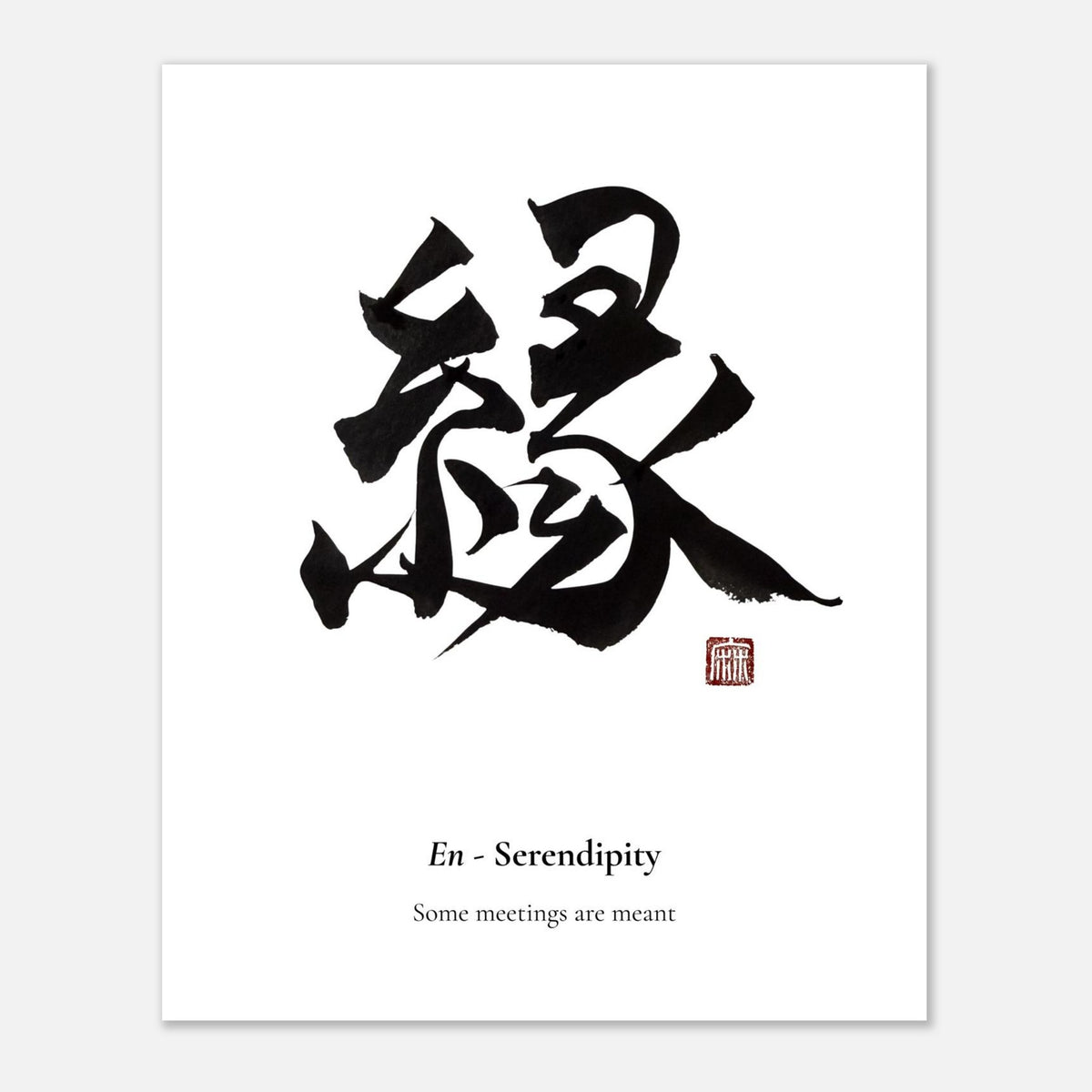
Some of the most frequently brushed characters include 愛 (ai, love), 夢 (yume, dream), 静 (shizuka, quiet or stillness), 縁 (en, a meaningful connection or serendipity), and 侘寂 (wabi-sabi, the beauty of imperfection). Each carries a depth that a literal translation alone cannot hold—which is why the character is often chosen for what it means to the person displaying it, not just its dictionary definition.
What does the calligraphy say or mean in a piece of art?
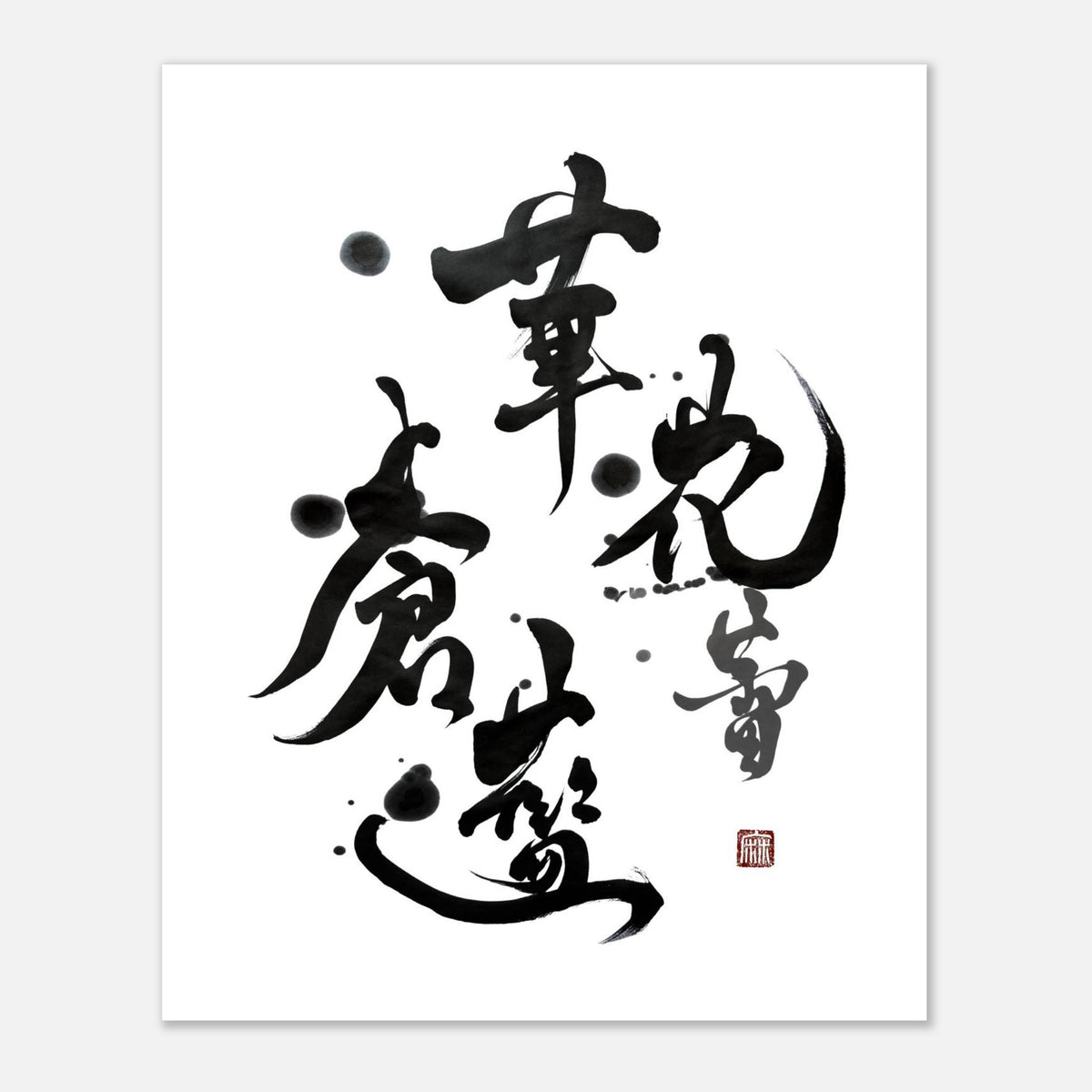
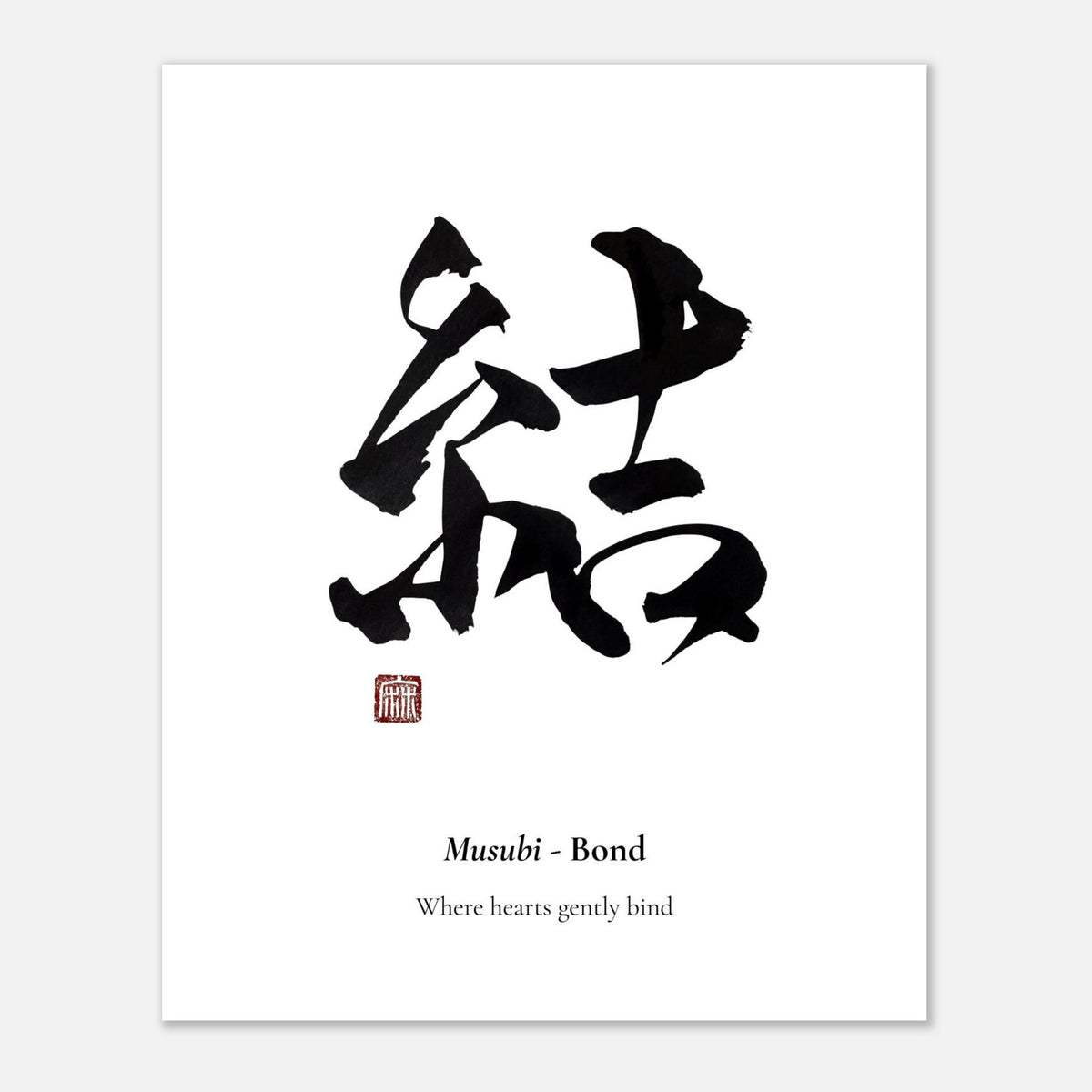
Most Shodō art features a single kanji or short phrase, chosen deliberately for its meaning rather than decorative value. The character itself is the message—there is no hidden text or additional wording. What it says is exactly what it means: a word held in ink, given space to be seen.
How is Japanese calligraphy different from regular handwriting?
Western handwriting prioritizes legibility and consistency. Japanese calligraphy values the opposite—variation in stroke thickness, rhythm, and flow are not flaws but the soul of the piece. There is no erasing or correcting; each stroke is final, which is part of why Shodō is often practiced as a form of meditation rather than simple writing.
How is shodō different from Western calligraphy?
Both are patient, disciplined arts. The difference is mostly one of emphasis. Western calligraphy centres on lettering: well-formed letters, held in consistent rhythm and proportion across a line of text. Shodō, written with a soft brush, values the single stroke that cannot be repeated. The pressure and speed of the hand, the way the ink sinks into the paper, and the white space left around the character all become part of the work. Each piece is a record of one moment.
See the brush in your own home
Each piece is brushed by hand in a single breath, then printed with care and sent framed or unframed. If this idea stayed with you, these are a gentle place to begin.