What Is an Ensō? The Story Behind Tsubomi, One Root, Five States
What Is an Ensō?
A circle, drawn in a single breath. No lifting the brush, no going back to correct a wobble in the line. Wherever the ink runs thin, it stays thin. Wherever the hand hesitates, the whole circle remembers it.
This is an ensō — one of the oldest forms in Zen practice, and one of the simplest. It has no fixed meaning, which is, in a way, exactly its meaning. Depending on who is looking at it, an ensō has been read as the universe, as emptiness, as enlightenment, as the moment the mind lets go of trying to be perfect. Most ensō are left slightly open. The circle doesn't quite close. That gap is not a mistake — it's the point. Nothing whole is ever finished being made.
Five Characters, One Root
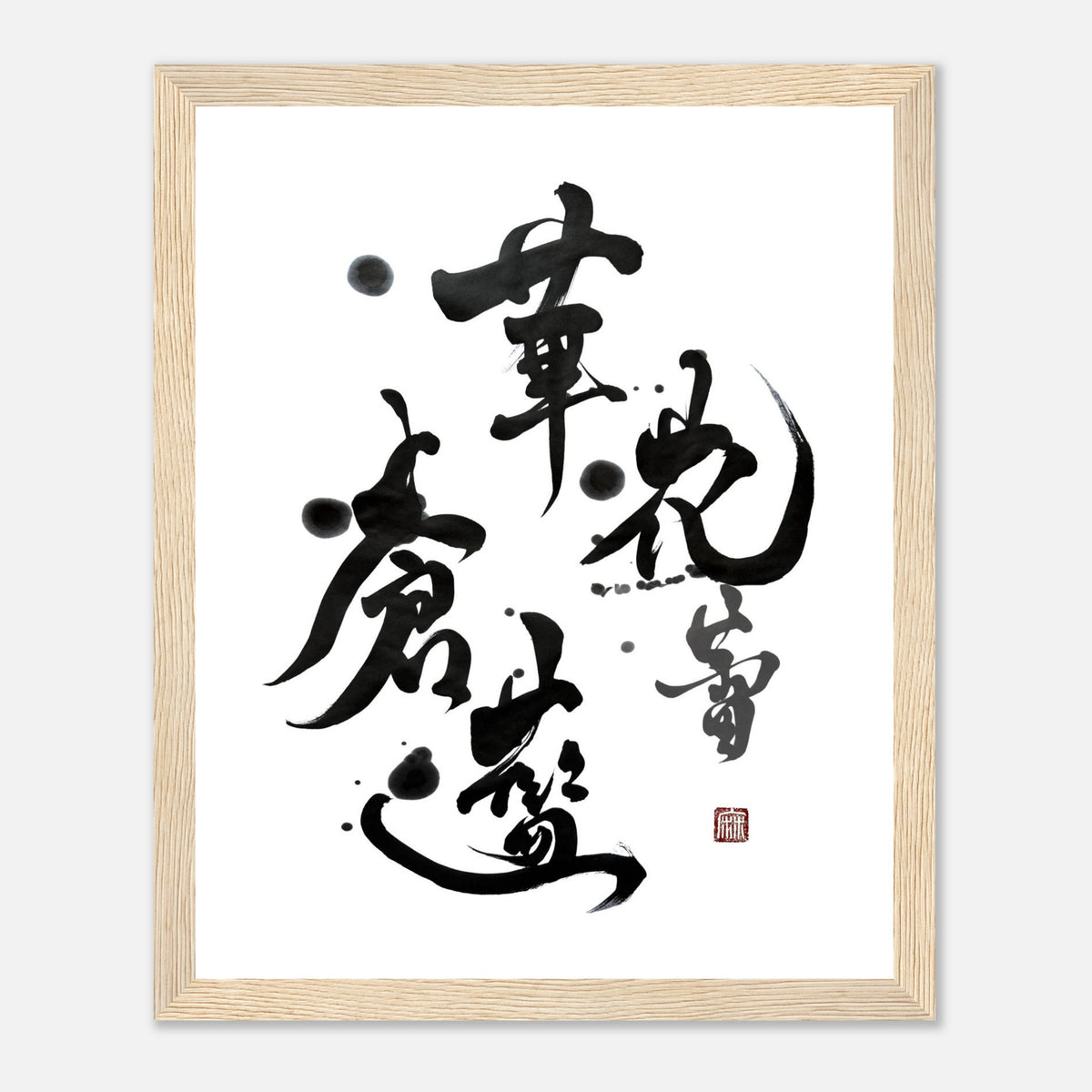
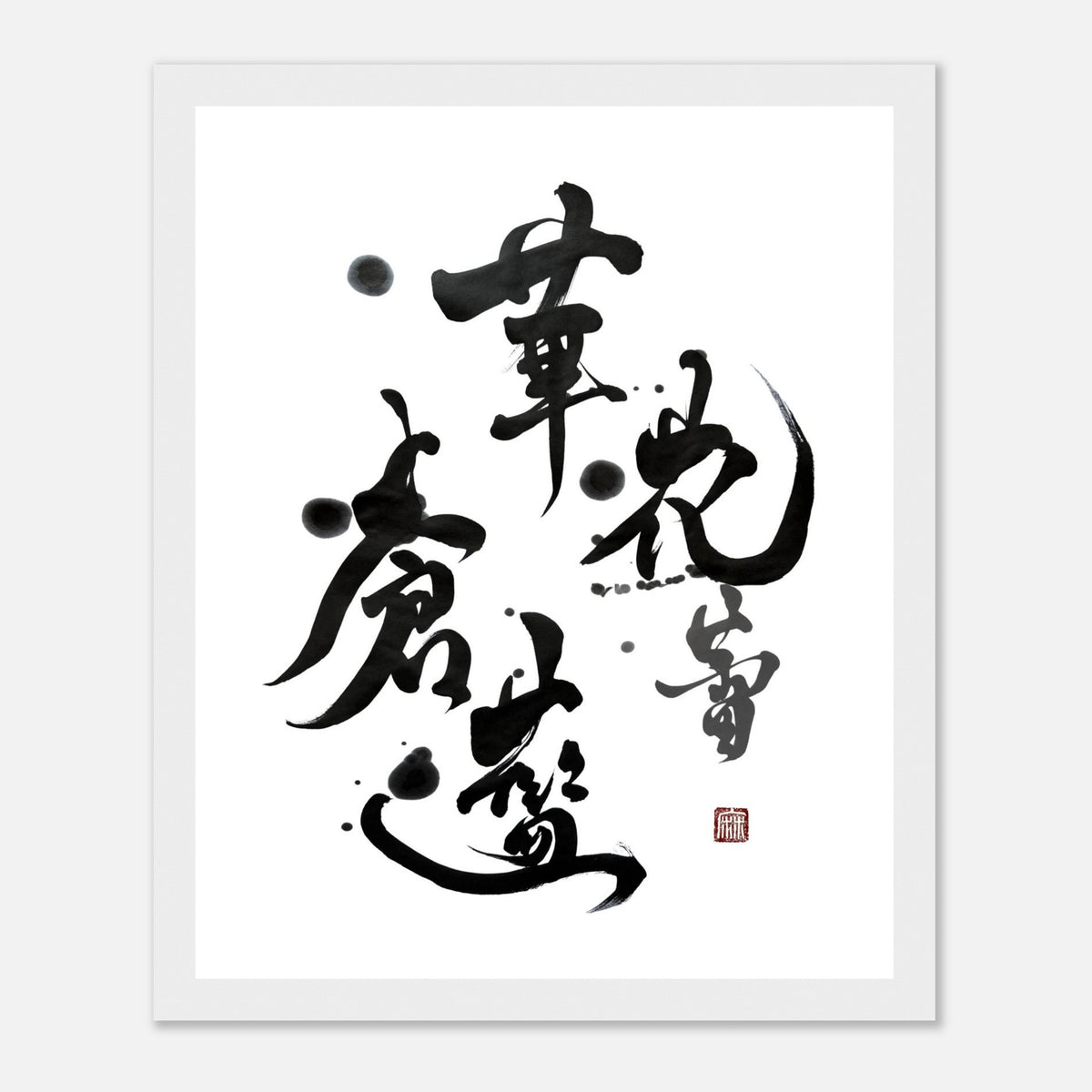
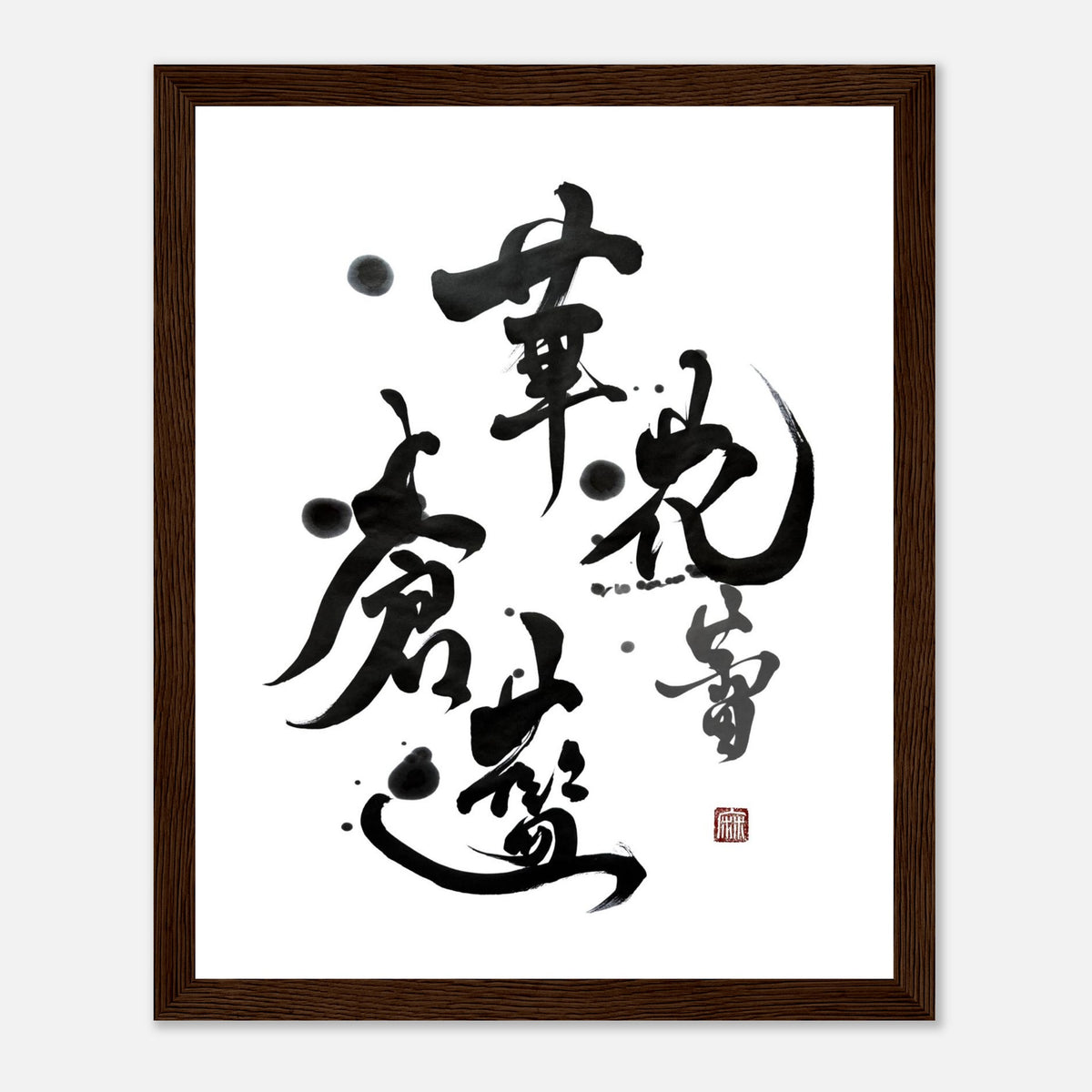
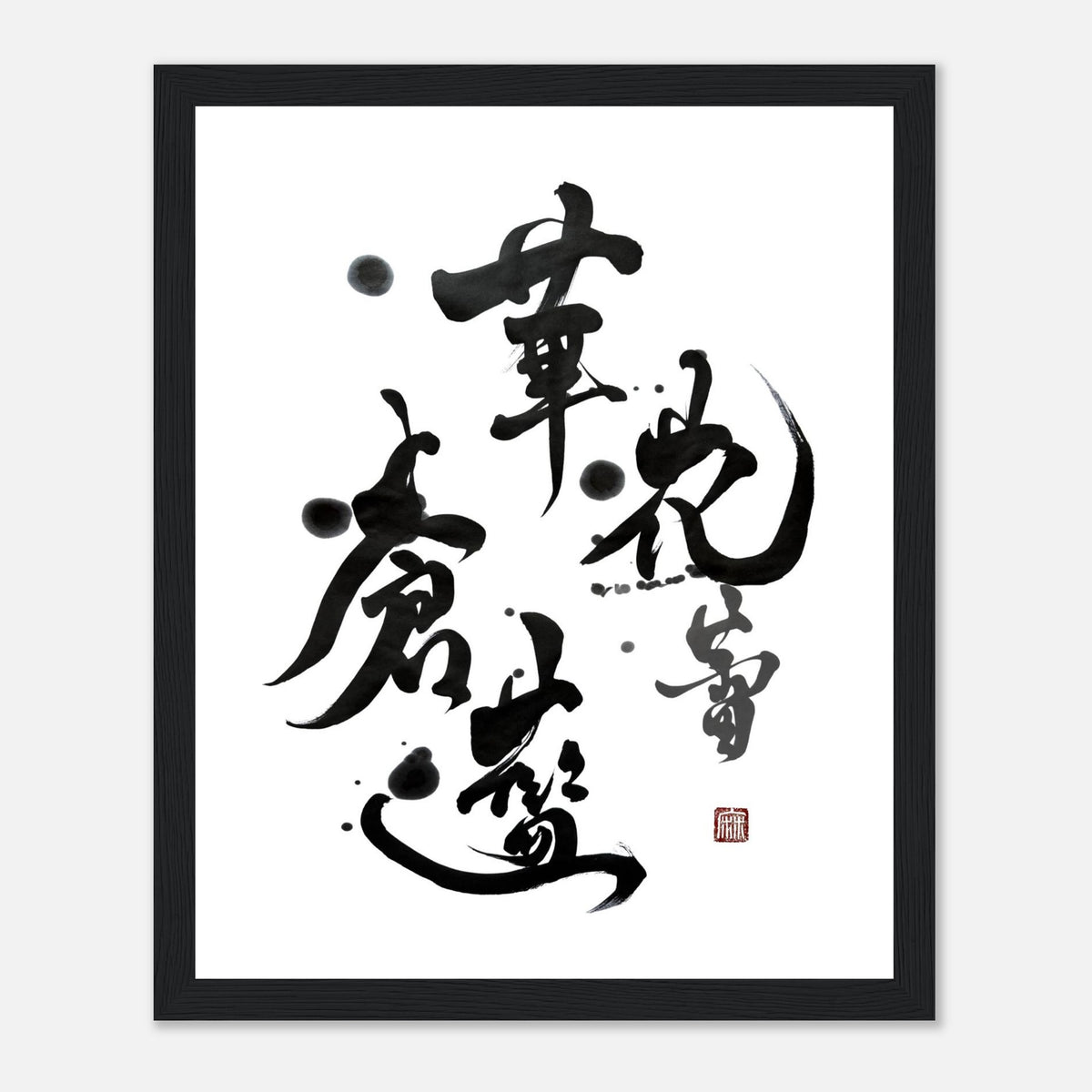
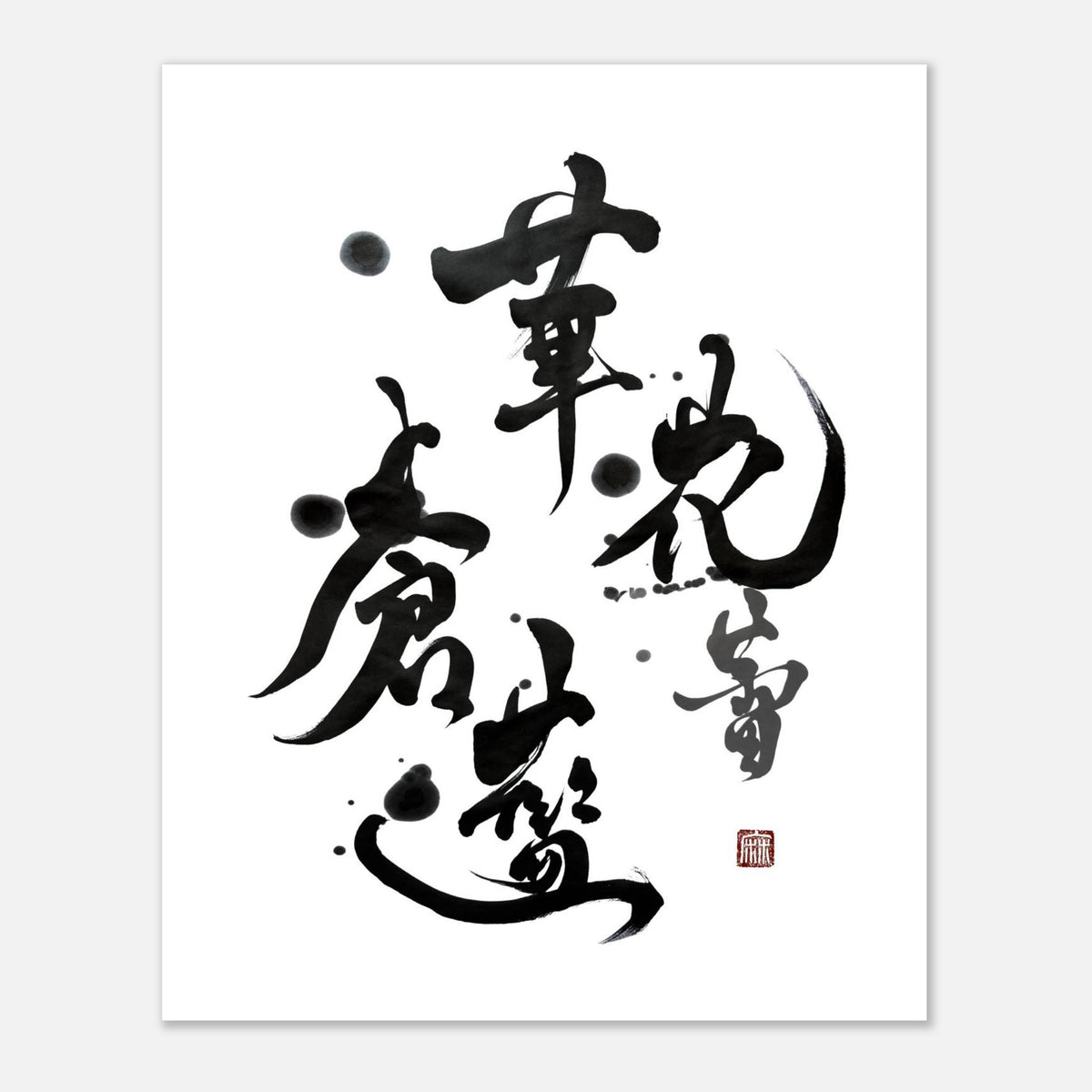
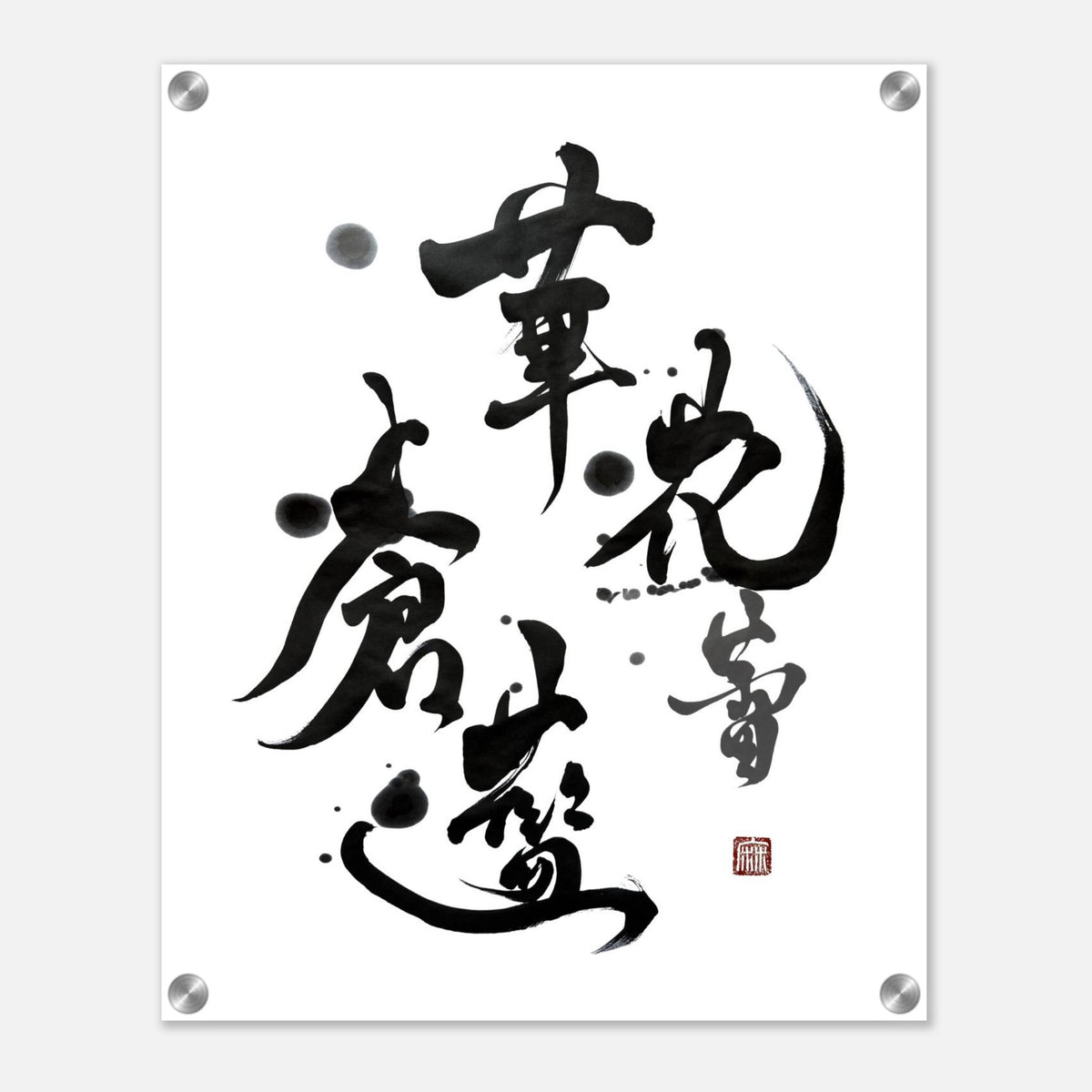
Tsubomi — Ensō of Returning takes this circular form and fills it with five characters, all sharing the same grass radical, the small mark at the top of a kanji that signals "this character grew from a plant." Written clockwise, from the boldest ink to the faintest:
藍 (ai) — indigo. Not just a color, but a transformation: a plant, harvested and processed, becomes this deep, permanent blue.
蒼 (ao) — a vast blue-green, the color of open sky or an old sea. A word that carries distance and time within it.
華 (hana) — a more elevated word for flower, used for splendor, brilliance, a bloom at its most radiant.
花 (hana) — the everyday word for flower. Familiar. Unadorned.
蕾 (tsubomi) — a bud. Not yet opened. All potential, no proof yet of what it will become.
Five different words, five different lives — and yet every one of them grew from the same radical, the same root mark, the same origin.
Reading the Circle Backward
Most pieces about growth move the way we expect growth to move: bud, then bloom, then full flower. Tsubomi moves the other way. The ink starts at its boldest and most resolved — indigo, something fully transformed — and fades, character by character, back to the palest stroke: the bud. Unopened. Beginning again.
Read clockwise, it isn't a story of becoming. It's a story of returning — tracing a full, richly lived state back to the quiet, unformed one it started from. The circle doesn't end at the bud. It only appears to, because an ensō has no end to find.
One Root, Five States
The five characters were never meant to be five different plants. They're five states of the same one — the same root, expressed at different points along a circle that keeps turning. A bud does not vanish once it becomes a flower. A flower does not vanish once it becomes the memory of a flower. Every state stays folded into the ones after it, the way the faintest stroke in this piece still shares its root with the boldest.
It's a fitting way to think about a life, too — not as a line of past selves left behind, one after another, but as one root, still growing, still holding every earlier state within it. Quieter in some seasons. Bolder in others. Never actually gone.
Explore 蕾 Tsubomi - Bud | ensō of returning →
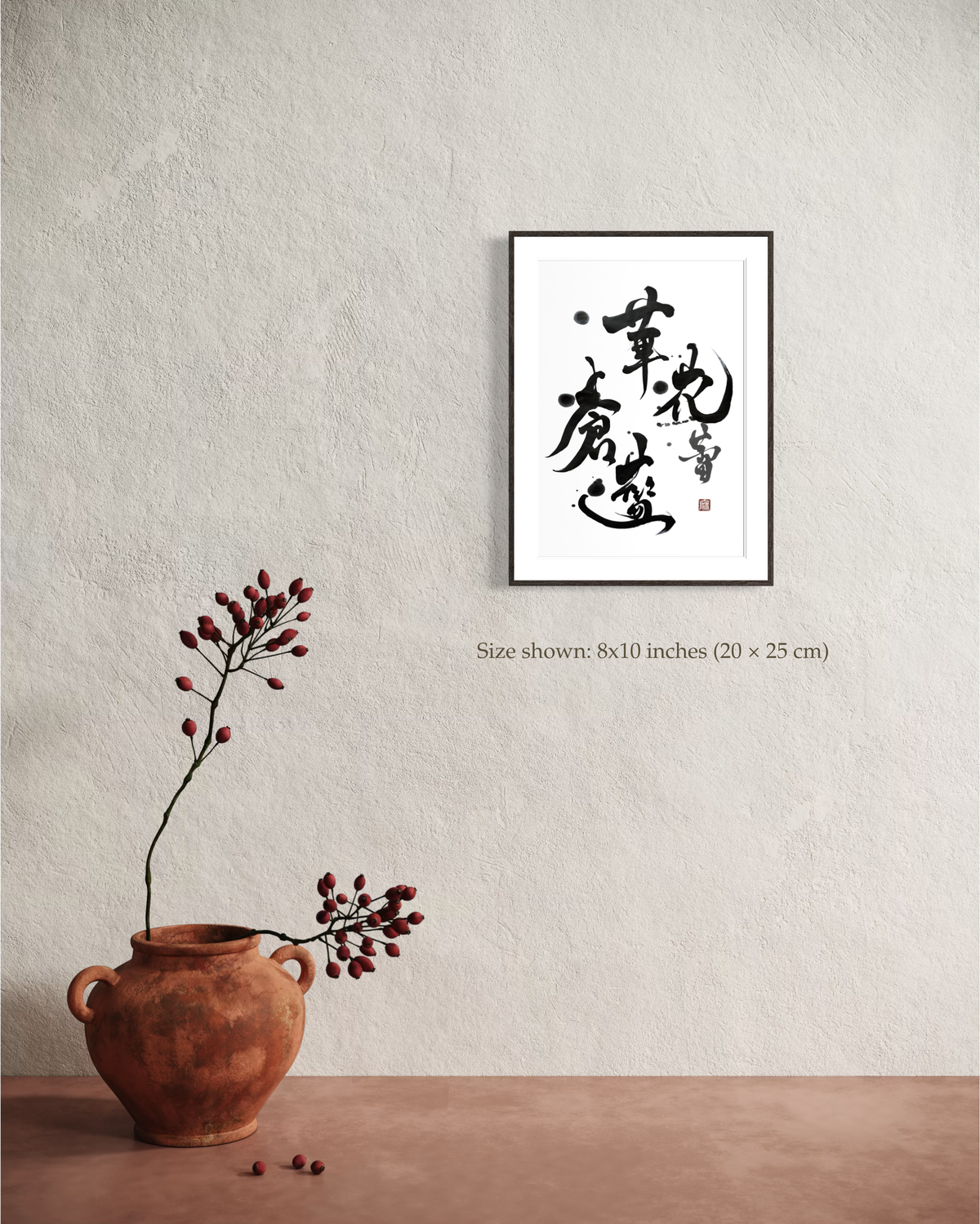
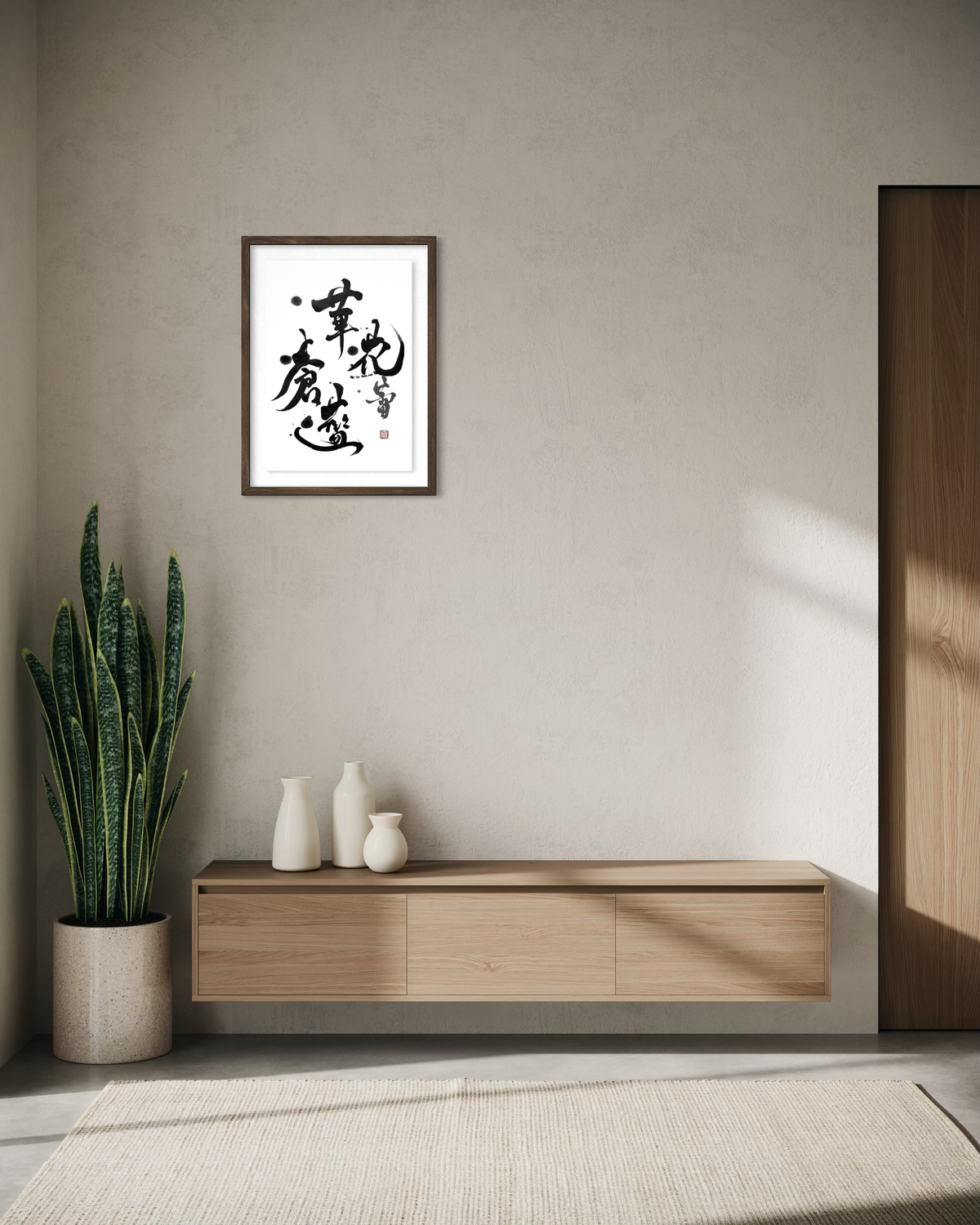
蕾 Tsubomi — Ensō of Returning is part of the Contemporary Prints collection, hand-drawn in sumi ink and available as a fine art print.