There's No English Word for It: How Japanese Thinking Creates Spaces That Feel Alive
Walk into a beautifully decorated Western room and you will feel it immediately — the care, the taste, the intention. Artwork chosen with precision. Furniture that speaks to each other in color and form. Everything in its place.
And yet, something is missing.
Not a thing. Not an object. Something harder to name than that.
The Japanese have a word for what is missing: 間 — Ma. It is often translated as "negative space" or "pause," but that translation loses almost everything that matters. Ma is not emptiness. It is the aliveness of what exists between things. The breath between notes that makes music possible. The silence after a question that allows the answer to arrive.
In Japanese thinking, Ma is not the absence of content. It is content itself.
A Language That Thinks Differently
The philosopher and former Japanese government official Takashi Matsumoto writes about what he calls 日本語思考 — Nihongo Shiko, or Japanese-language thinking. His argument is striking: the structure of the Japanese language itself produces a different relationship to the world.
In English, every sentence needs a subject. I. You. It. The self is grammatically mandatory — always at the center, always distinct from everything around it. Japanese grammar doesn't require this. The self is often implied, or dissolved entirely into context. Who is doing the action matters less than the relationship between the action, the space, and the other people present.
This isn't just linguistic trivia. It shapes how Japanese people perceive a room.
A Western interior is typically designed as a collection of objects: the right sofa, the right rug, the right print. Each piece is chosen for what it is. A Japanese interior is designed around relationships — between object and space, between light and shadow, between the inhabitant and the walls. Each element is chosen for what it does to everything else.
寄り添う — The Word That Has No Translation
There is another Japanese concept that Matsumoto centers his thinking around: 寄り添う (yorisou). The closest English translation is "to be alongside" or "to lean in gently toward." But even that misses it.
Yorisou describes a specific kind of presence — not intrusive, not distant, but quietly, completely with. A mother sitting beside a sleeping child, not doing anything, just being there. A friend who doesn't offer solutions but simply stays.
It is the quality of presence that does not demand attention but makes everything feel less alone.
This is what a well-chosen piece of art can do for a room.
Not every piece achieves this. Most art decorates — it fills space, establishes aesthetic, signals taste. But some pieces yorisou. They lean in, quietly, toward whoever enters. They hold something without speaking loudly about it. They change the feeling of being in the room without insisting on being noticed.
Why a Single Kanji Does What a Gallery Wall Cannot
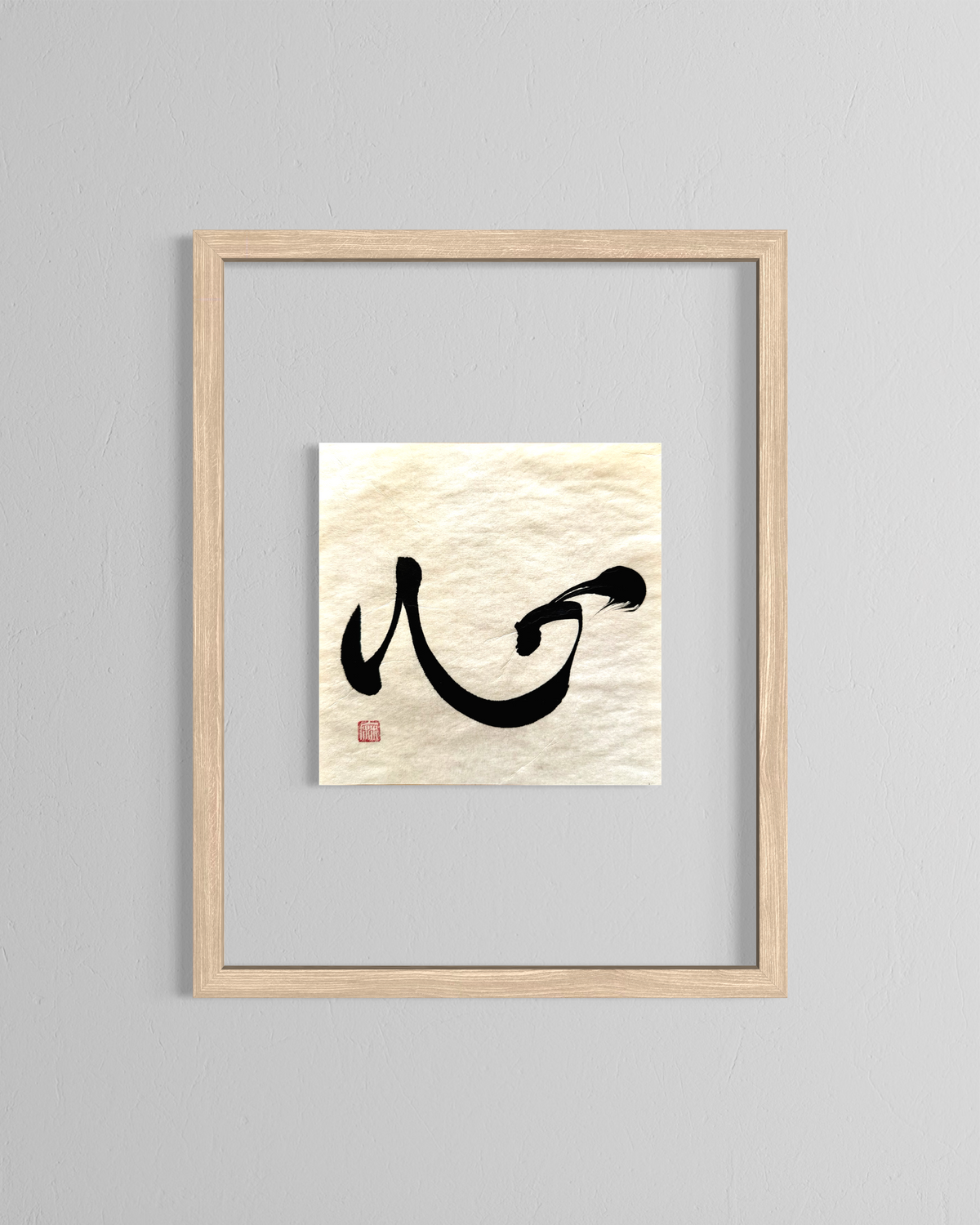
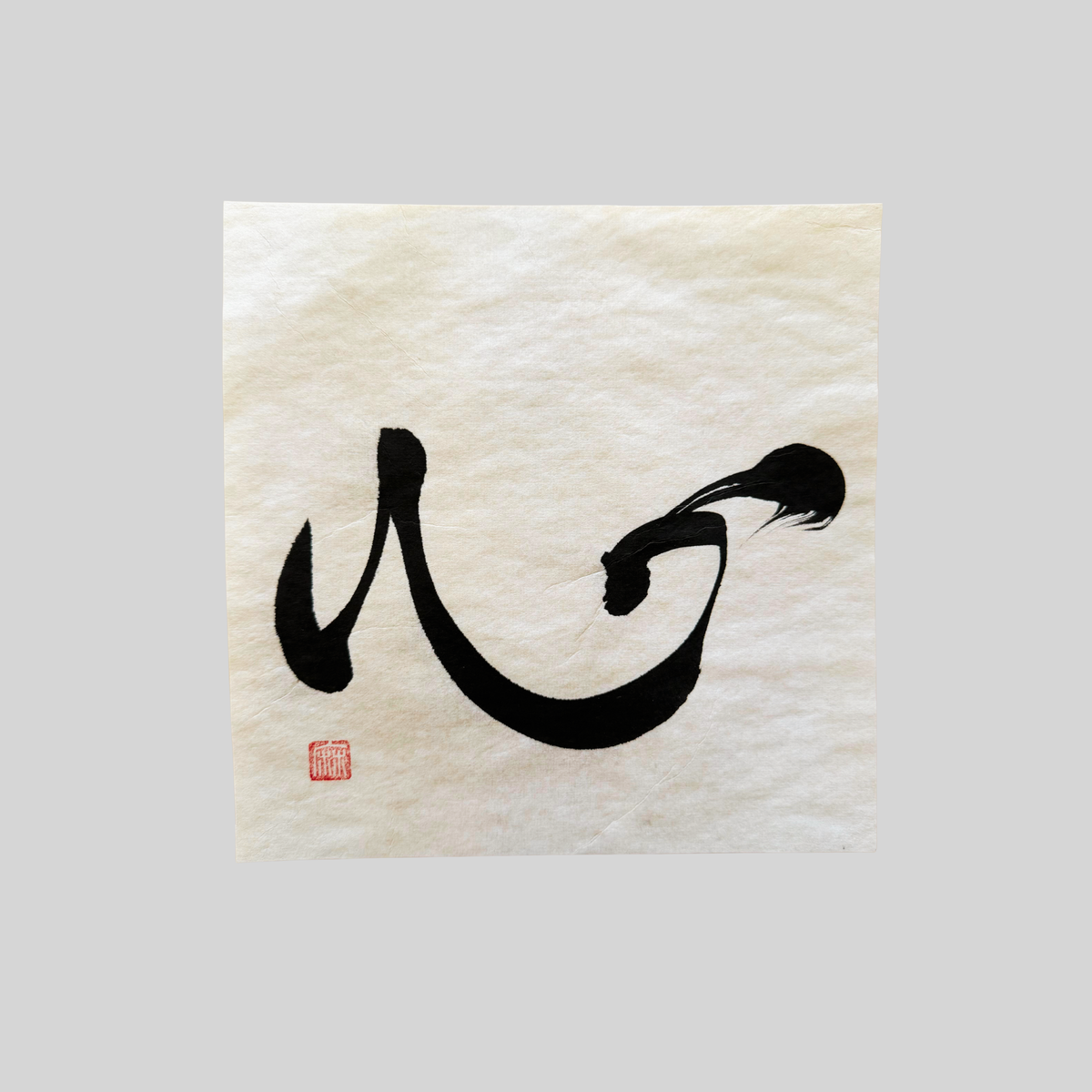
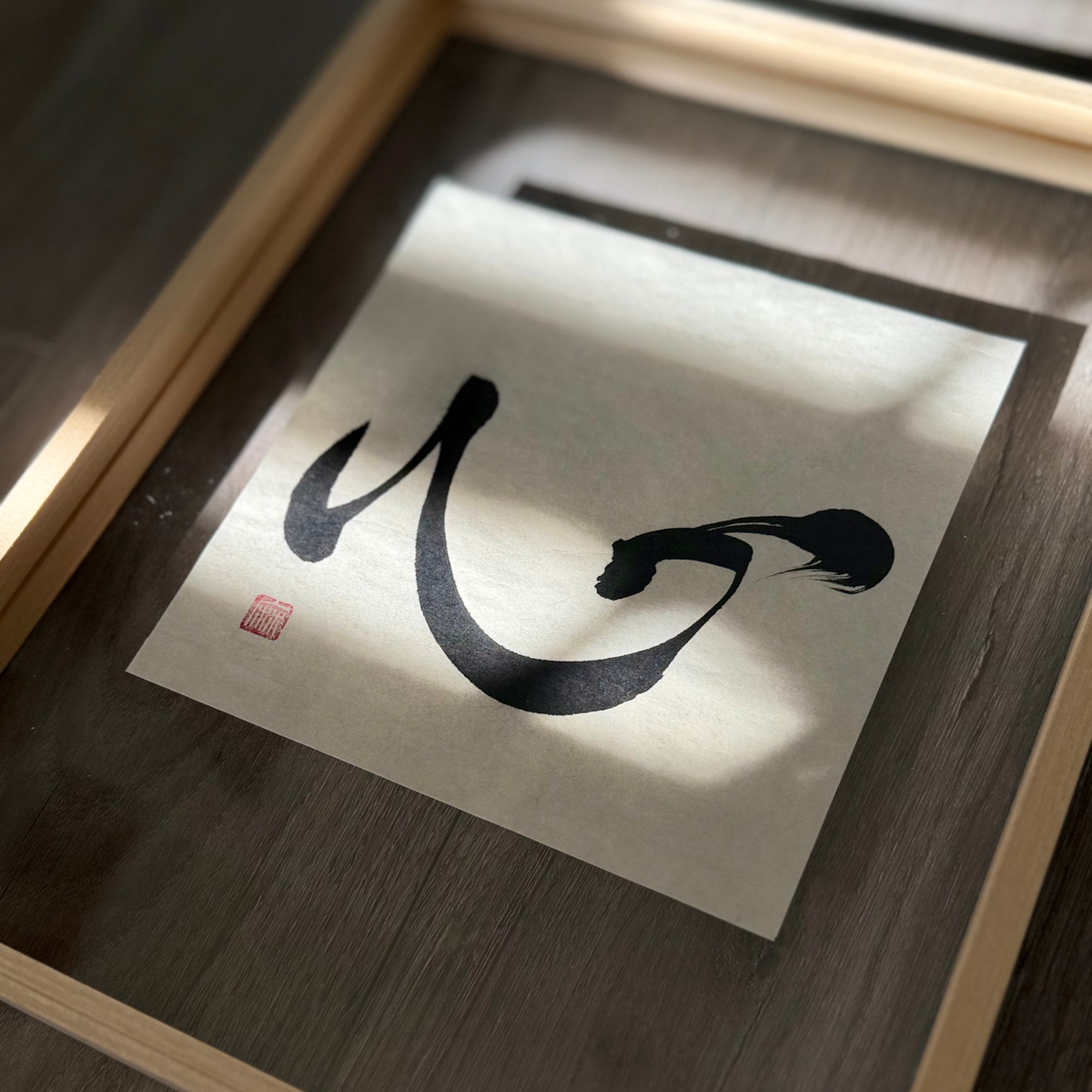
In Shodō — the Japanese art of calligraphy — every brushstroke is made once. There is no correction. No undo. The ink meets the paper in a moment of complete commitment, and whatever happens in that moment is the work.
This is not technique. It is philosophy made physical.
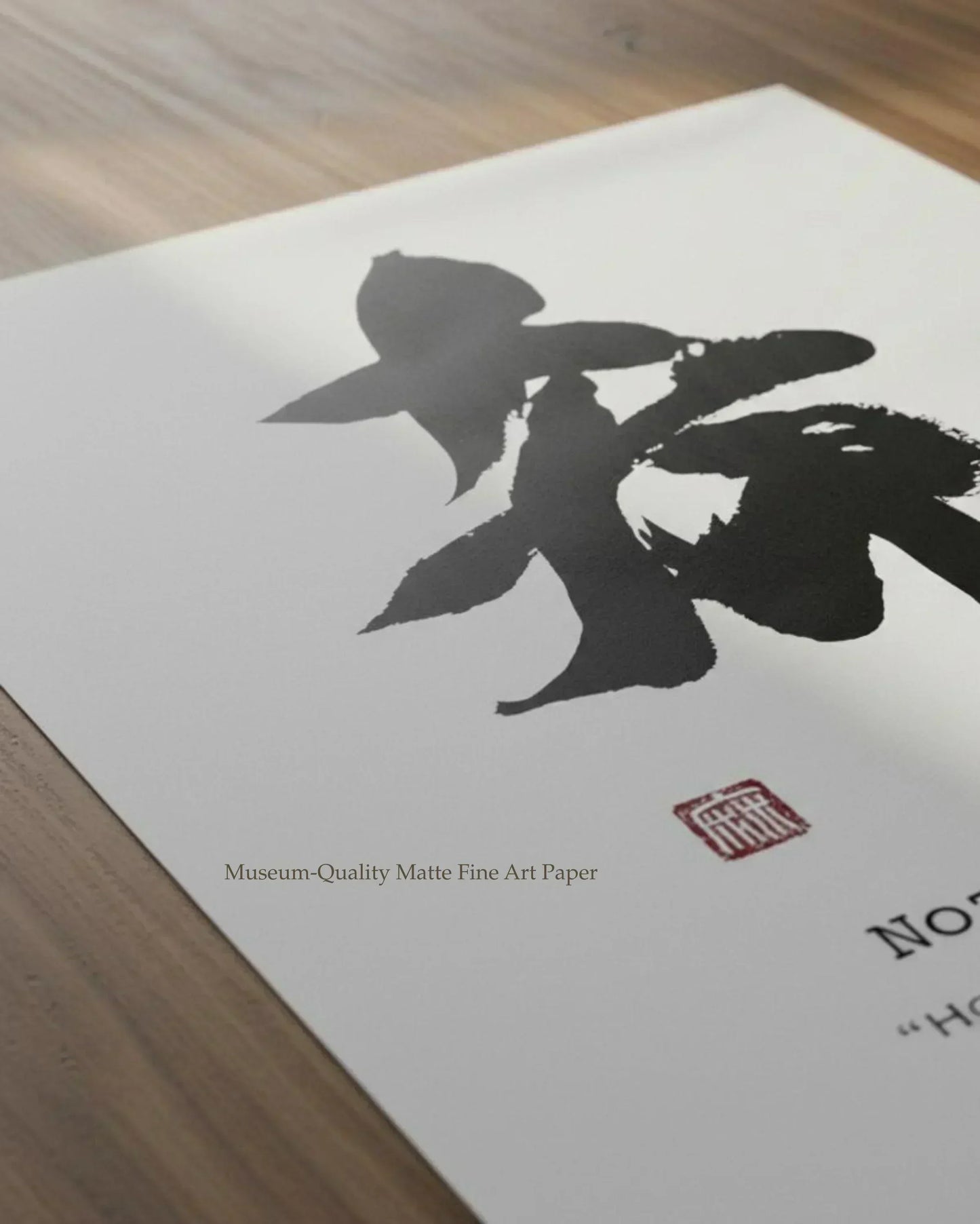
When a calligrapher writes 希 (Nozomi — hope), the character is not simply drawn. It is held, briefly, in the body before it touches the page. The breath, the weight of the brush, the quality of attention — all of it enters the stroke. What you see on the paper is not just ink arranged in a meaningful shape. It is a record of a moment of genuine intention.
This is why a single kanji on a wall can do something that a gallery of beautiful prints cannot.
A gallery wall decorates space. A kanji inhabits it.
It brings with it the presence of the person who made it — the pause before the stroke, the silence after. It carries Ma inside itself. And because of that, it creates Ma in the room around it.
The Room as a Living Thing
In traditional Japanese aesthetics, a room is not a backdrop. It is a participant.
The concept of 世間 (seken in its older sense) — the shared world, the relational space between people — extends to physical environments. A room that is simply filled with objects is a room that has not yet woken up. A room that has been considered as a relationship between elements — space, light, stillness, and one piece of work that holds meaning — is a room that is alive.
This is why Japandi interiors feel different from Scandinavian minimalism, even though they share many visual qualities. Scandinavian minimalism strips away the unnecessary. Japanese minimalism goes further: it asks what each element gives to everything else. Not just what is there, but what is present.
An empty wall in a Scandinavian interior is clean. An empty wall in a Japanese interior is listening.
How to Choose Art the Japanese Way
When choosing a piece for your home, the Western instinct is to ask: Does this look right? Does it match? Is this beautiful?
The Japanese instinct is different: What does this bring into the room? What does it hold? What changes when it is here?
This is a harder question to answer in a shop or on a screen. It requires sitting with a piece for a moment. Letting it be present without immediately deciding. Allowing the relationship between you and the work to exist before you name it.
Some things to feel for:
Stillness. Does the piece quiet something in you, or does it compete for attention? Art that yorisou asks nothing. It is simply there.
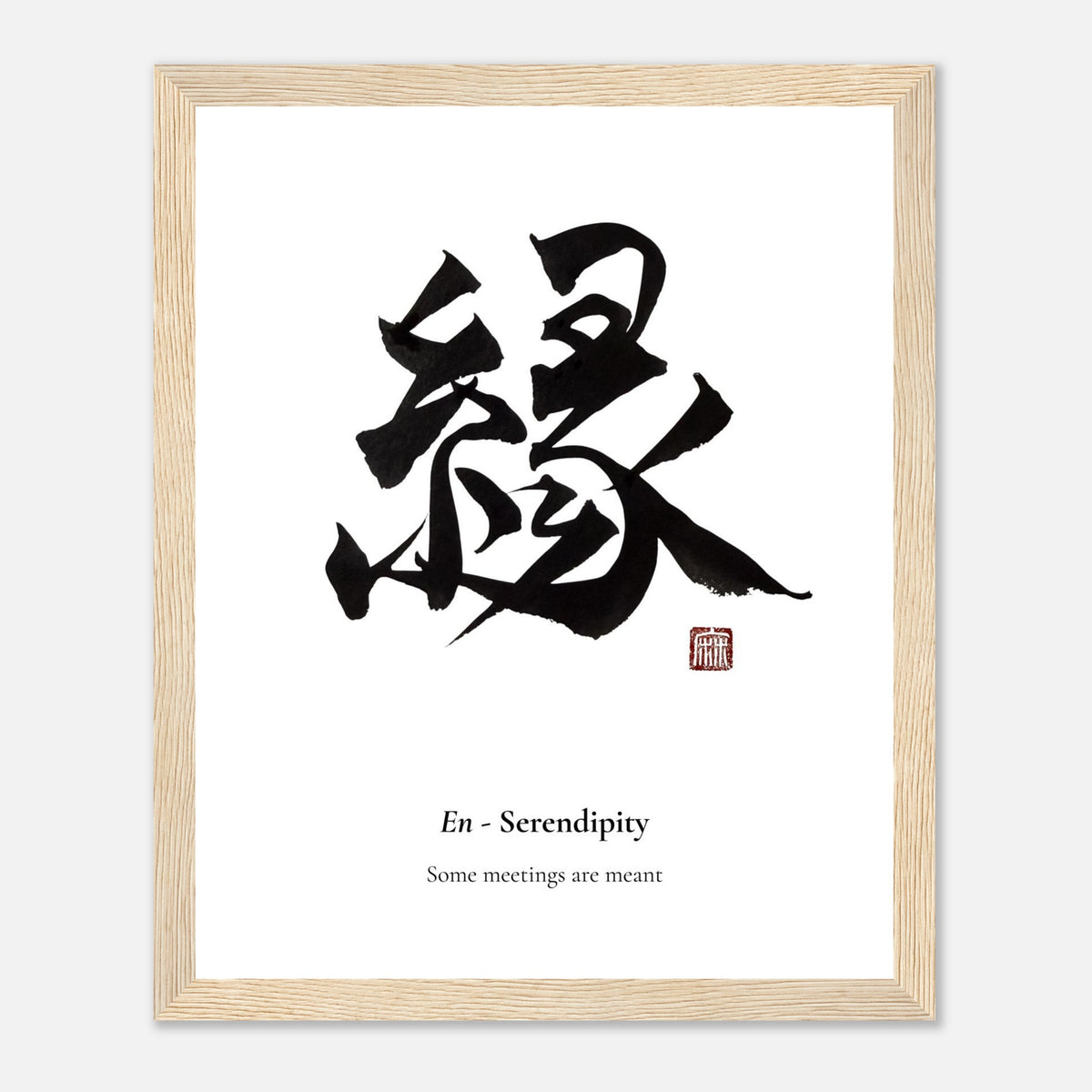
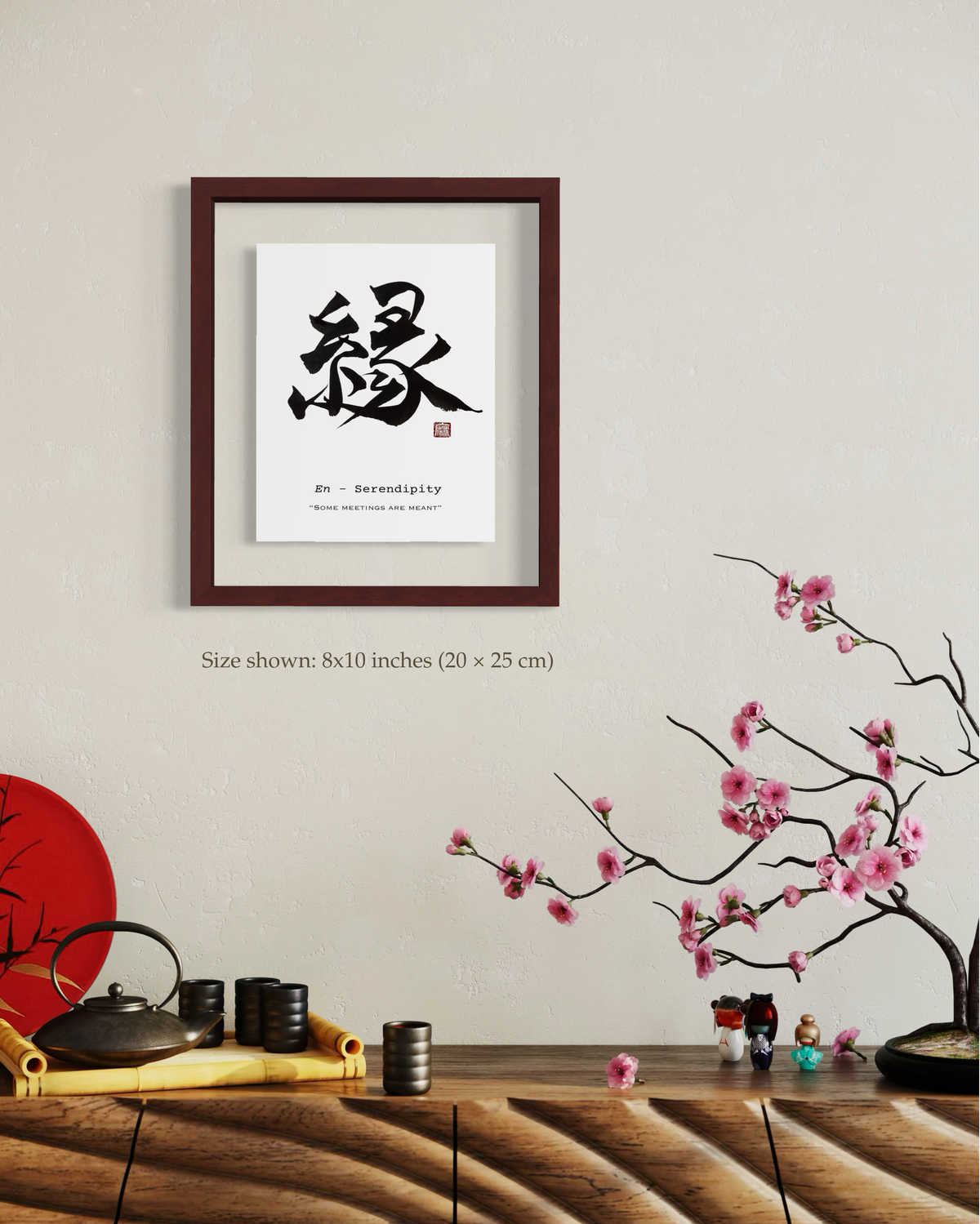
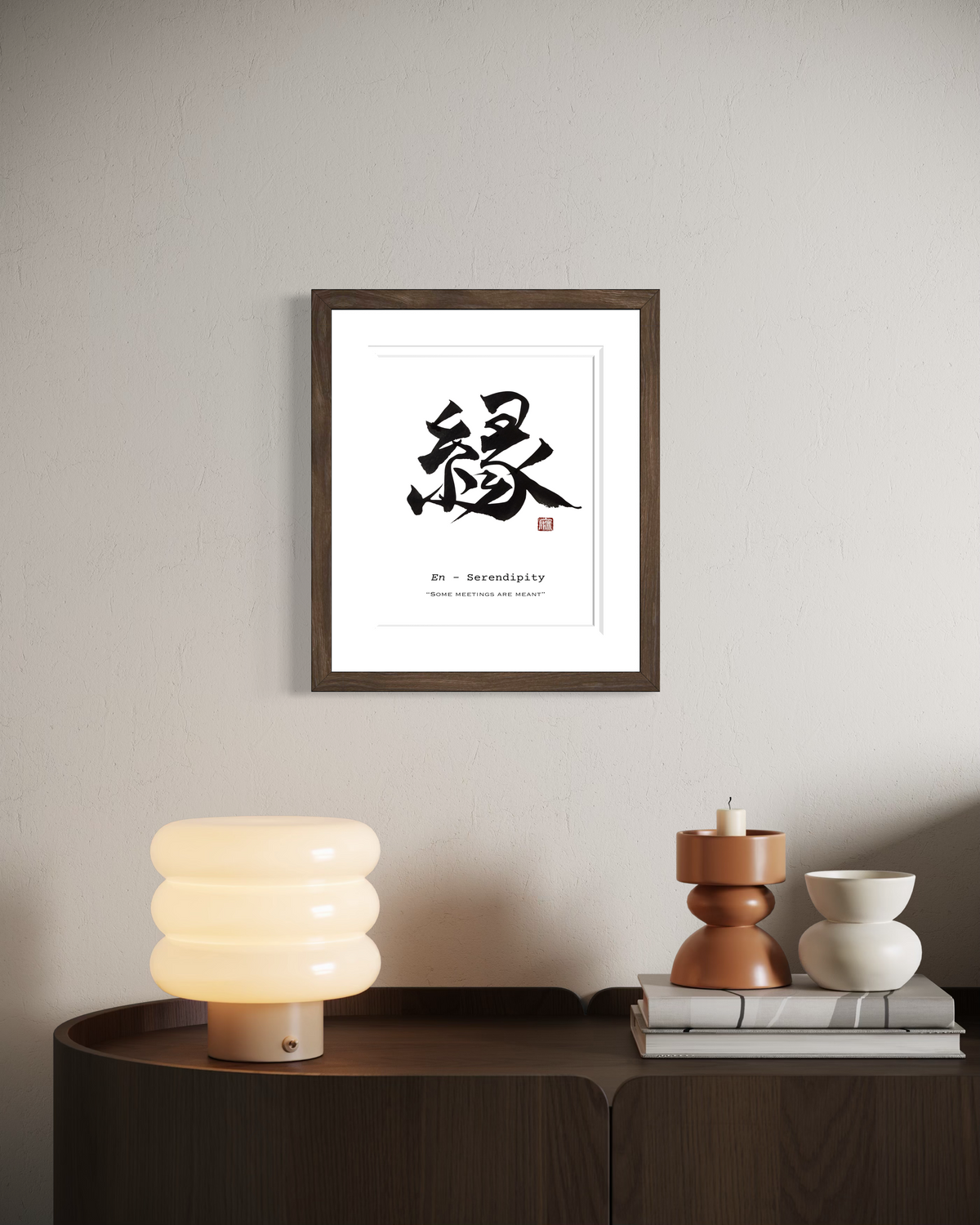
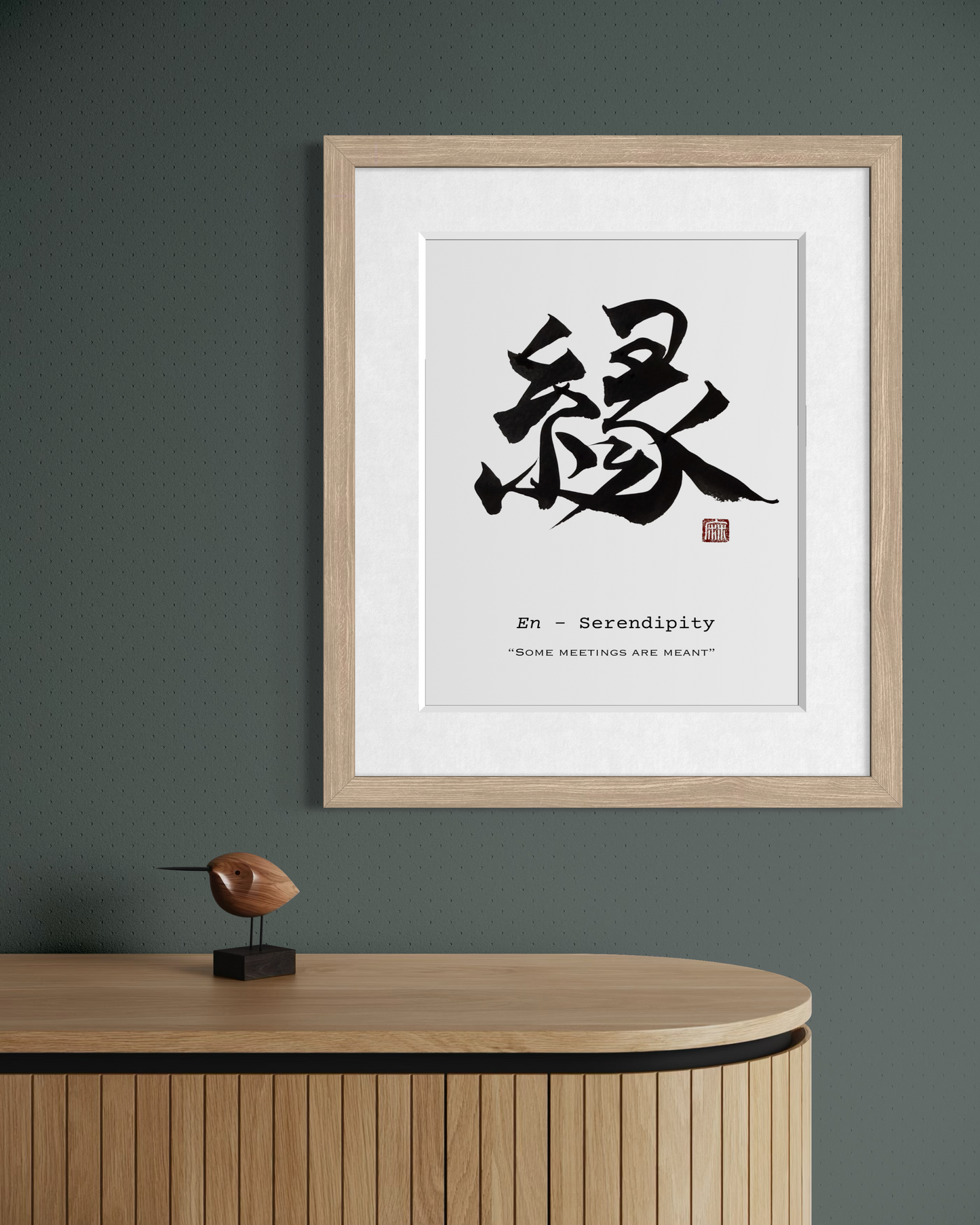
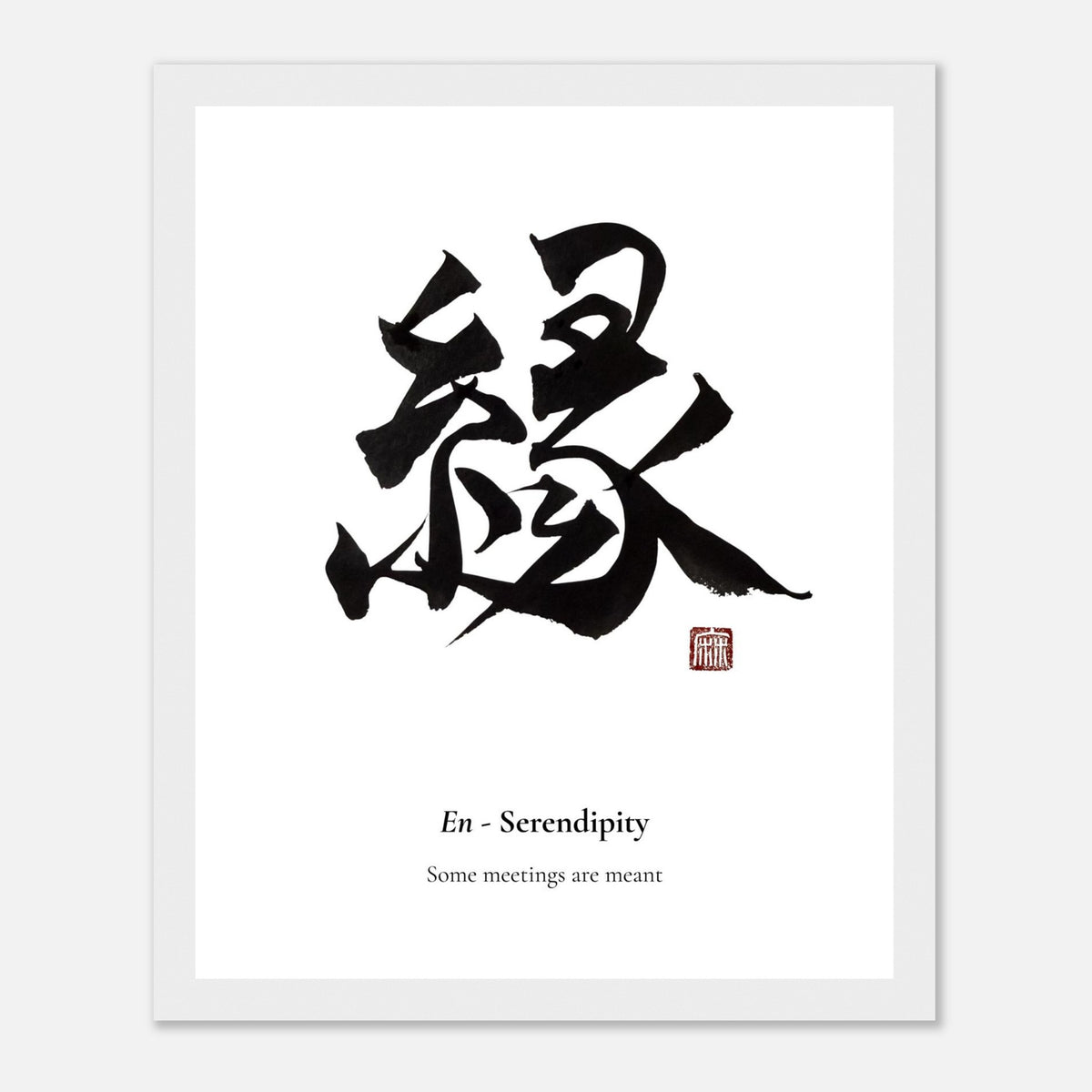
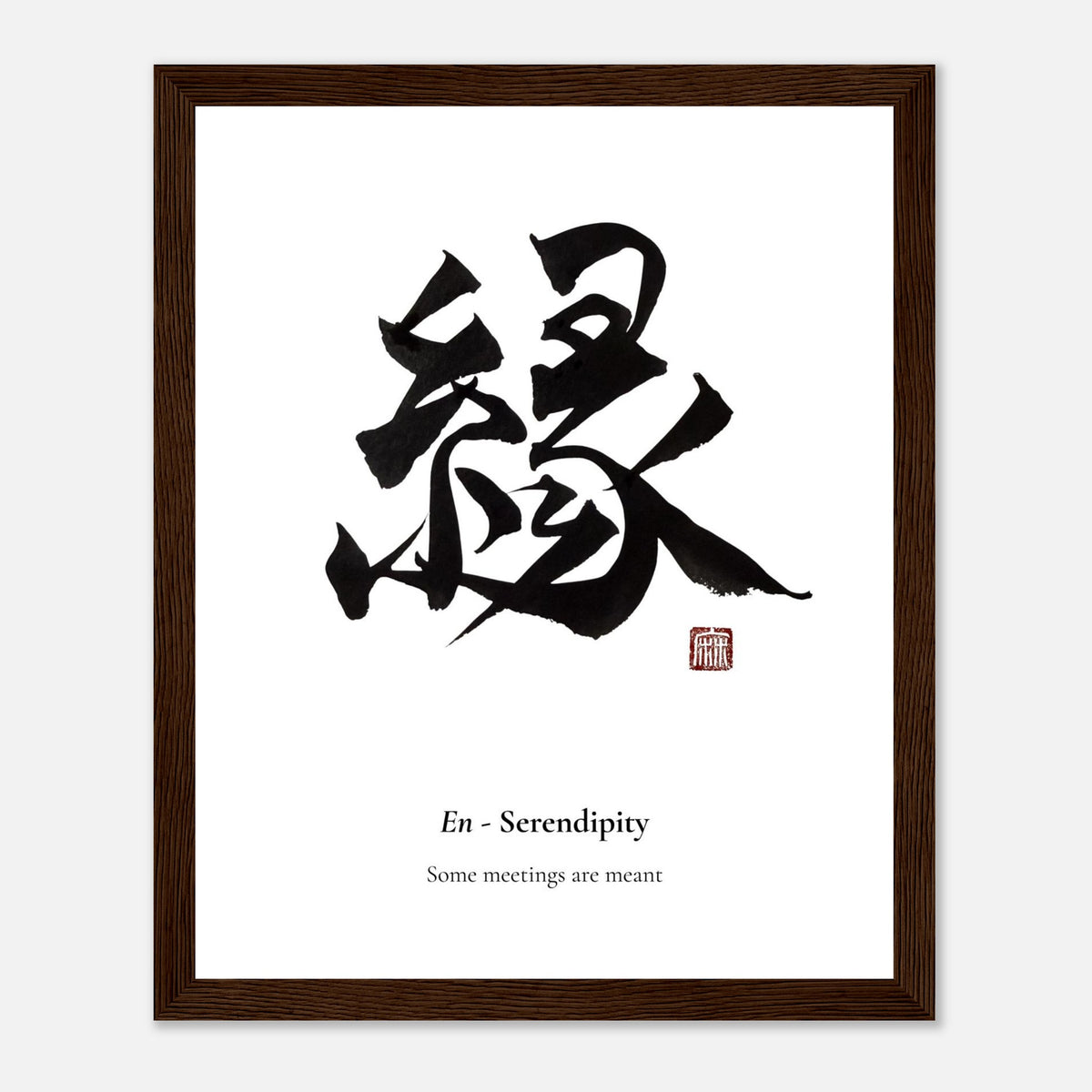
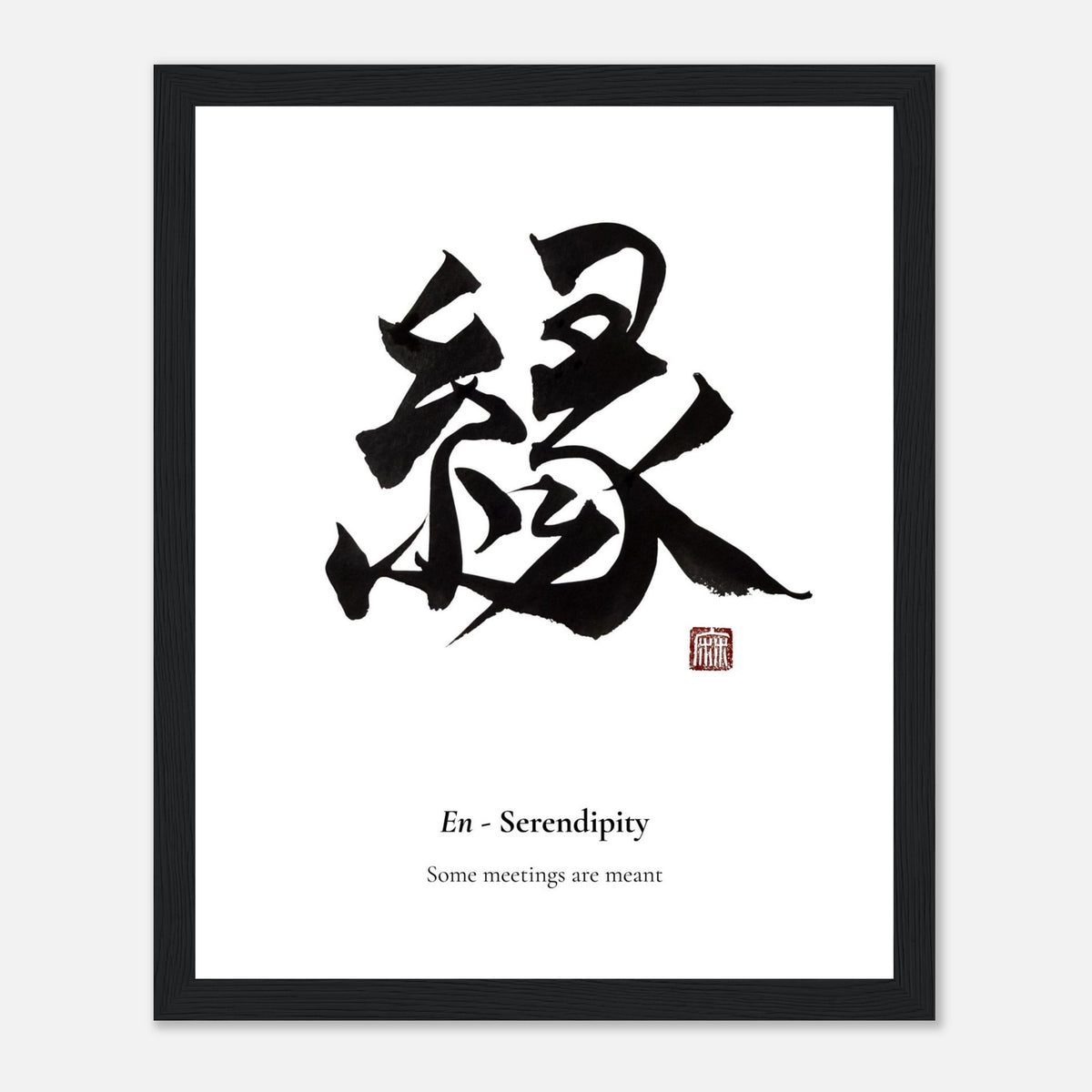
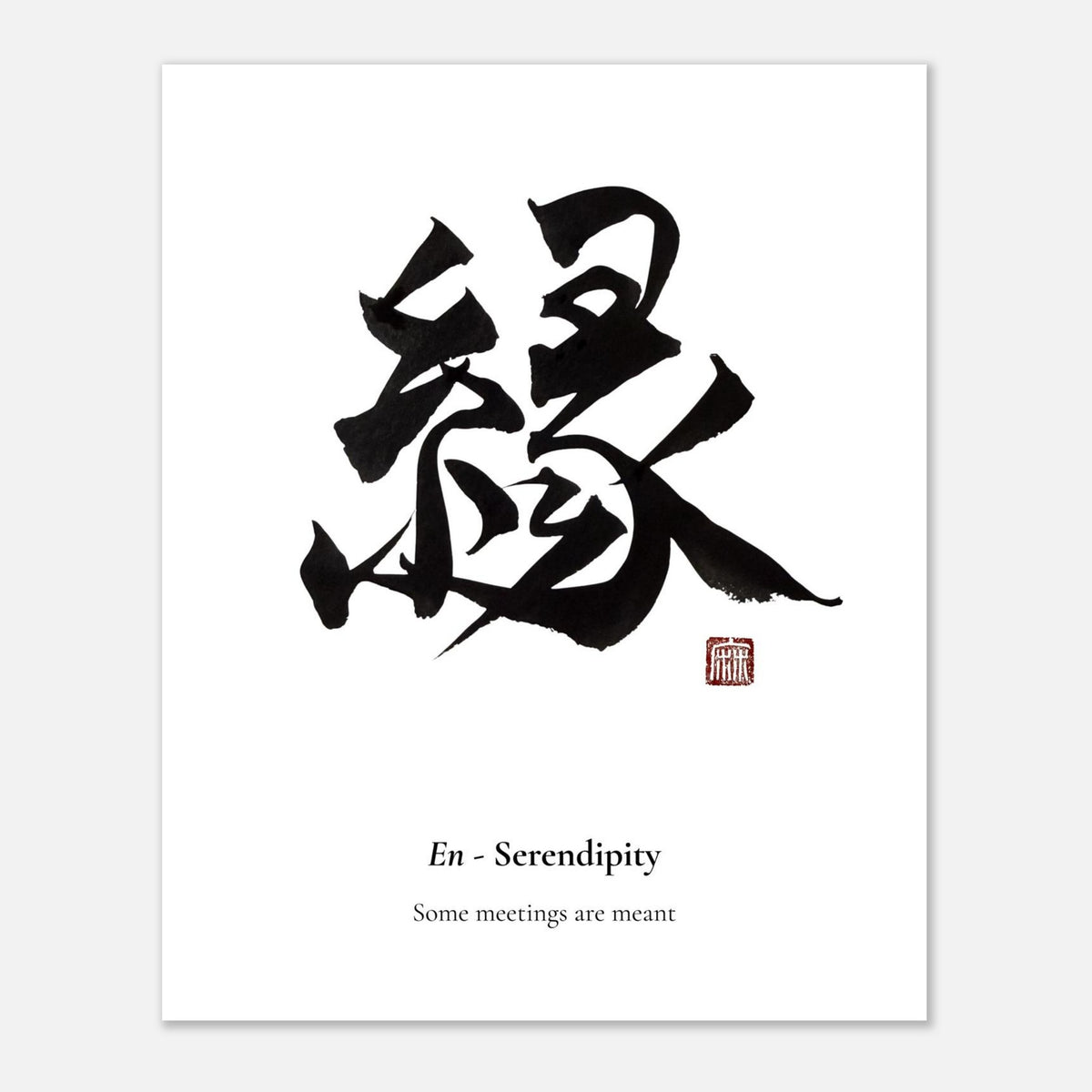
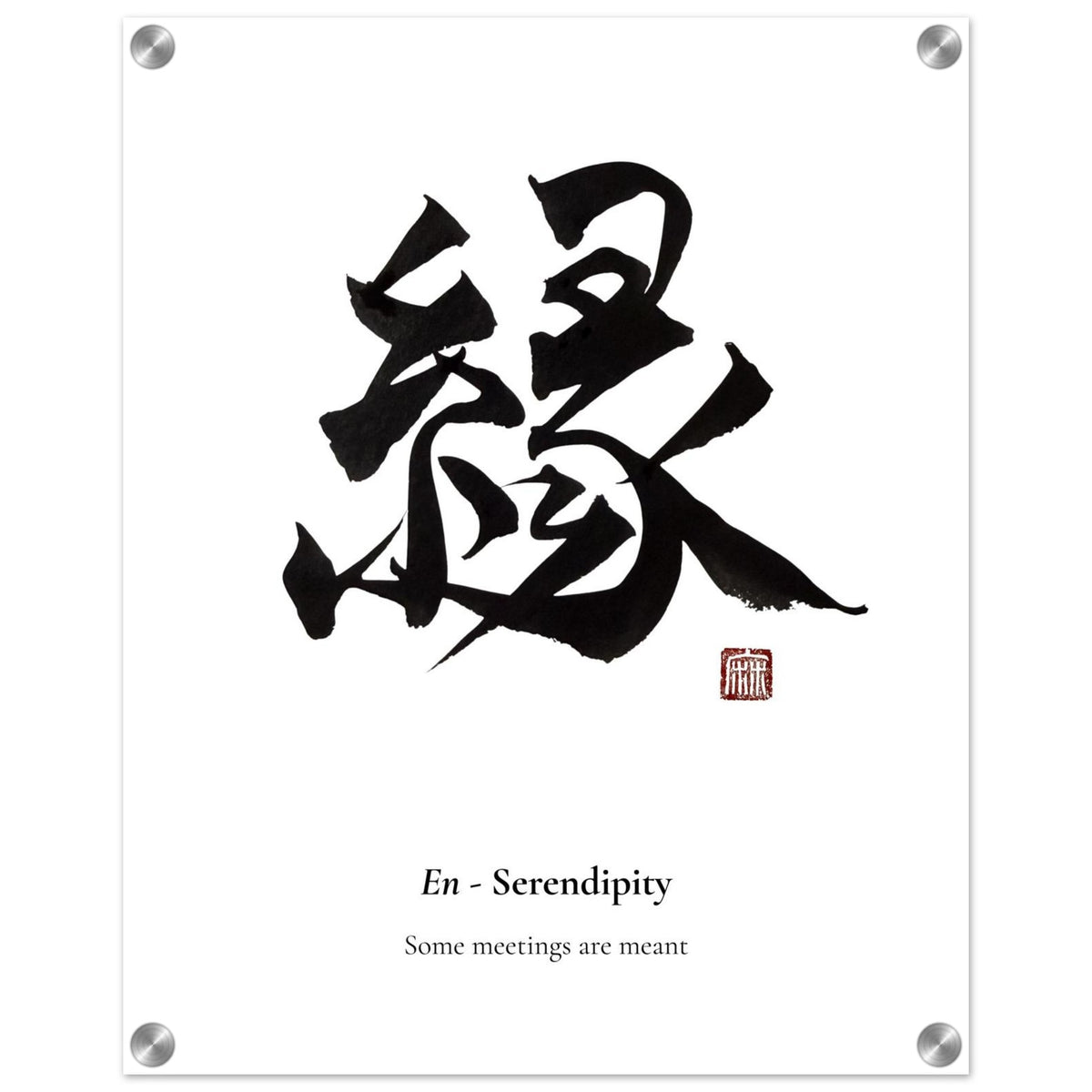
Meaning that is open, not closed. A kanji like 縁 (En — serendipity) carries meaning without declaring it. It does not tell you what to feel. It offers a container and lets you bring what you need to it.
The presence of the maker. Handcrafted work — especially work made in a single committed gesture, as Shodō is — carries something that printed or digitally produced work does not. The moment of making is still in it. You feel it without knowing you feel it.
The Thing That Was Missing
Return to that beautifully decorated Western room. The care, the taste, the intention. Everything chosen with precision.
What was missing was not another object.
It was a moment of yorisou — a quiet presence that leans in, holds space, and makes the room feel like it is for you. Not just designed. Inhabited.
One piece, made with intention, can do this.
You don't need to fill the walls. You need to find the one thing that brings the room to life.
BrushForma creates contemporary Japanese calligraphy art rooted in Shodō philosophy — hand-brushed sumi ink work for the intentional home. Explore the collections at brushforma.com.