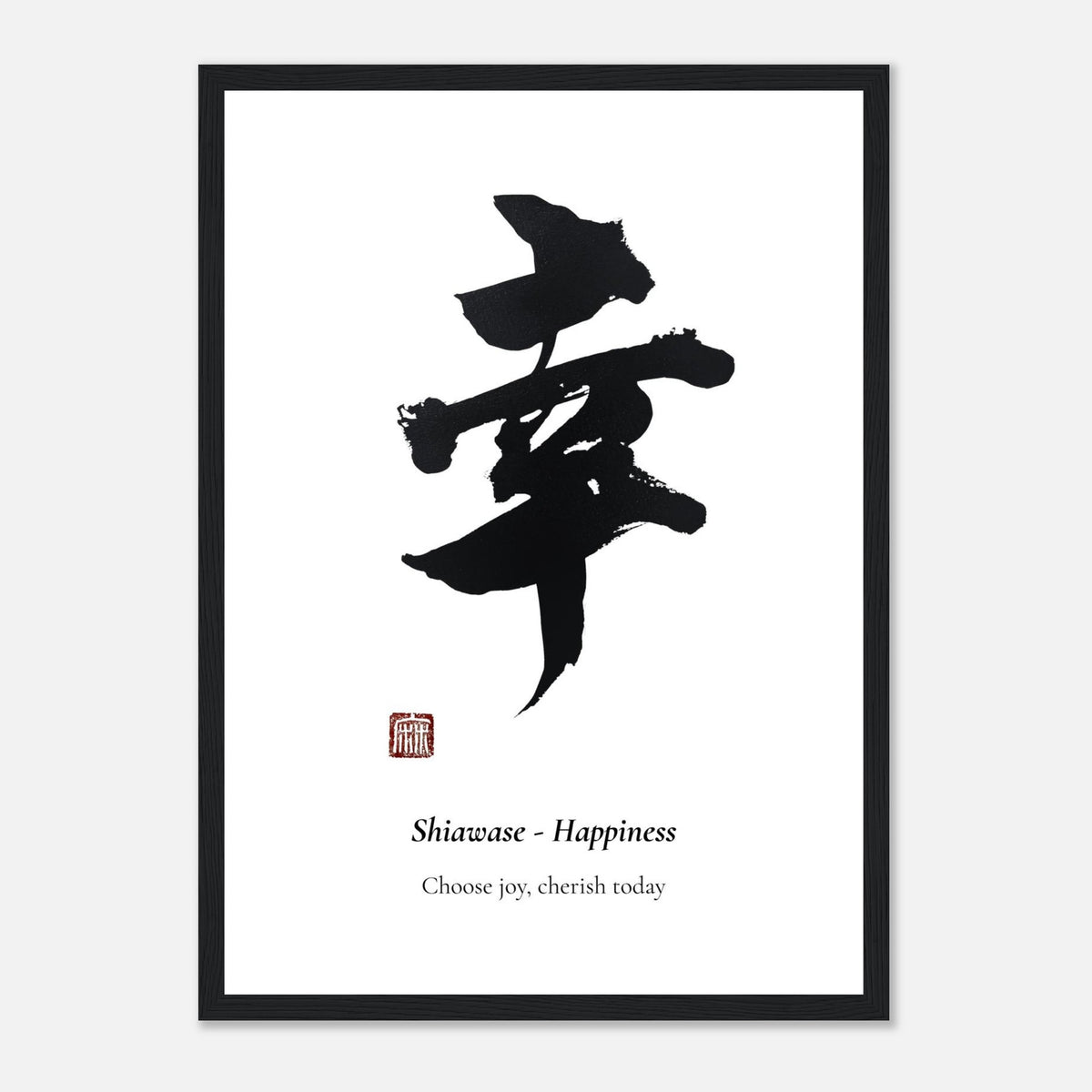
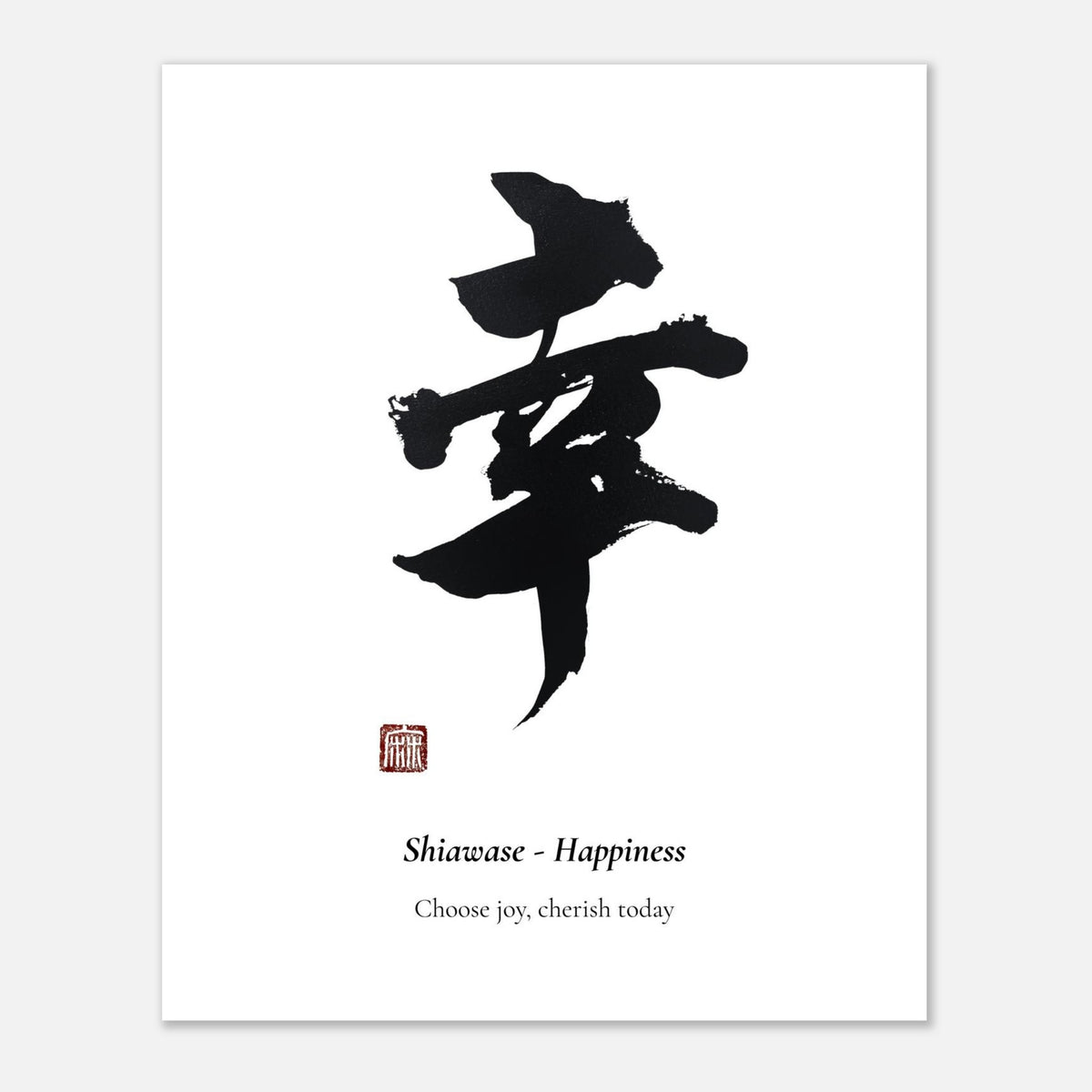
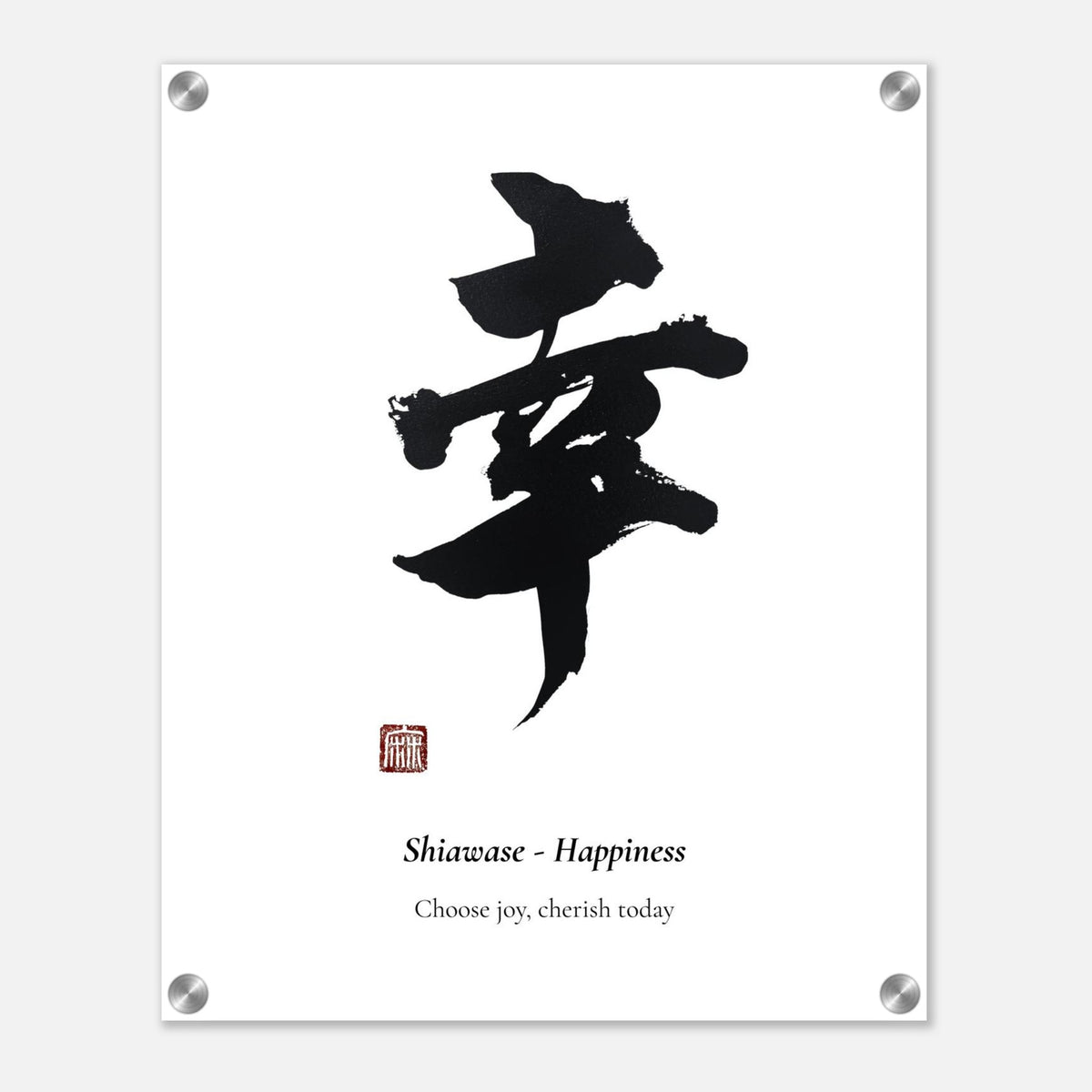
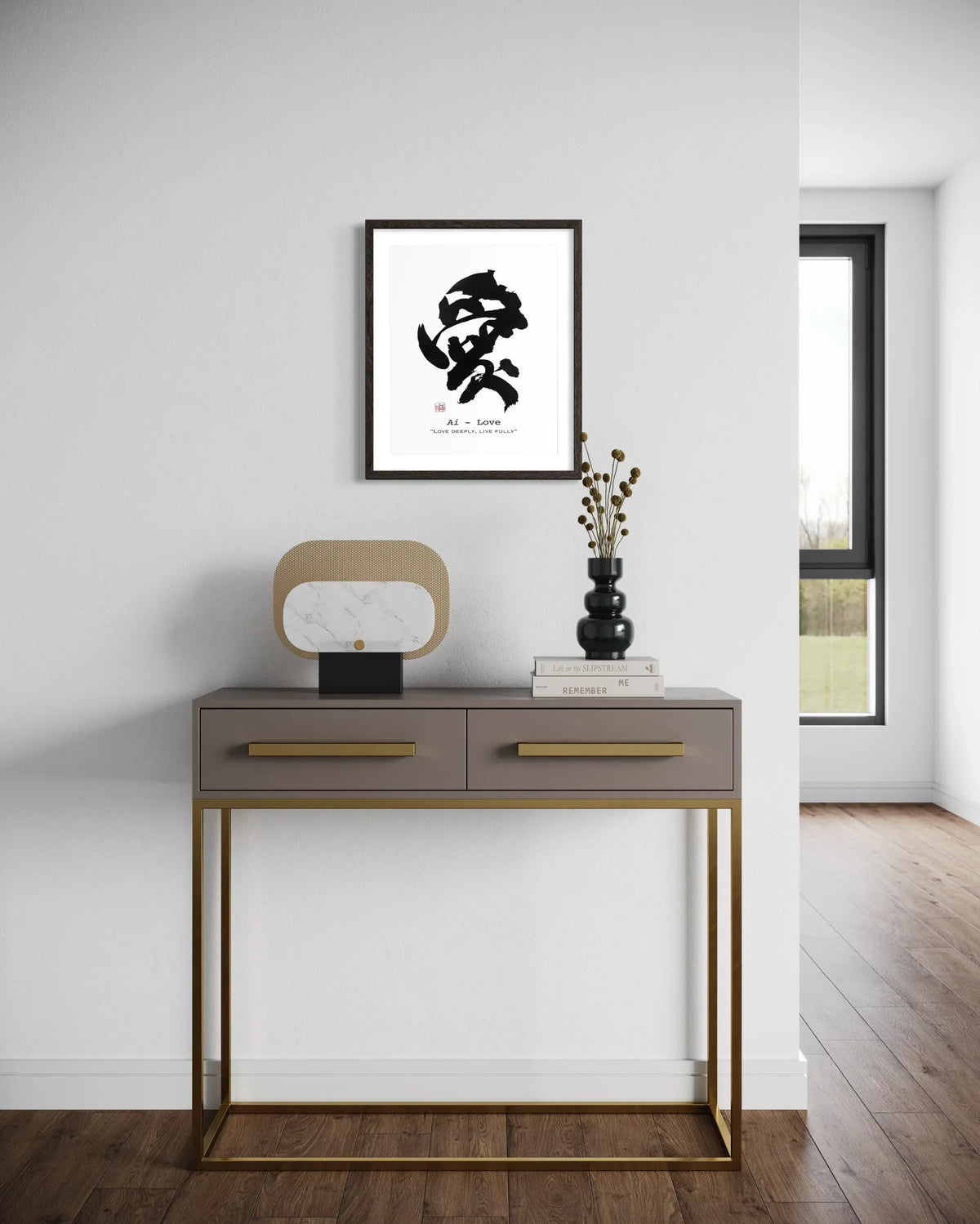
Best Japanese Art for Living Room: A Curated Guide
Japanese art has long been admired for its quiet elegance, balance, and emotional depth. In modern interiors — especially Japandi and minimalist homes — Japanese wall art brings a sense of calm that mass-produced decor rarely achieves.
If you're searching for the best Japanese art for your living room, this curated guide will help you choose pieces that feel intentional, timeless, and beautifully integrated into your space.
Why Japanese Art Works Beautifully in Living Rooms
Unlike overly decorative wall pieces, Japanese art emphasizes restraint, negative space, and meaning. This makes it especially powerful in living rooms, where visual calm matters most.
Japanese calligraphy and ink art naturally complement:
- minimalist interiors
- Japandi spaces
- Scandinavian design
- modern neutral homes
- wabi-sabi inspired rooms
The result is a space that feels thoughtful rather than decorated.
What to Look for in Japanese Living Room Art
Not all Japanese-inspired art creates the same impact. When selecting a piece for your living room, focus on three key elements.
1. Simplicity and Negative Space
Traditional sumi ink philosophy values what is not painted as much as what is. Look for artwork that allows the wall to breathe.
Best choices include:
- single kanji characters
- minimal brush compositions
- balanced white space
- restrained black ink palettes
These pieces create calm instead of visual noise.
2. Meaningful Kanji Characters
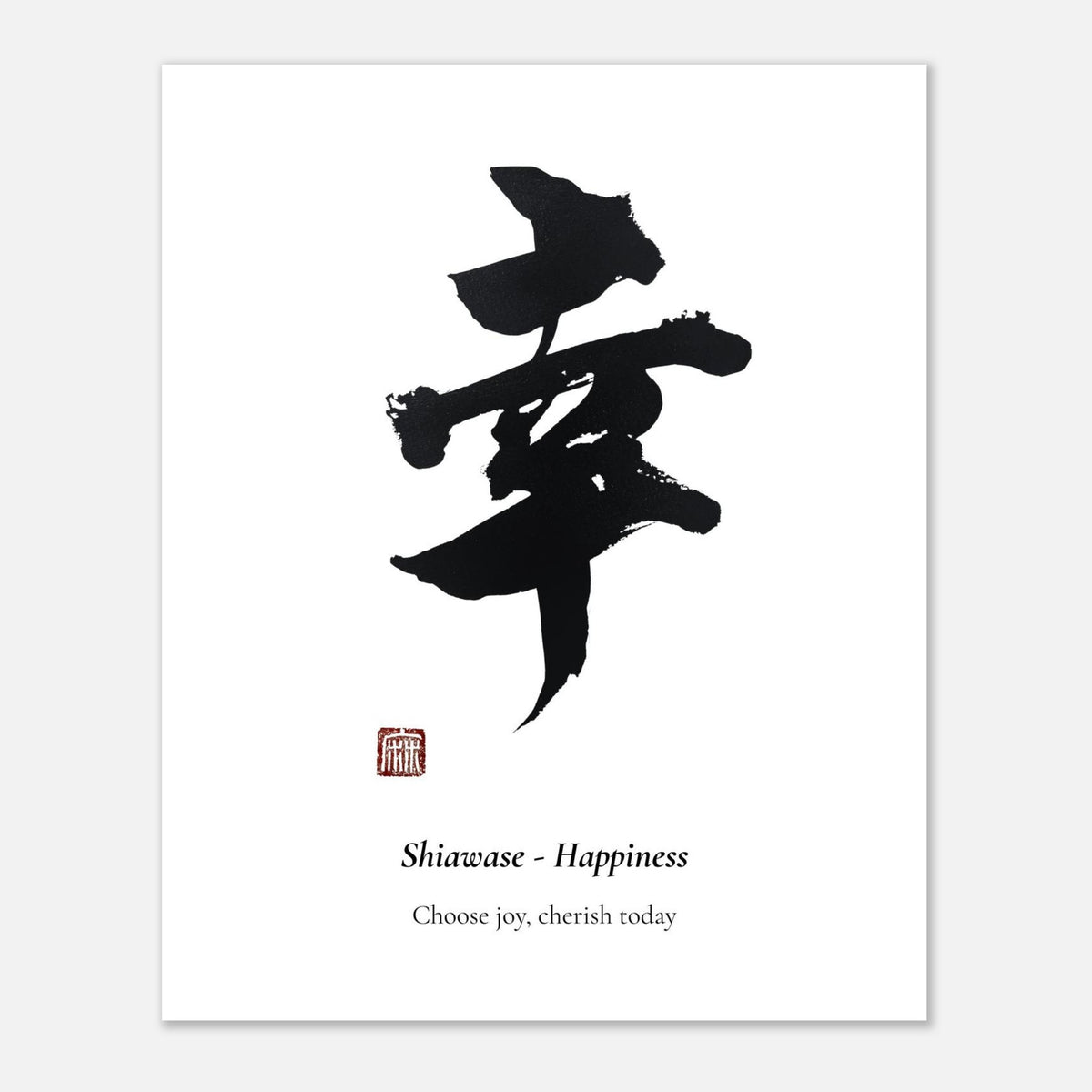
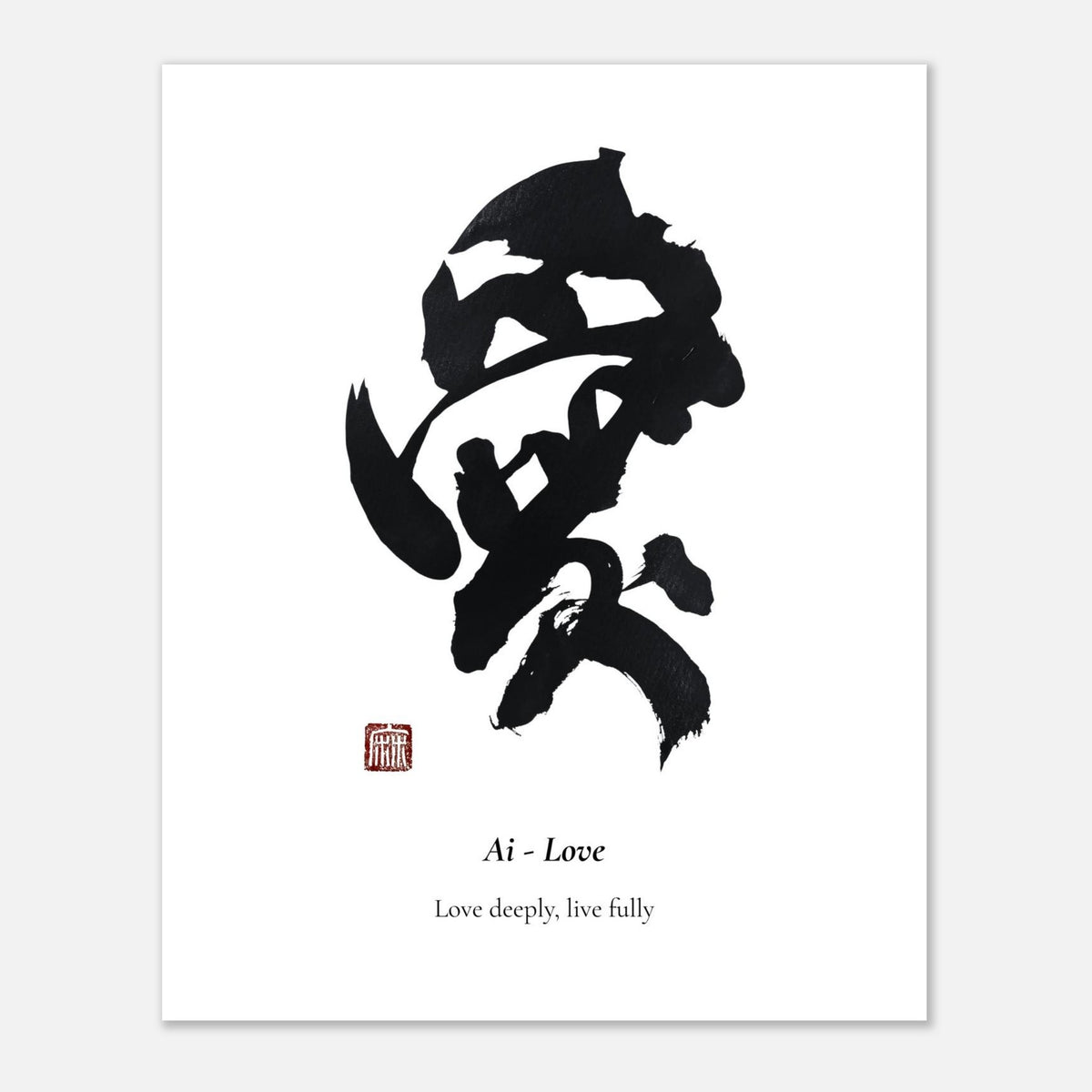
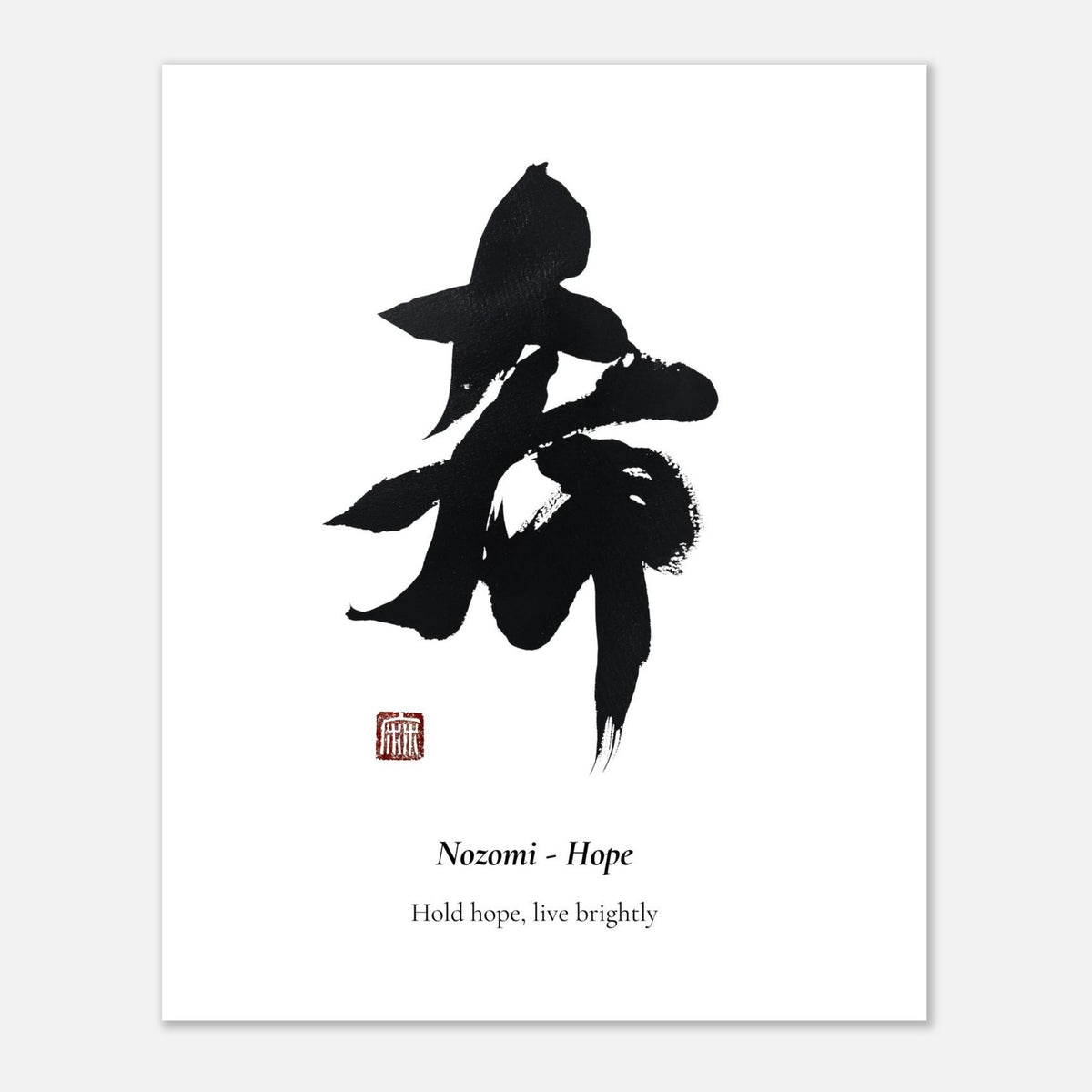
One of the most powerful aspects of Japanese calligraphy art is symbolism. Choosing a character with personal meaning makes the artwork feel deeply intentional.
Popular choices for living rooms include:
-
夢 (Yume — Dream) — aspiration and forward vision
-
愛 (Ai — Love) — warmth and connection
-
希 (Nozomi — Hope) — quiet optimism
-
和 (Wa — Harmony) — balance and peace
-
笑 (Warai — Laugh) — lightness and joy
In shared spaces like the living room, characters that express harmony, hope, and warmth tend to work best.
3. Proper Scale for Your Wall
Size is one of the most overlooked decisions.
General living room sizing guide:
-
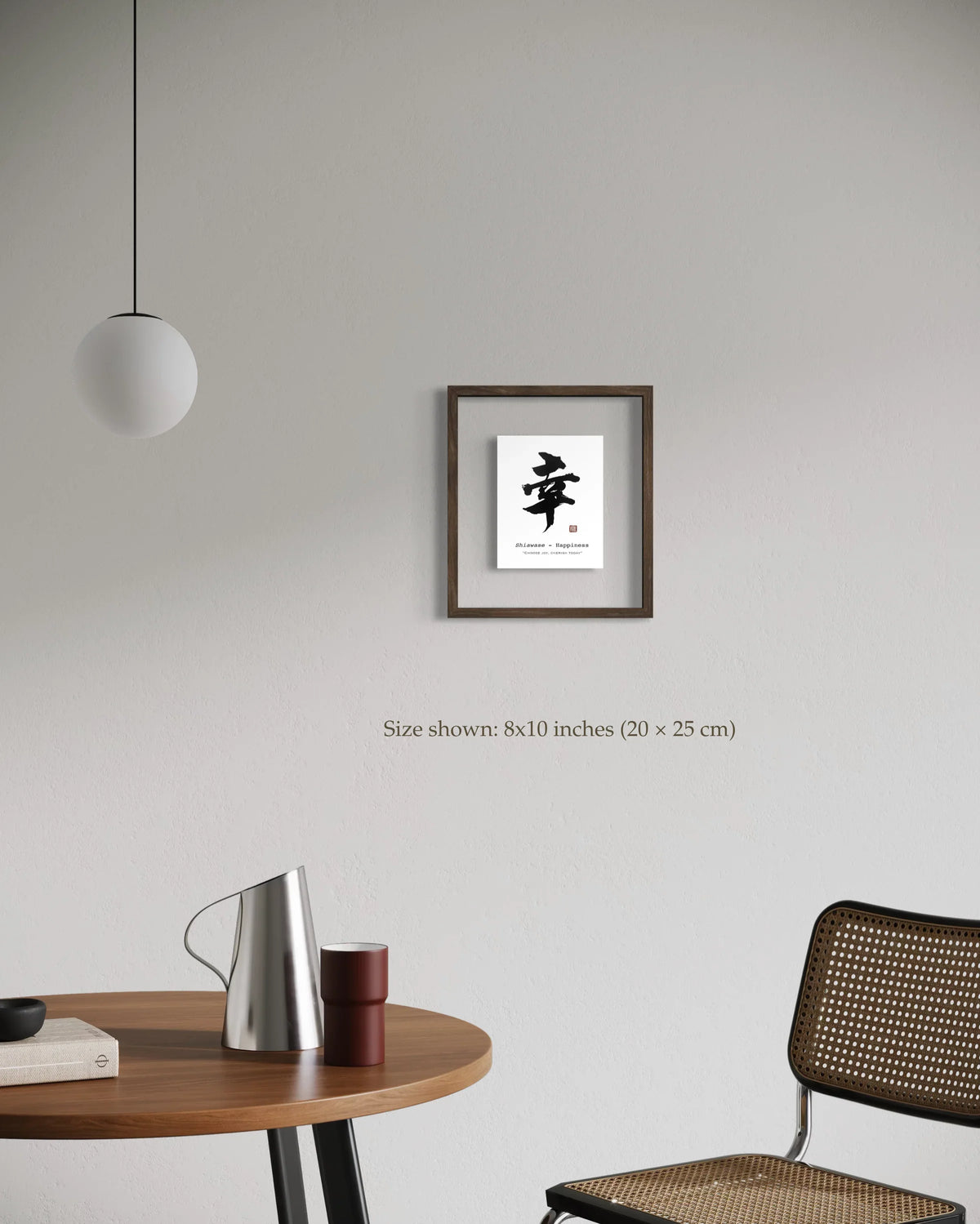
Small walls or shelves → 8×10 or 11×14
-
Above console table → 16×24 or A2
-
Above sofa → A1 or large statement piece
-
Gallery wall → mix of small and medium sizes
When in doubt, slightly larger usually looks more intentional than too small.
Best Japanese Art Styles for Modern Living Rooms
Different styles create different moods. Here are the most effective approaches for contemporary homes.
Minimal Calligraphy Prints
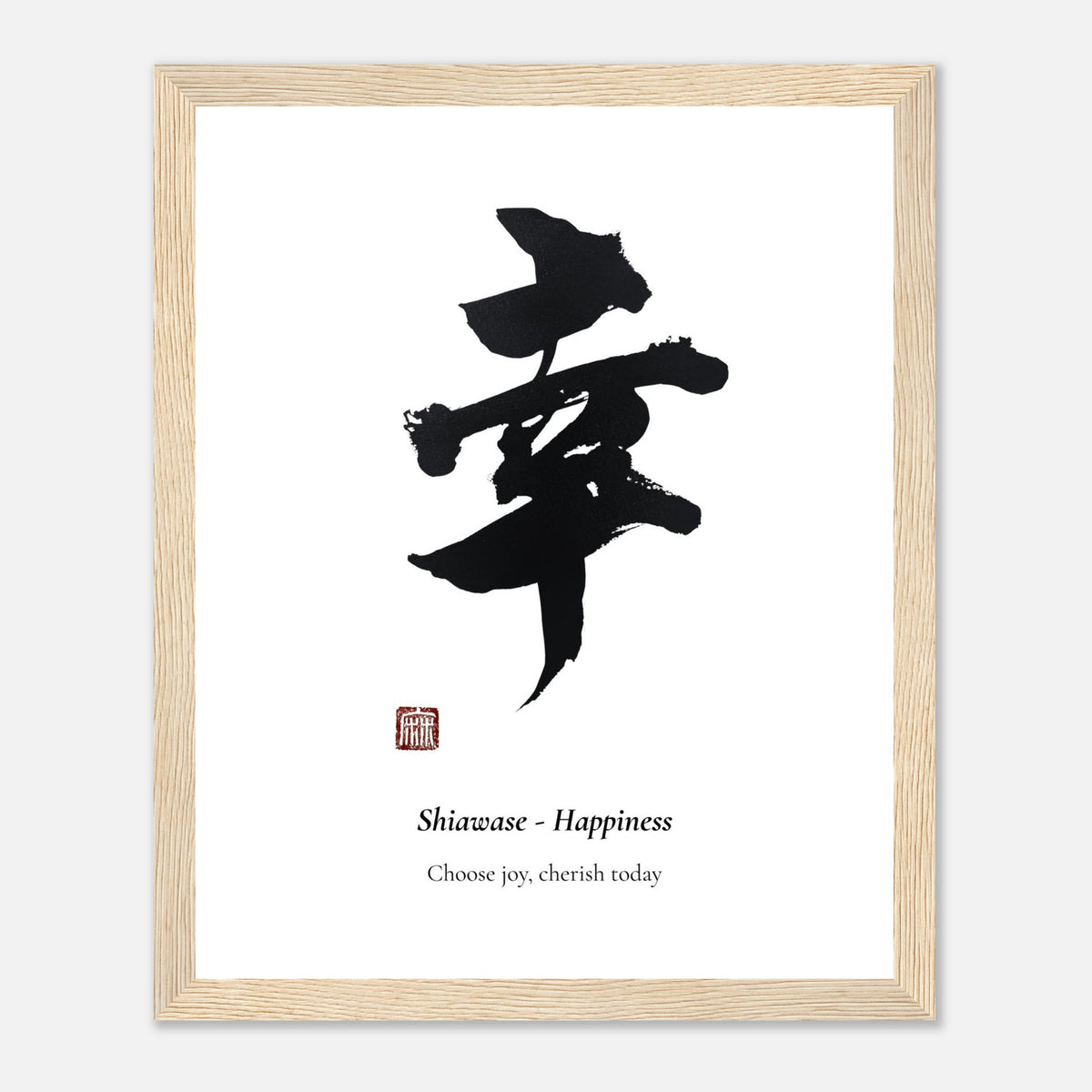
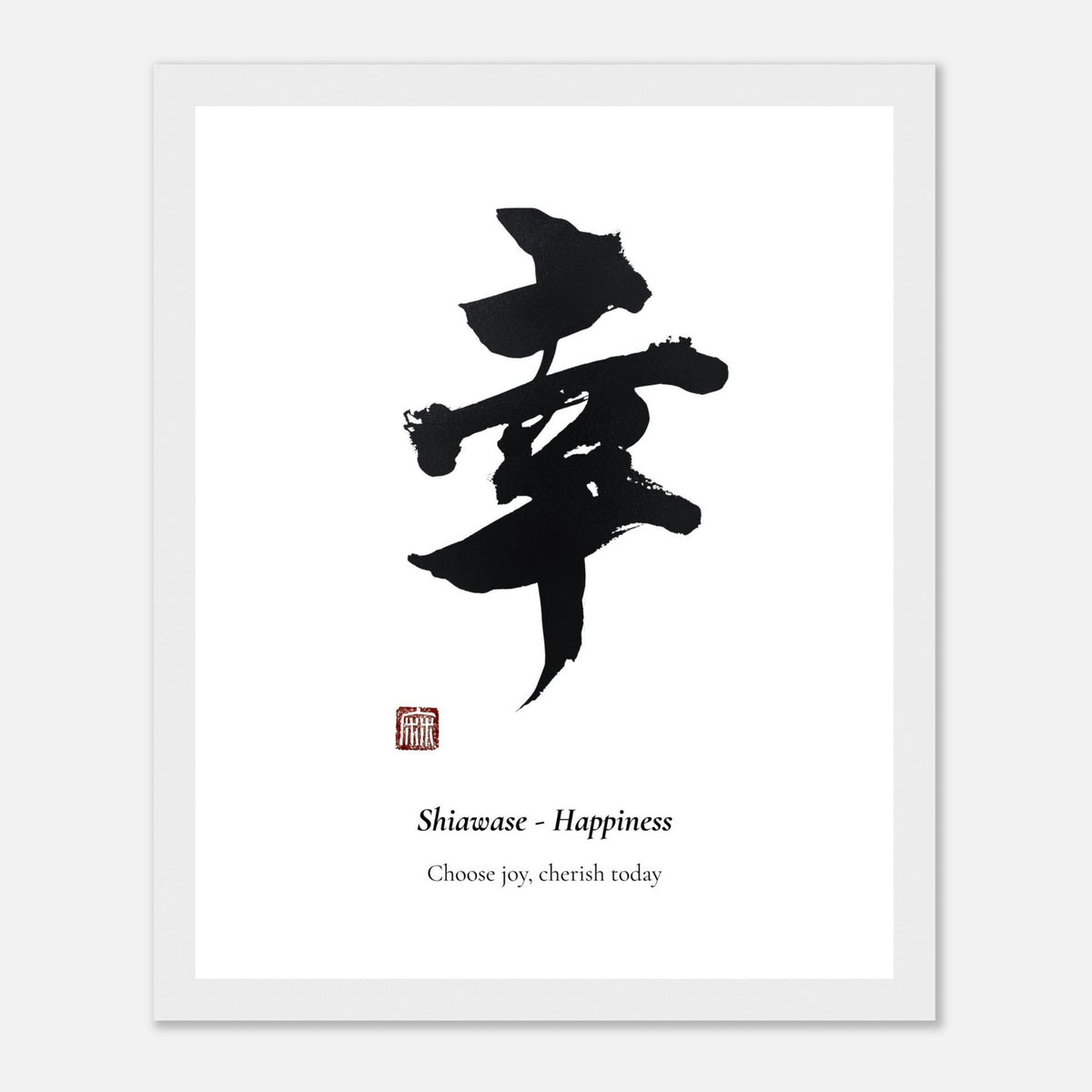
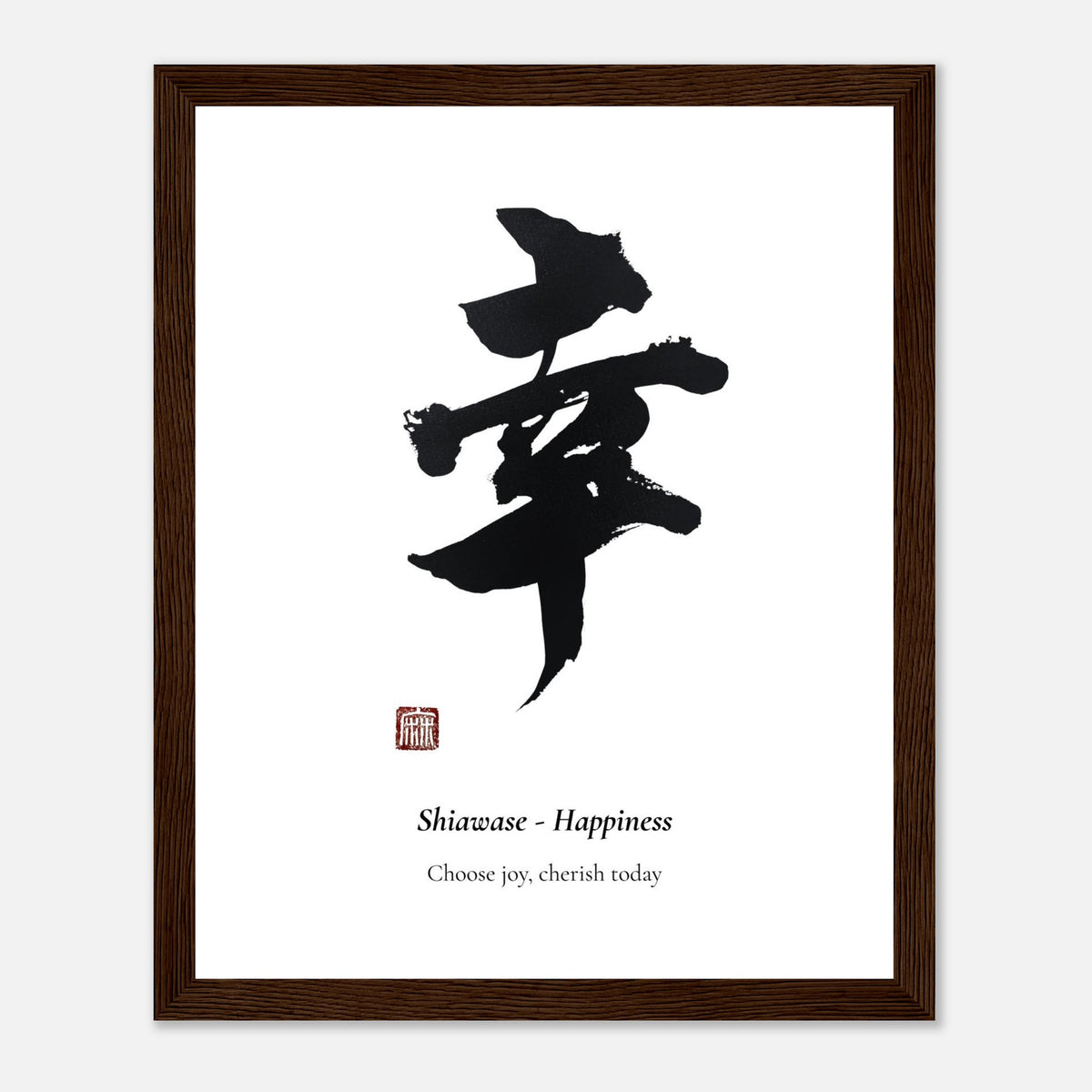
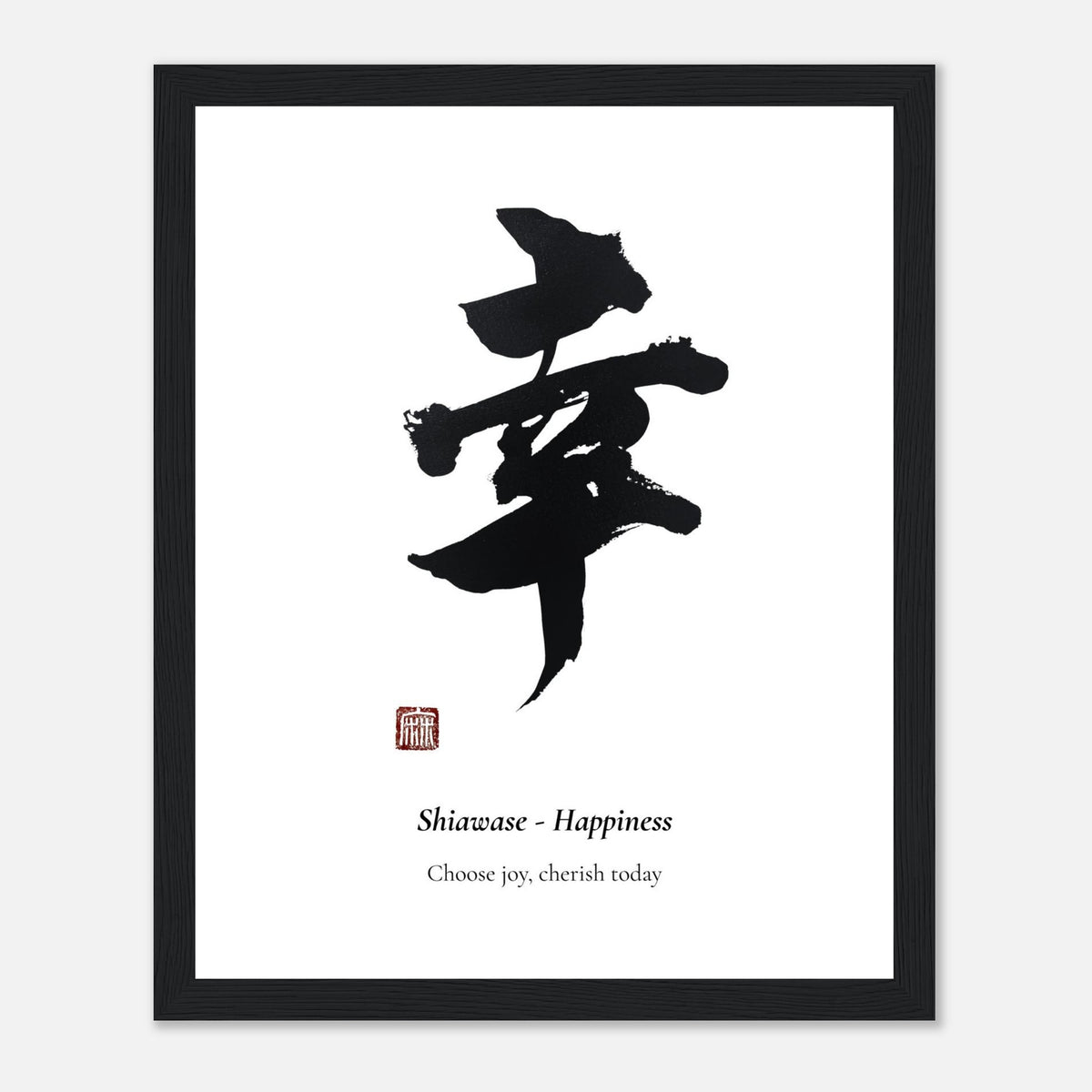
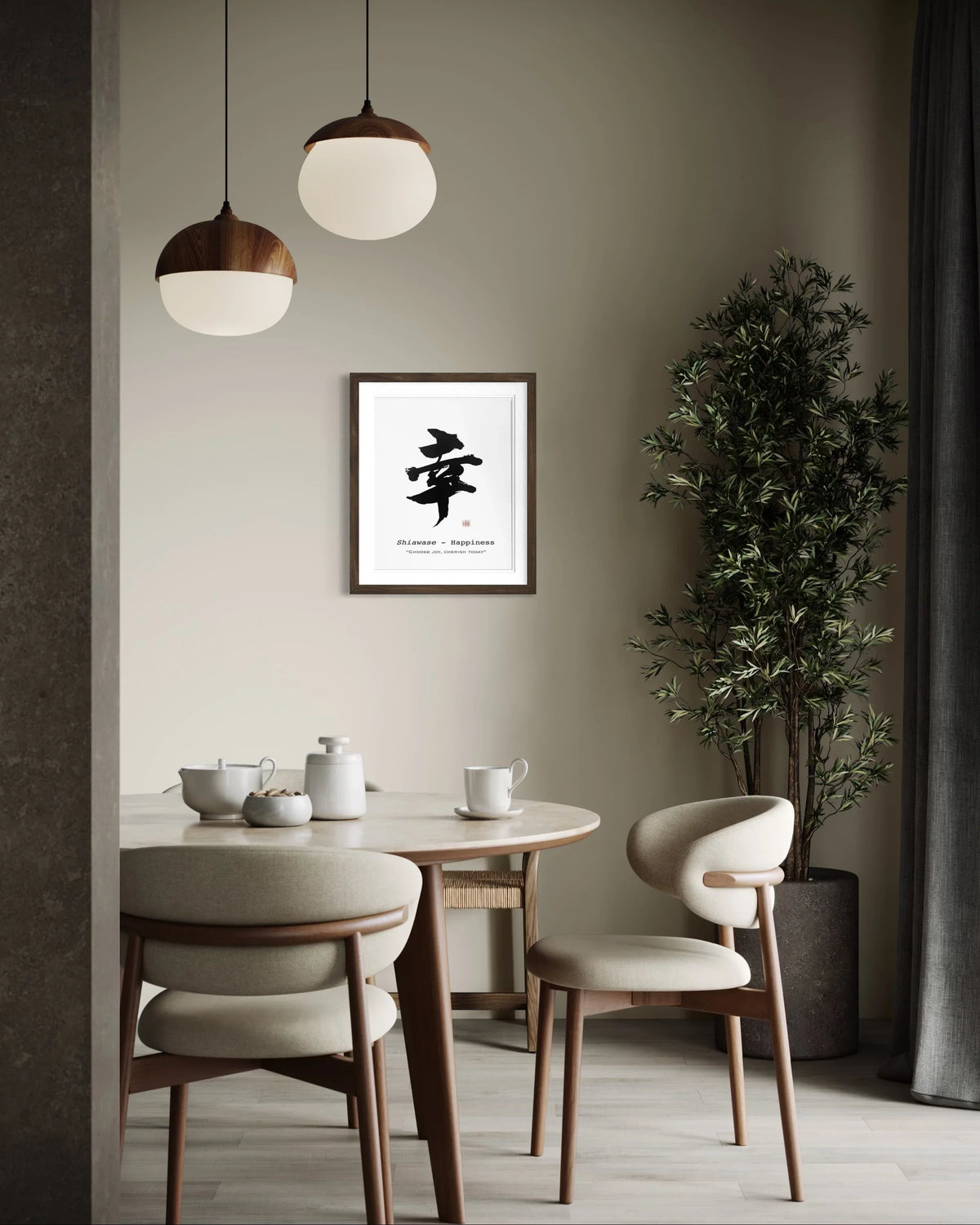
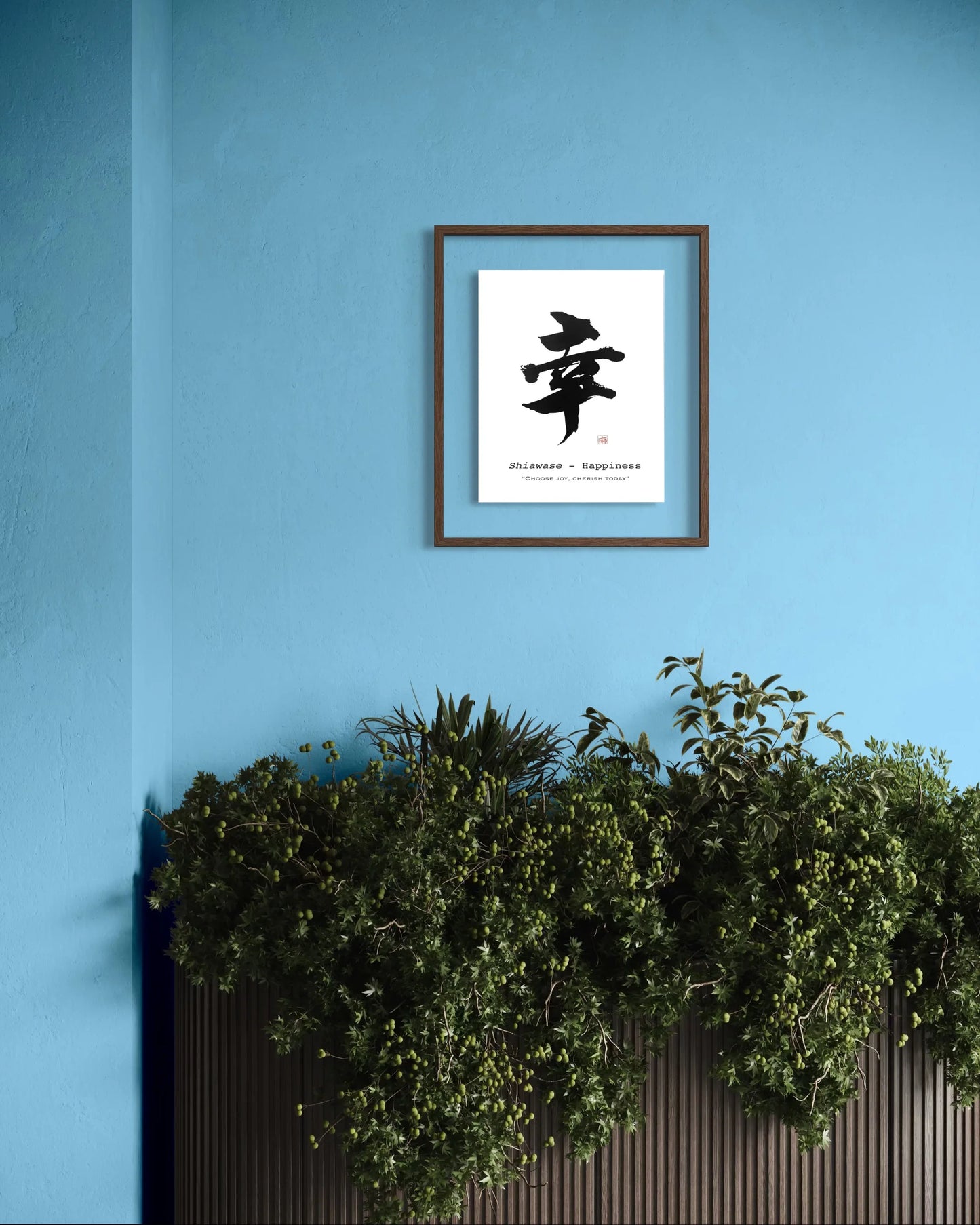
Minimal calligraphy is the most versatile choice for modern spaces. A single, confident brushstroke can anchor an entire wall without overwhelming the room.
Best for:
- Japandi interiors
- Scandinavian homes
- neutral living rooms
- modern apartments
Hand-Brushed Original Works
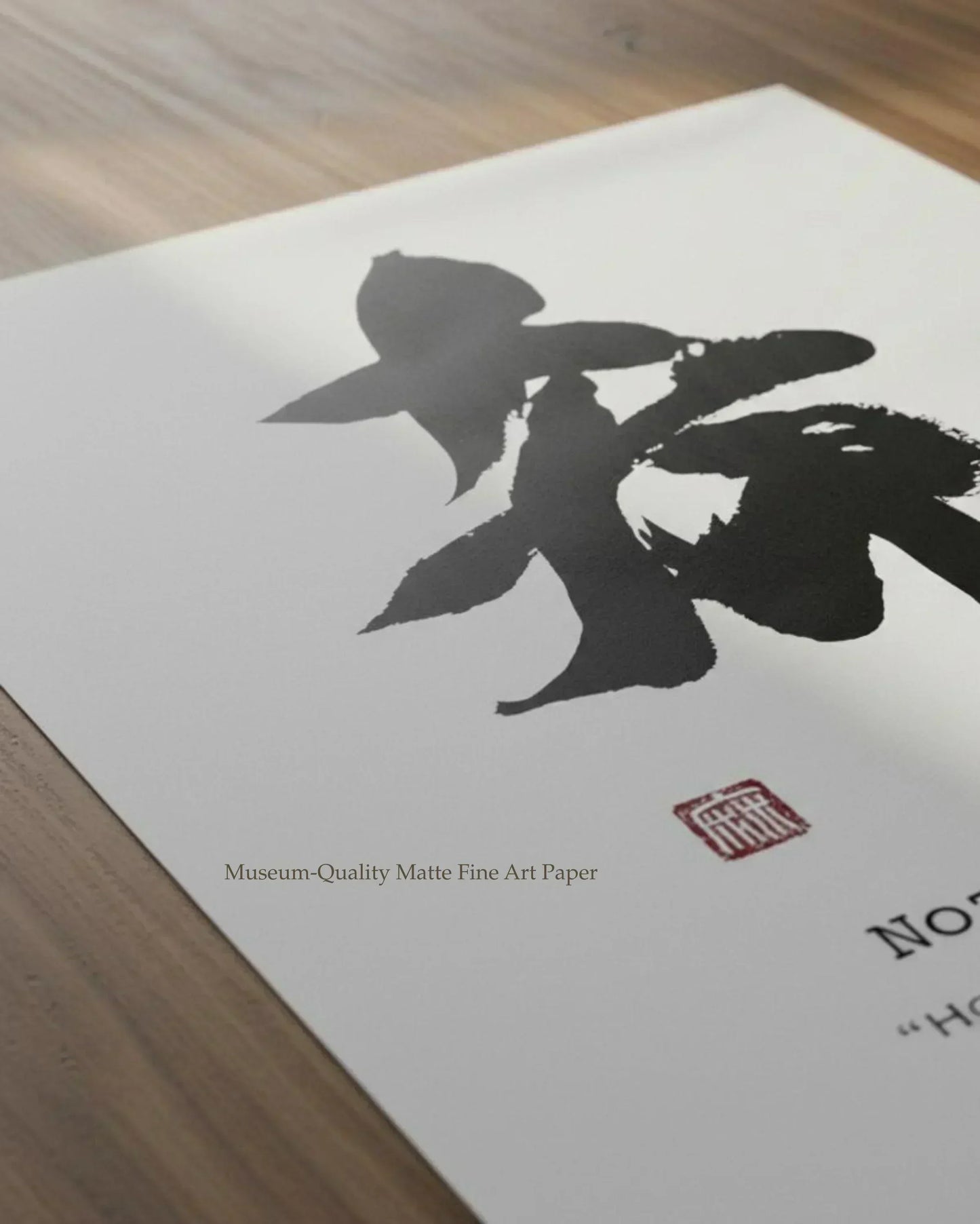
Original hand-brushed pieces carry subtle texture and movement that digital prints often lack. For collectors or design-focused homes, these works add authenticity and depth.
Best for:
- statement walls
- art collectors
- wabi-sabi interiors
- quiet luxury spaces
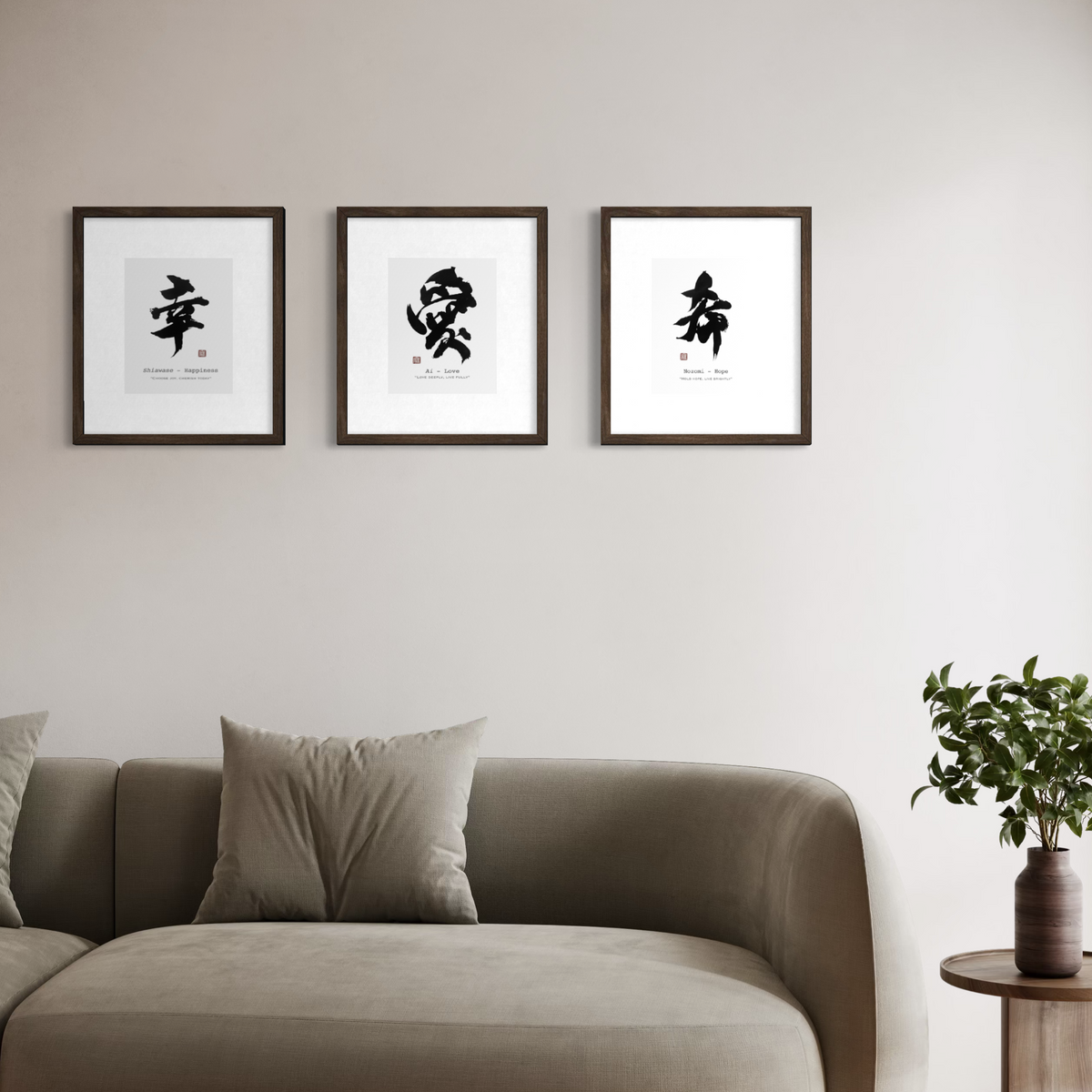
Japandi Gallery Wall Compositions
For a layered but still calm look, a small gallery wall combining calligraphy with neutral prints works beautifully.
Key styling tips:
- keep frames consistent
- limit color palette
- maintain generous spacing
- anchor with one stronger piece
How to Style Japanese Art in Your Living Room
Placement matters as much as the artwork itself.
Above the Sofa
- Choose a medium-to-large piece
- Center horizontally
- Hang 6–8 inches (approximately 20cm) above the sofa back
- Keep surrounding decor minimal
This creates a calm focal point.
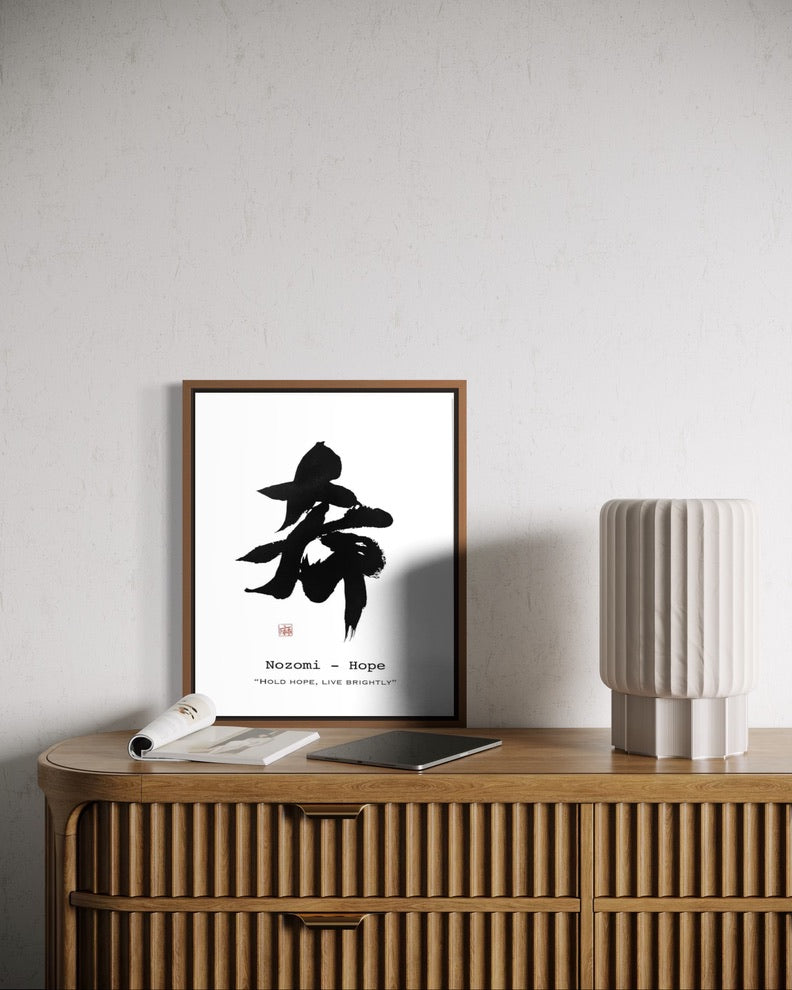
On a Console or Shelf
- Leaned frames work well in Japandi styling
- Layer with ceramics or books
- Use odd-number groupings
- Avoid overcrowding
This approach feels relaxed and editorial.
As a Gallery Wall
- Start with your anchor piece
- Build outward with smaller works
- Maintain equal spacing
- Keep the palette cohesive
Japandi gallery walls should feel curated, not busy.
Common Mistakes to Avoid
Many otherwise beautiful spaces miss the mark because of small decisions.
Avoid:
X choosing art that is too small
X overcrowding the wall
X mixing too many frame styles
X overly decorative fonts instead of true brushwork
X ignoring the meaning of the kanji
Intentional restraint is what makes Japanese art powerful.
The best Japanese art for a living room is not necessarily the boldest piece — it is the one that brings quiet balance to the space.
When chosen thoughtfully, Japanese calligraphy art can:
- soften modern interiors
- add cultural depth
- create a calm focal point
- elevate minimalist rooms
- support Japandi styling
Whether you choose a single meaningful kanji or a carefully composed gallery wall, the goal is the same: a living space that feels grounded, intentional, and quietly refined.
Discover calligraphy pieces designed to bring quiet meaning into your living space.