What Is Wabi-Sabi Wall Art — And Why Japanese Calligraphy Embodies It
The most honest art leaves a trace of the hand that made it.
Scroll through any interior design feed today and you will find wabi-sabi everywhere. Texture canvases in off-white. Abstract plaster paintings. Muted, earth-toned prints marketed as "the art of imperfection."
But here is the question worth sitting with: is any of it actually wabi-sabi?
The philosophy of wabi-sabi is not an aesthetic trend. It is not a color palette. It is a way of seeing — rooted deep in Japanese culture, shaped by Zen Buddhism, and inseparable from the act of making things by hand. And when you understand what wabi-sabi truly means, one art form stands apart from all the rest: Shodō, the ancient Japanese art of calligraphy.
This is what wabi-sabi wall art actually is — and why the brushstroke says it better than any canvas.
What Does Wabi-Sabi Actually Mean?
Wabi and sabi are two separate Japanese concepts that have become intertwined over centuries.
Wabi (侘) refers to a kind of humble simplicity — the beauty found in quiet, unadorned things. A single bowl. A room with few objects. The feeling of enough.
Sabi (寂) speaks to the beauty of time passing — the patina on old wood, the crack in a ceramic glaze, the way worn things carry the memory of use.
Together, wabi-sabi describes a worldview that finds profound beauty in what is imperfect, impermanent, and incomplete. It asks us to stop reaching for perfection and start noticing what is already here.
This is not a decorating style. It is a quiet philosophy of life — and it shows most clearly in art made by hand, in the moment, with full attention.
Why Most "Wabi-Sabi Wall Art" Misses the Point
When you search for wabi-sabi art online, you find an ocean of texture paintings — layered plaster, impasto oils, abstract beige canvases. These works are beautiful, and they capture a certain aesthetic. But they are often made to look imperfect, rather than emerging from a process that is inherently imperfect.
True wabi-sabi is not applied after the fact. It is not a texture added to a surface or a color chosen to look worn. It lives in the process — in the irreversibility of the mark, in the breath of the maker, in the single moment that cannot be repeated.
That is exactly what Shodō is.
Why Shodō Is the Most Authentic Expression of Wabi-Sabi
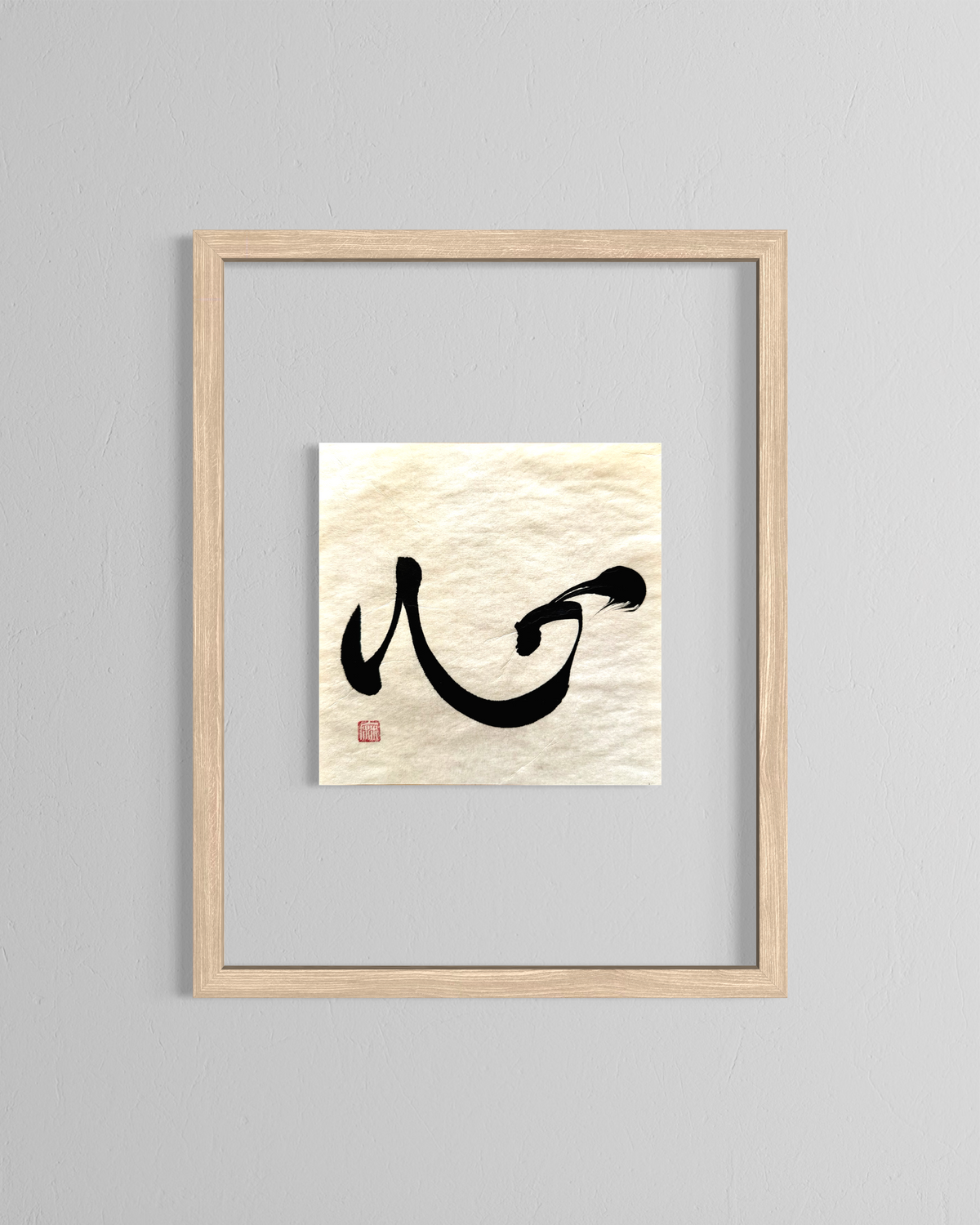
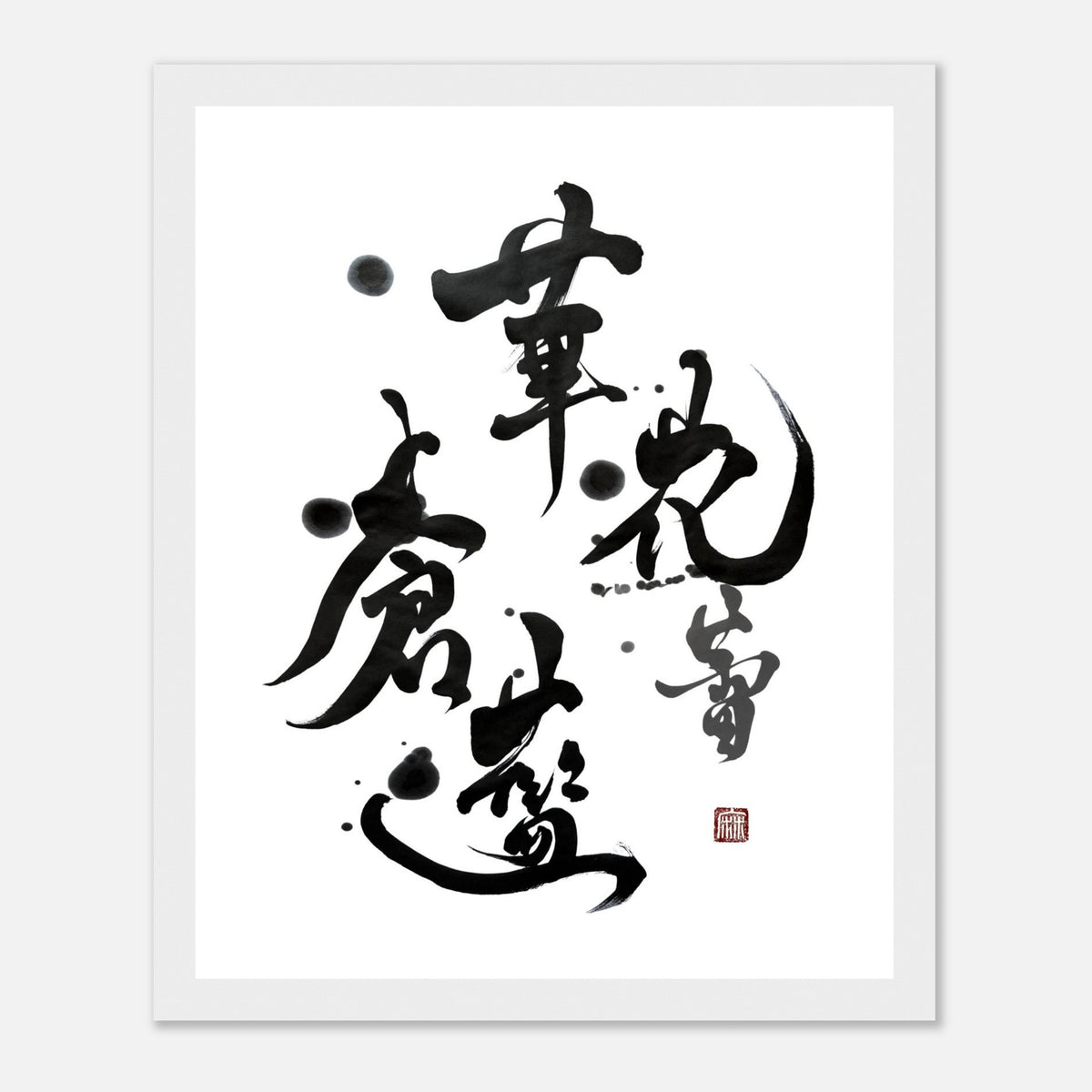
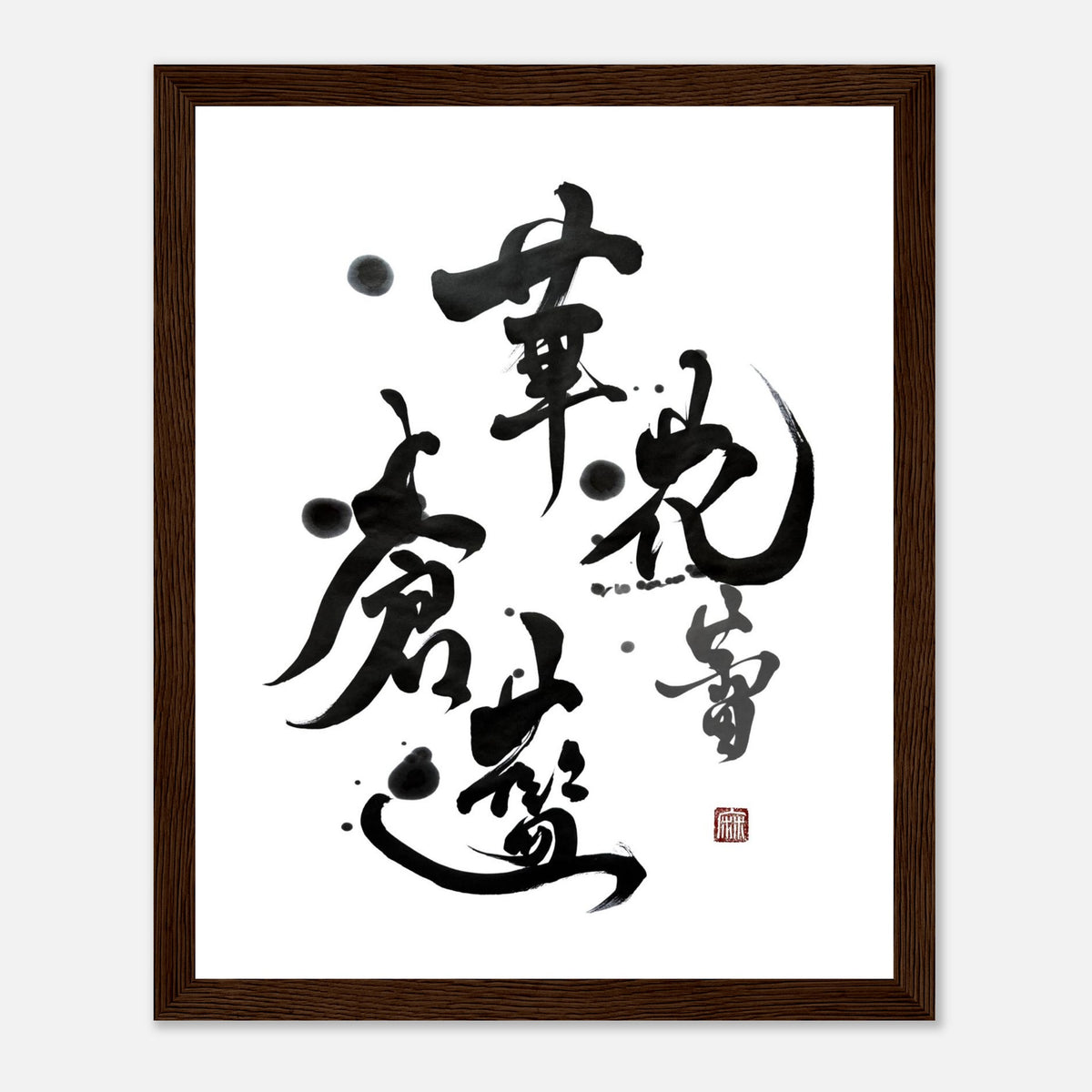
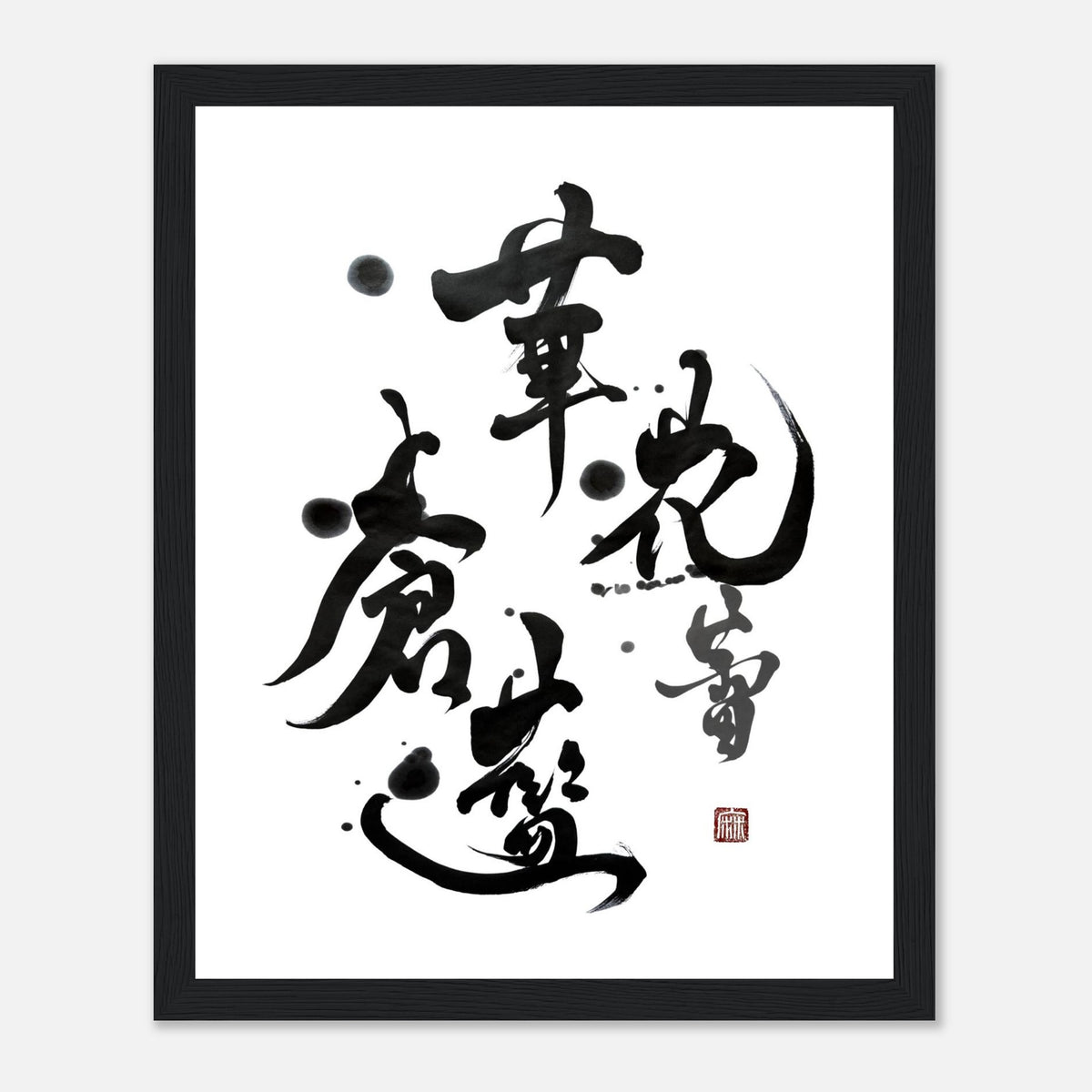
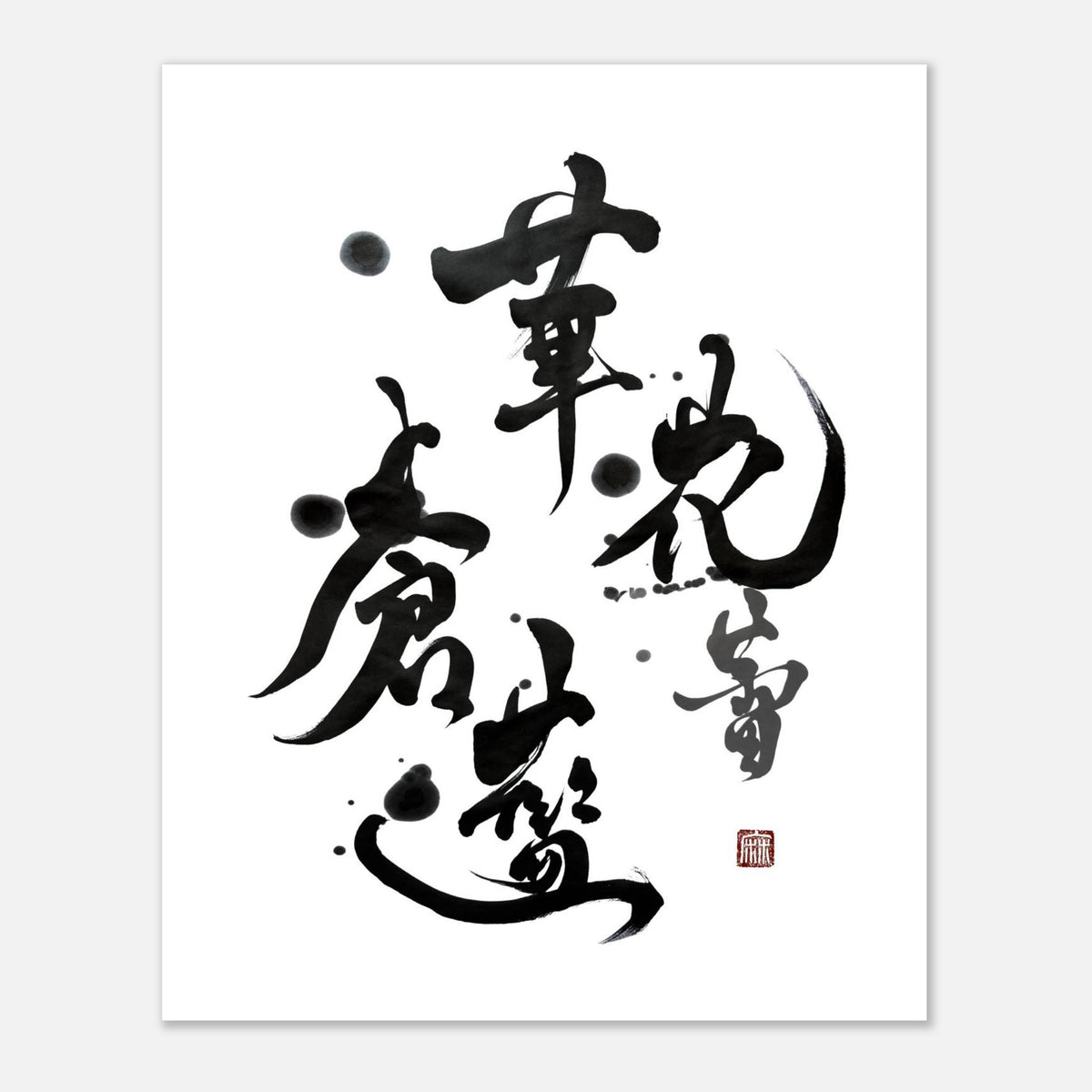
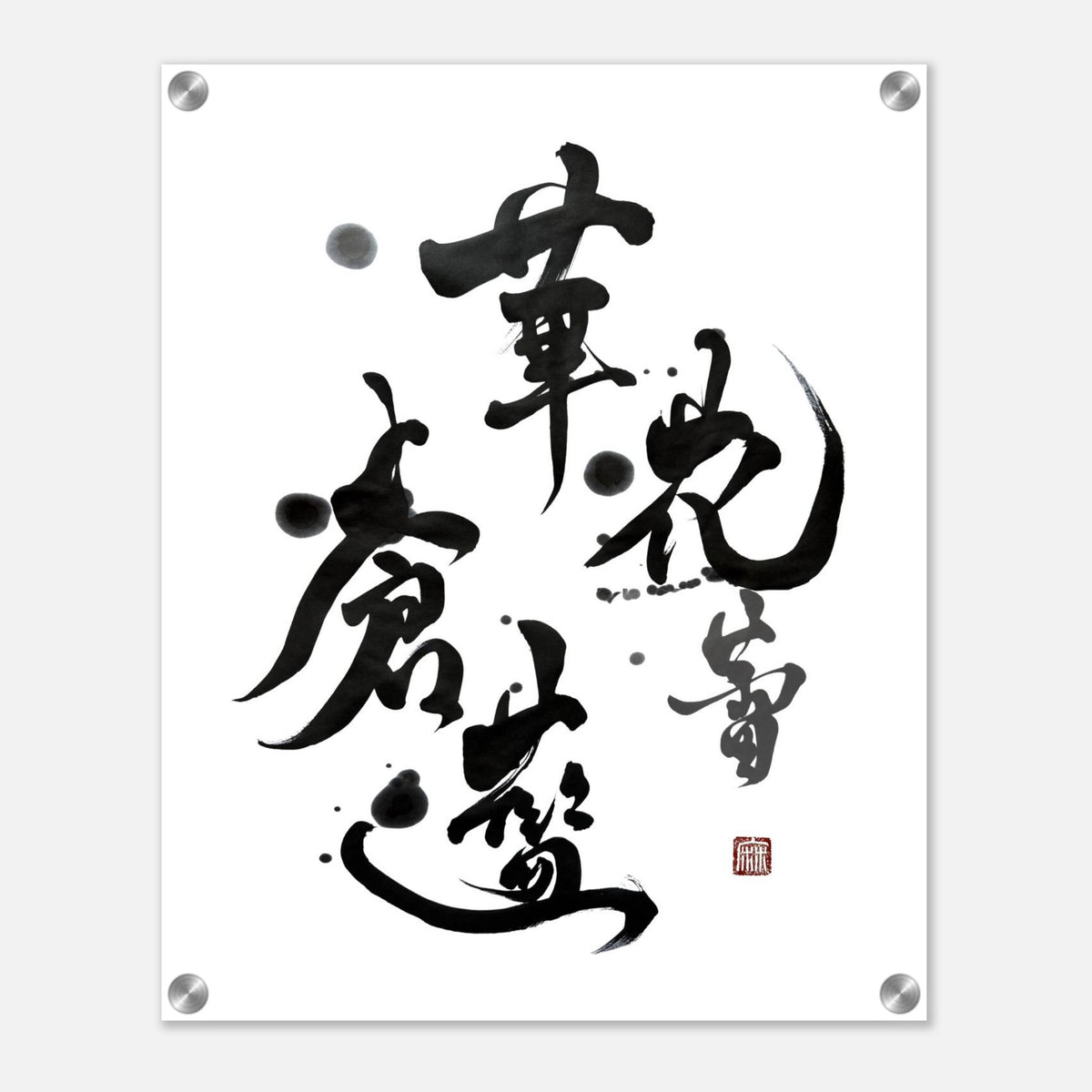
Shodō (書道) — the Way of Writing — is one of Japan's oldest and most revered art forms. Each work begins with ink, a brush, and a single breath of intention.
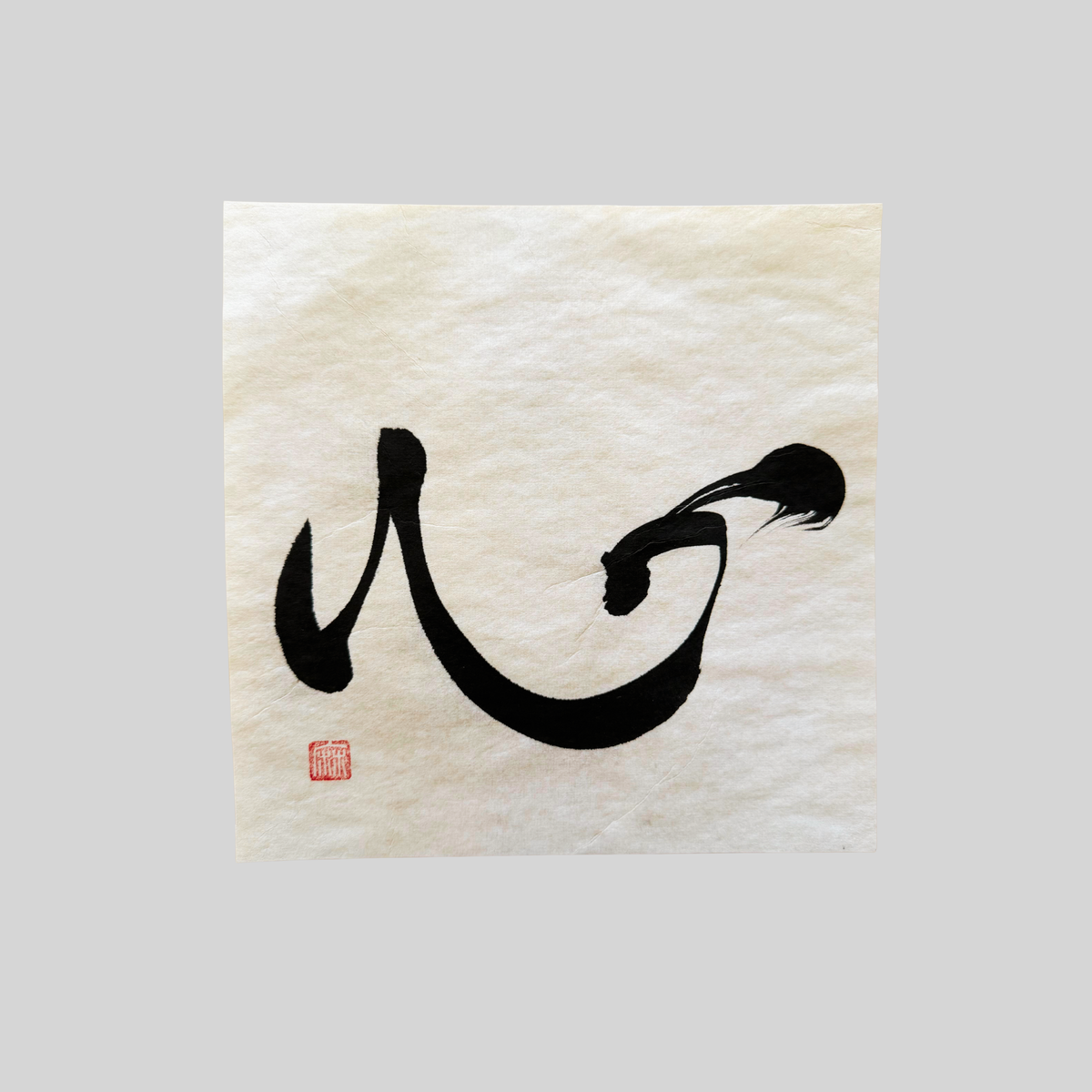
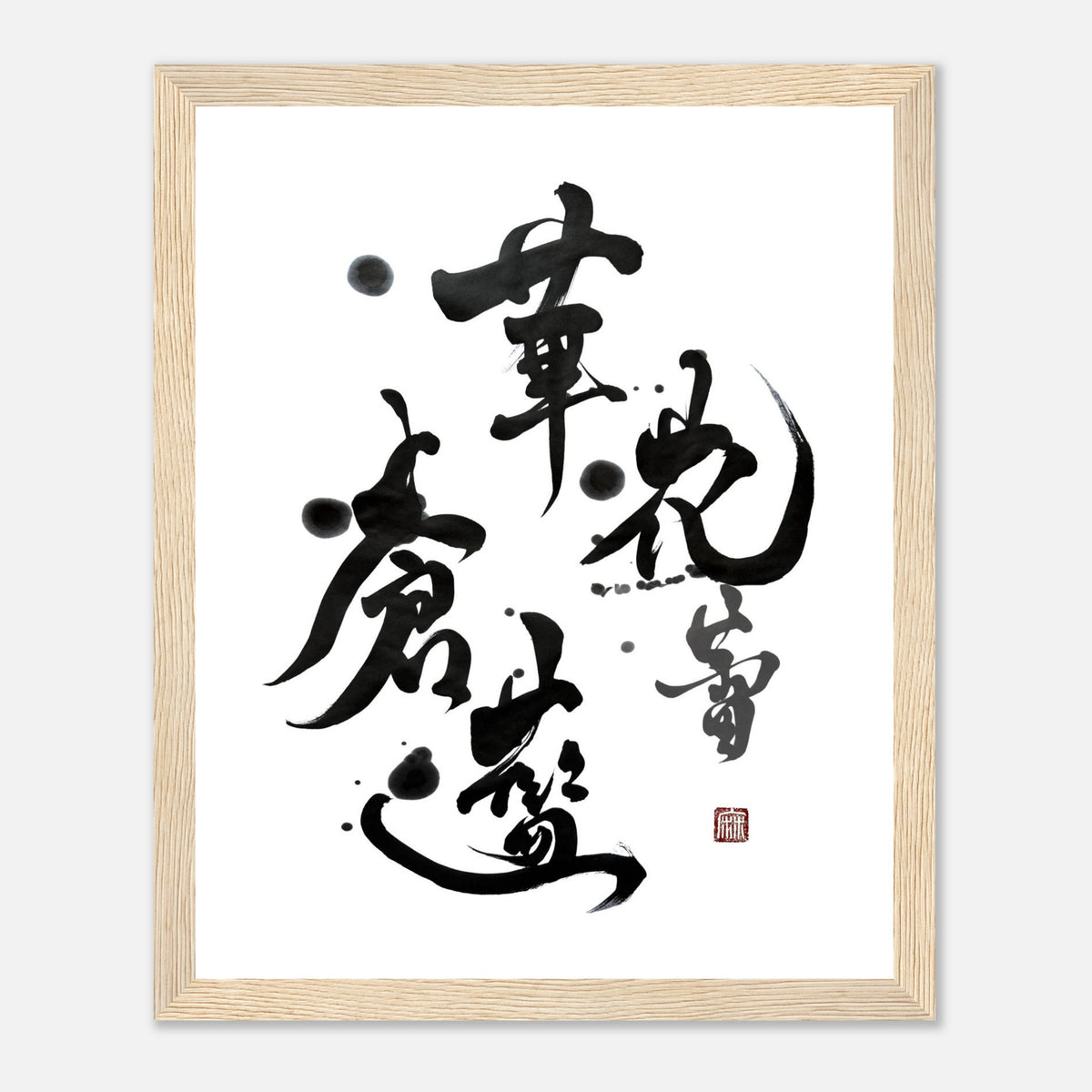
There is no undoing a brushstroke in Shodō. The ink meets the paper and the mark is made — alive with the pressure of the hand, the speed of the movement, the quality of the artist's attention in that precise moment. No two works are identical. Not because they were designed to be different, but because no two moments are.
This is wabi-sabi in its purest form:
- Impermanence — the ink dries and the moment is gone forever.
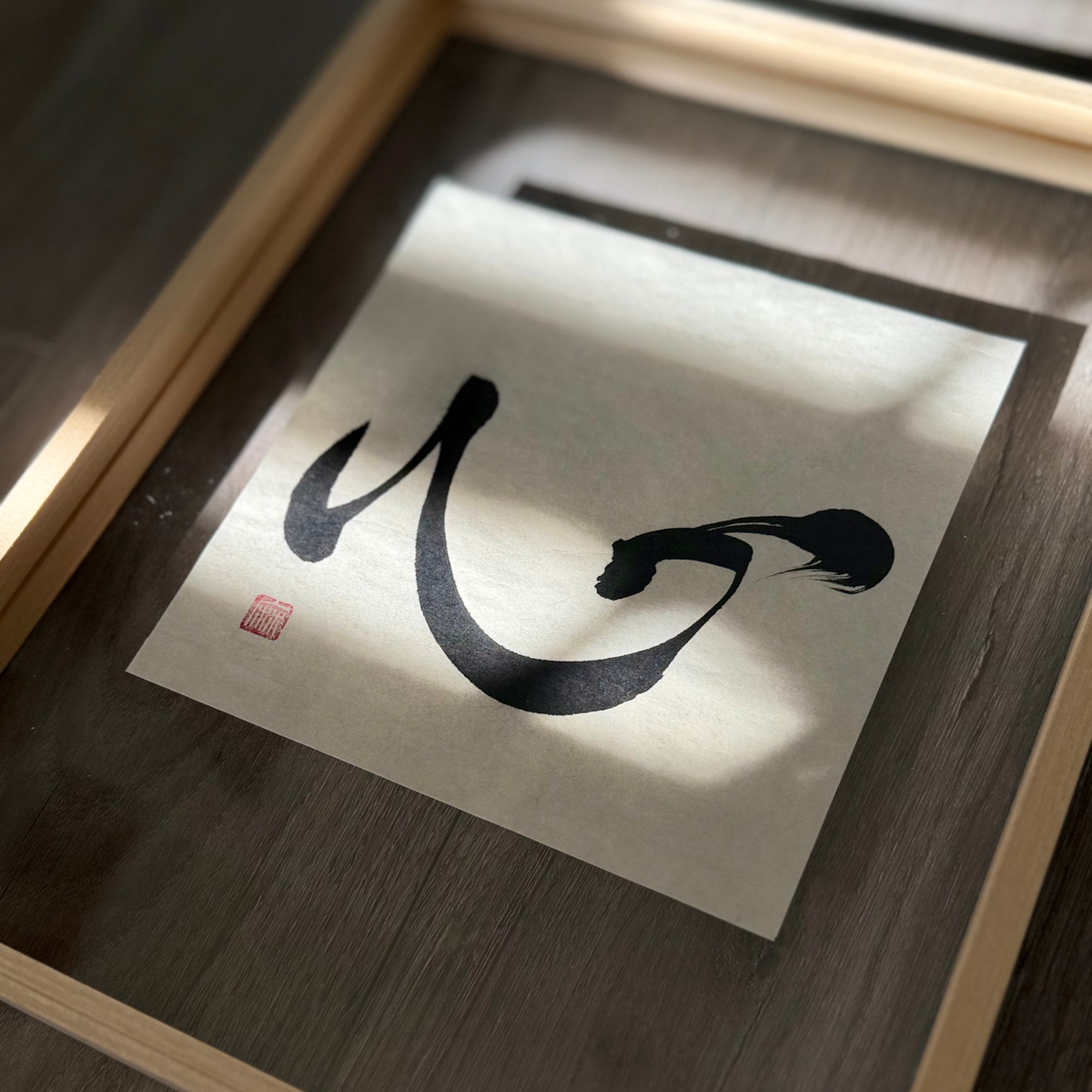
- Imperfection — the slight tremble, the variation in pressure, the organic edge of the brushstroke that no machine could replicate.
- Incompleteness — a single character surrounded by white space, asking the viewer to bring their own stillness to the piece.
Where textured abstract art mimics the look of wabi-sabi, Shodō calligraphy embodies it. The philosophy is built into the practice itself.
Every stroke is a choice made once, in full presence. There is no revision. Only intention.
What to Look for in Wabi-Sabi Wall Art
If you are drawn to wabi-sabi aesthetics, the most meaningful art for your space will share a few qualities — regardless of medium.
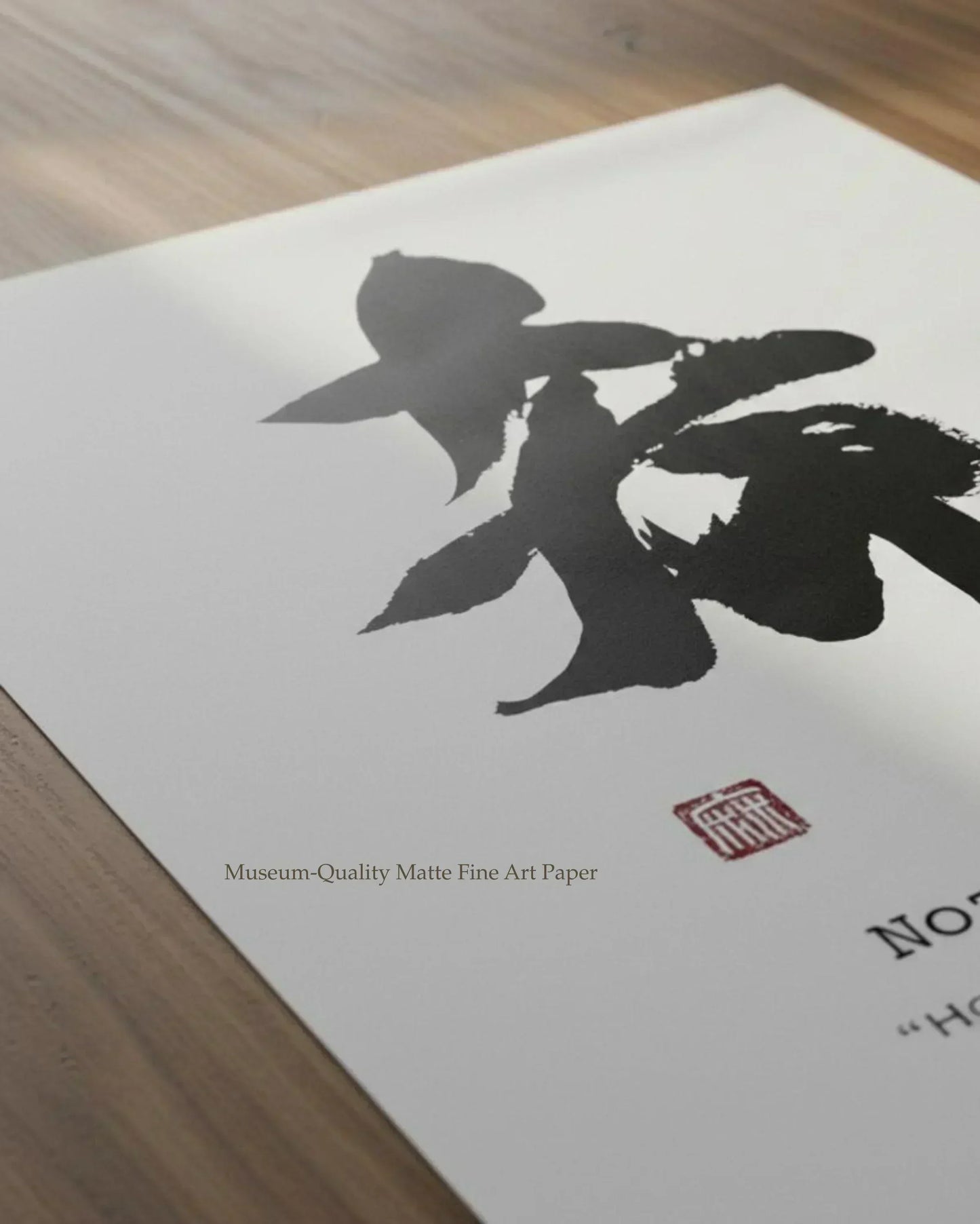
It is made by hand, in a single unrepeatable gesture. Mass-produced prints can be beautiful, but they carry no moment. Look for work where the hand of the artist is visible in the final piece.
It holds negative space with intention. Wabi-sabi art does not fill every corner. The emptiness around a mark is as deliberate as the mark itself — it is where the viewer's breath can rest.
It connects to a cultural lineage. Authentic wabi-sabi art draws from a philosophy with deep roots. When you understand why a work was made the way it was, it becomes something more than decoration.
It ages well. Art rooted in wabi-sabi values does not need to stay fresh or trendy. It deepens over time, like all things made with care.
How to Bring Wabi-Sabi Wall Art Into Your Home
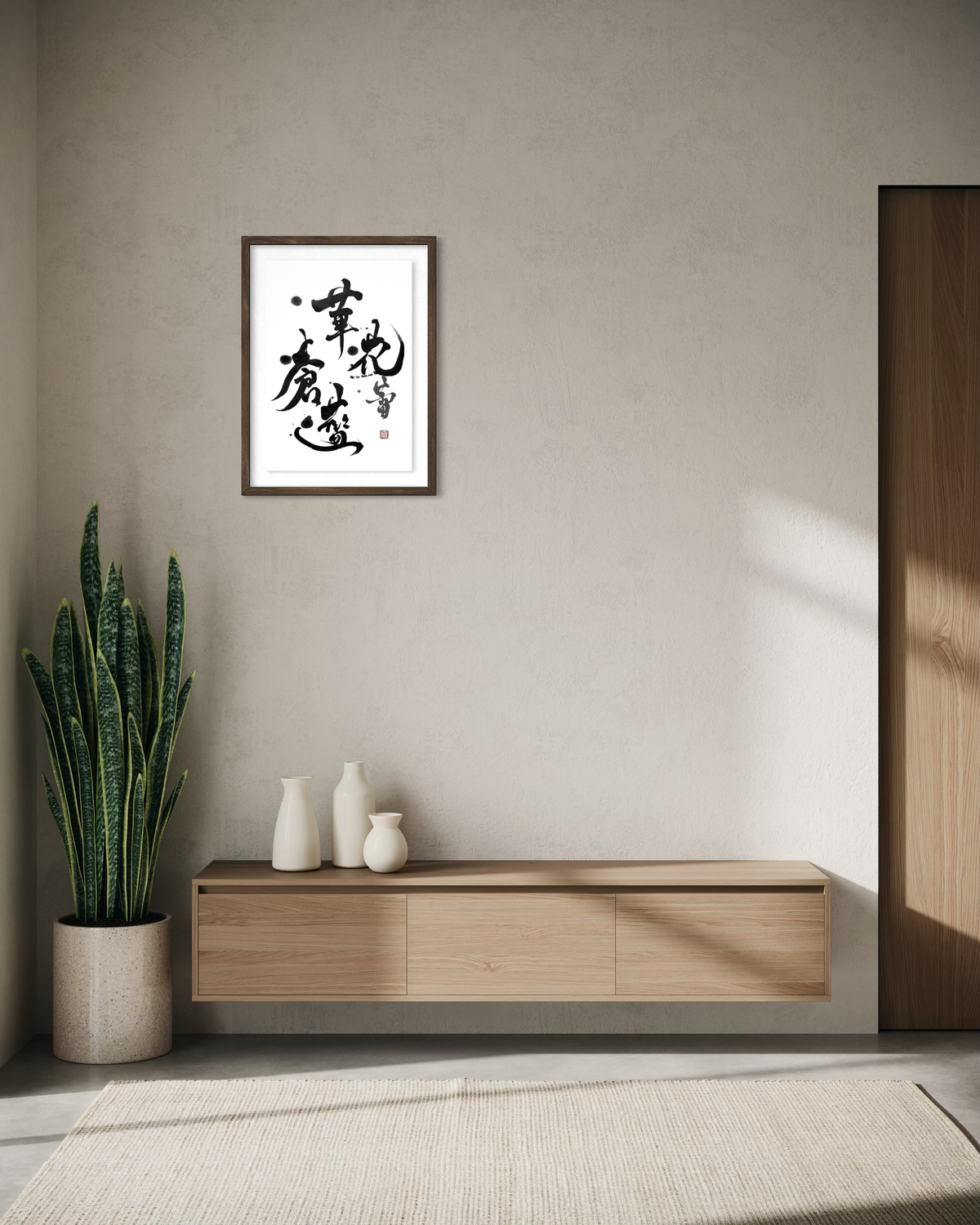
Wabi-sabi art belongs wherever stillness is welcome. A living room where you want quiet after a long day. A bedroom wall that greets you first in the morning. An entryway that asks you to slow down before you step inside.
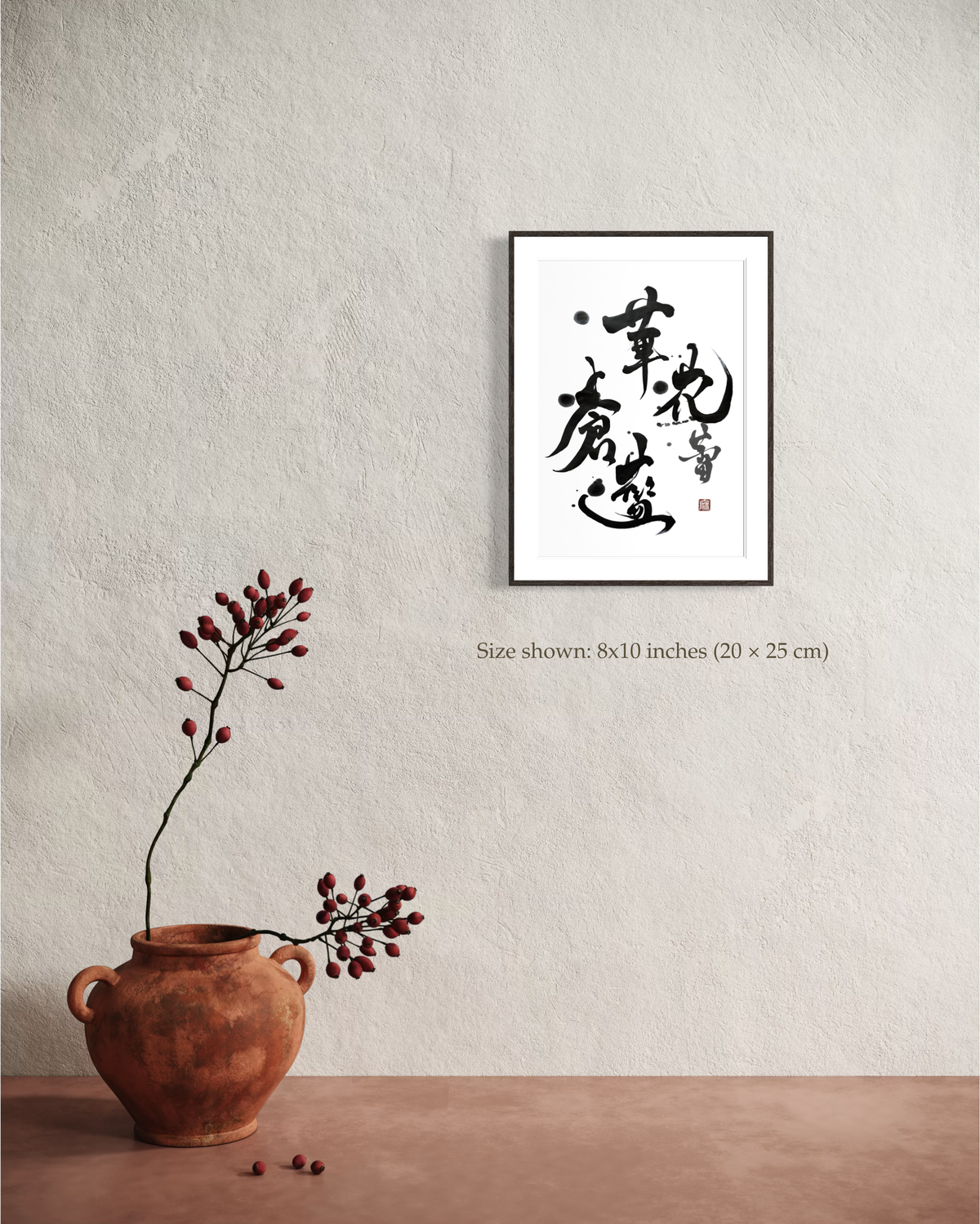
In Japandi interiors — that calm meeting point of Japanese and Scandinavian design — Shodō calligraphy prints are a natural anchor. A single piece on a white wall, surrounded by natural wood and linen, carries the entire philosophy of the space without saying a word.
You do not need many pieces. One work of true intention creates more presence than a gallery wall of trends.
A single brushstroke on white paper. Nothing missing. Nothing extra.
About BrushForma
BrushForma is a contemporary Japanese calligraphy art brand rooted in the philosophy of Shodō. Each piece is created by hand using traditional ink and brush, bringing the ancient practice of mindful mark-making into modern homes and Japandi interiors.
Every work in the BrushForma collection is an original expression of a single moment — imperfect, impermanent, and entirely its own.