What Is Kanji Art — And How to Choose a Character With Meaning
A single character. Centuries of meaning. One moment of ink.
There is something striking about a single Japanese character on a wall. Even if you cannot read it, something communicates — a sense of weight, of history, of something decided rather than decorated.
This is kanji art. And once you understand what it is and how it works, choosing one becomes less like shopping and more like listening for the thing that was already yours.
What Is Kanji?
Kanji (漢字) are the logographic characters used in Japanese writing, originally adapted from Chinese script over a thousand years ago. Unlike alphabetic letters, each kanji carries meaning in its form — a single character can represent a concept, an idea, or an entire word.
There are thousands of kanji in use, but the most commonly used number around two thousand. Within that, a smaller set of characters have become particularly resonant in art and philosophy — concepts that translate across languages not because they simplify, but because they point to something universal.
What Makes a Kanji Art Piece Different From a Print
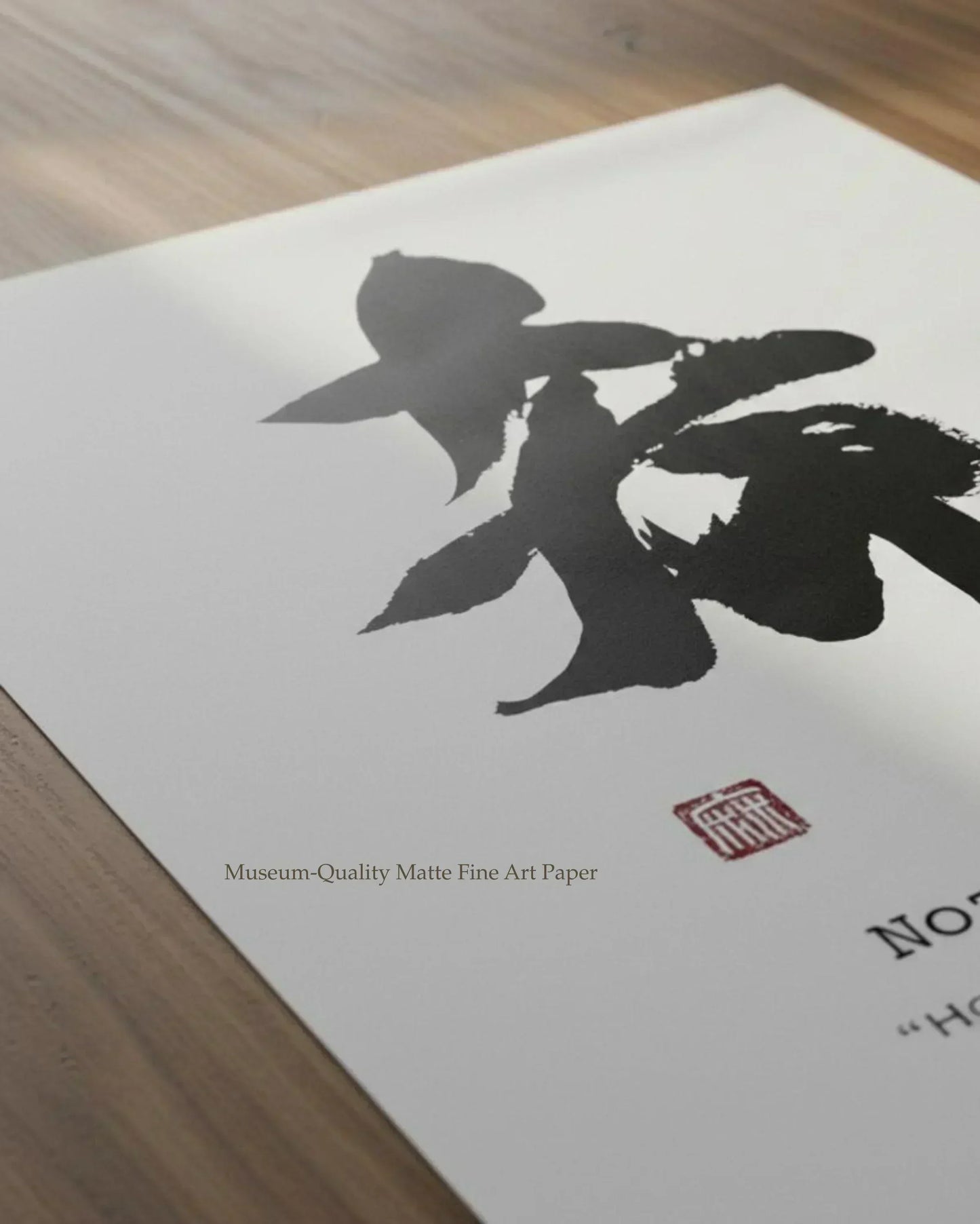
A printed kanji on a poster is a reproduction of a character. A brushed kanji in Shodō is the character brought to life through a specific moment of human intention.
In Shodō — the Way of Writing — the calligrapher does not simply copy the form of a character. They inhabit it. The pressure of the brush, the speed of the stroke, the breath held or released — all of these are part of the work. The result is not a perfect specimen of the character. It is a living interpretation of it.
This is why two pieces of the same kanji made by the same artist will never be identical — and why that is exactly as it should be.
A Guide to the Most Meaningful Kanji Characters
和 (Wa) — Harmony. One of the most beloved characters in Japanese culture. Wa speaks to balance, peace, and the harmony between people and their environment. It is also one of the oldest names for Japan itself. A natural choice for a living room or shared space.
愛 (Ai) — Love. The character for love in Japanese — broad and encompassing, not limited to romance. It carries warmth, care, and deep feeling. A meaningful choice for a bedroom or family space.
夢 (Yume) — Dream. A character with a beautiful visual complexity that matches its meaning. Yume speaks to aspiration, imagination, and the world of sleep. Often chosen by those who want their space to hold creative energy.
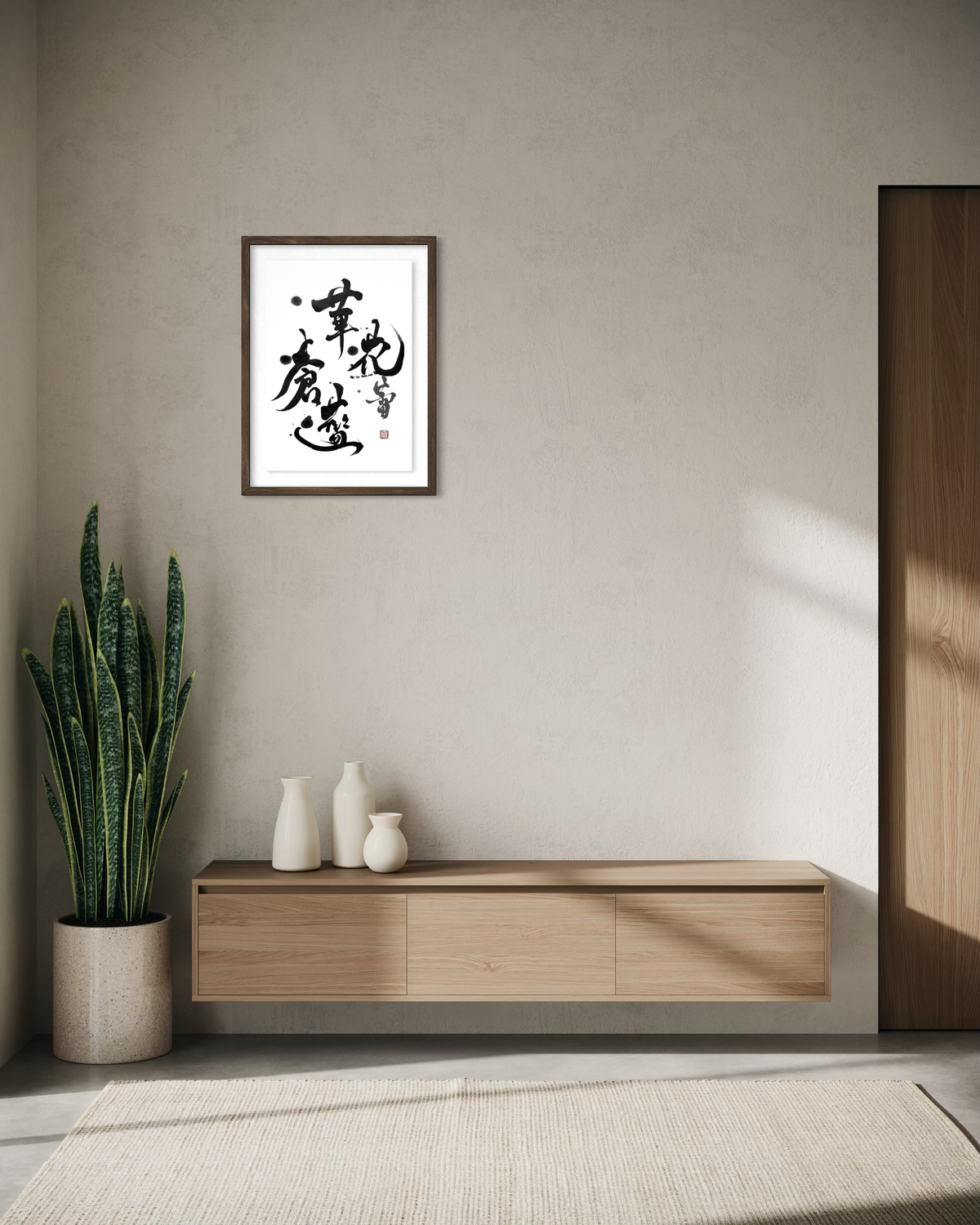
静 (Shizuka) — Quiet / Stillness. Perhaps the most fitting character for a Japandi or minimalist interior. Shizuka is the quality of deep calm — not merely the absence of noise, but an active, grounded stillness.
心 (Kokoro) — Heart / Mind / Spirit. In Japanese, kokoro encompasses what English splits into separate words — the heart, the mind, and the inner self are one. A deeply personal character, often chosen by people who want their space to hold emotional truth.
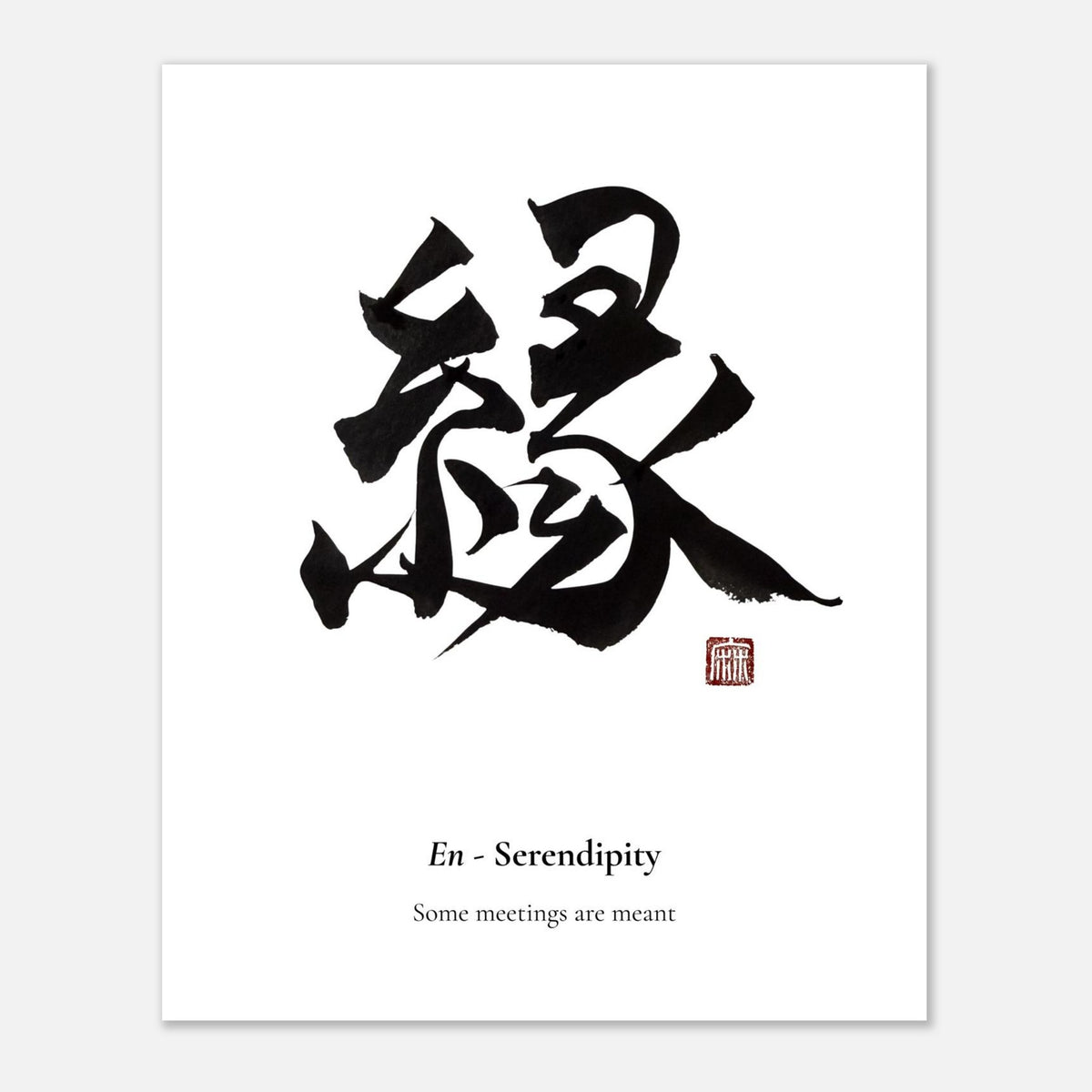
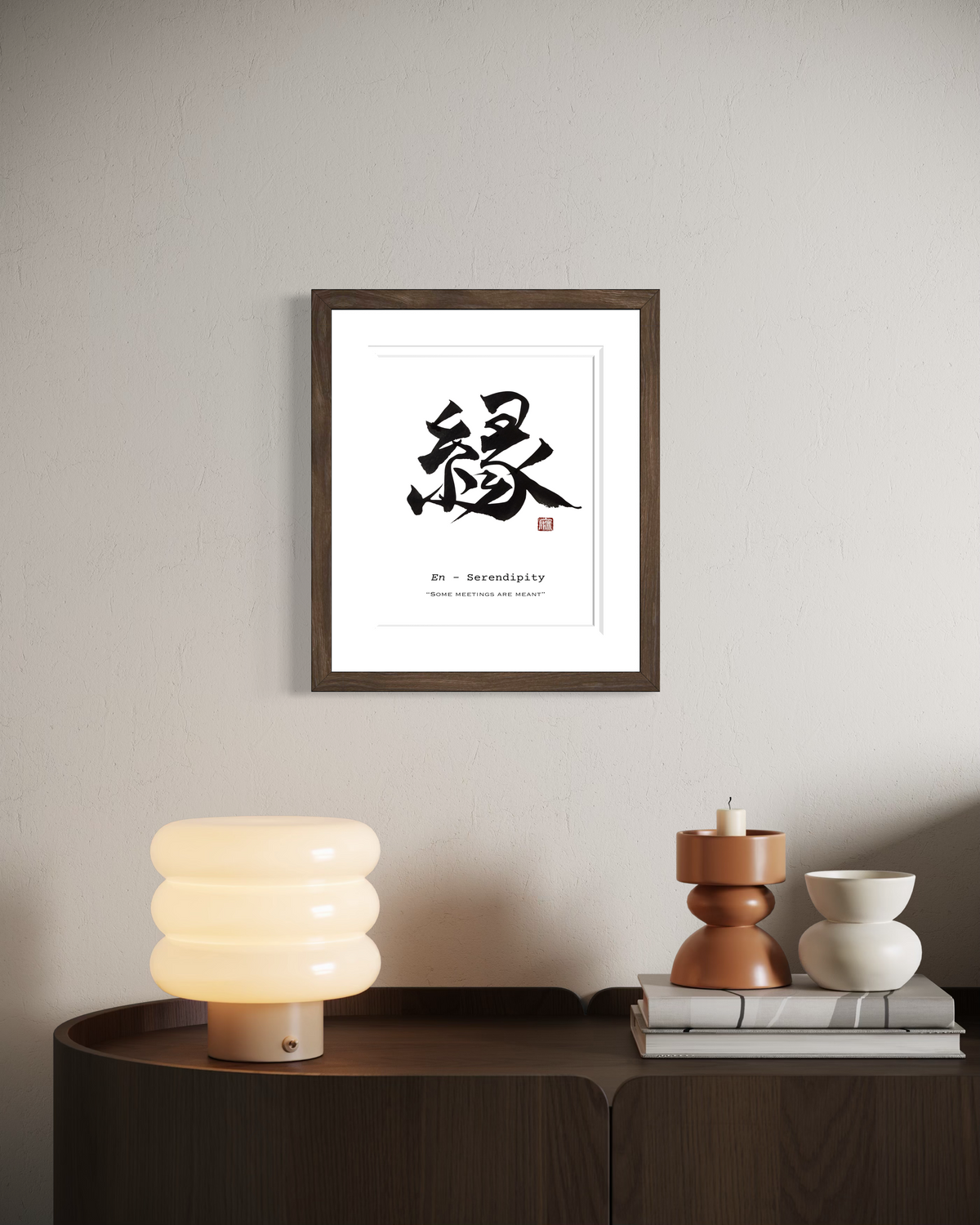
縁 (En) — Fate / Connection. En describes the invisible threads that connect people — the encounters that were meant to happen, the relationships that feel predestined. A profound and quietly romantic choice.
Fifteen characters and what they mean
These are the characters we brush and print at BrushForma. The names we use are one common reading; many kanji can be read in more than one way.
愛 Ai, love
Love in its widest sense: for a partner, a child, a friend, a home. It is a character that asks to be lived with gently, every day. See the 愛 Ai print.
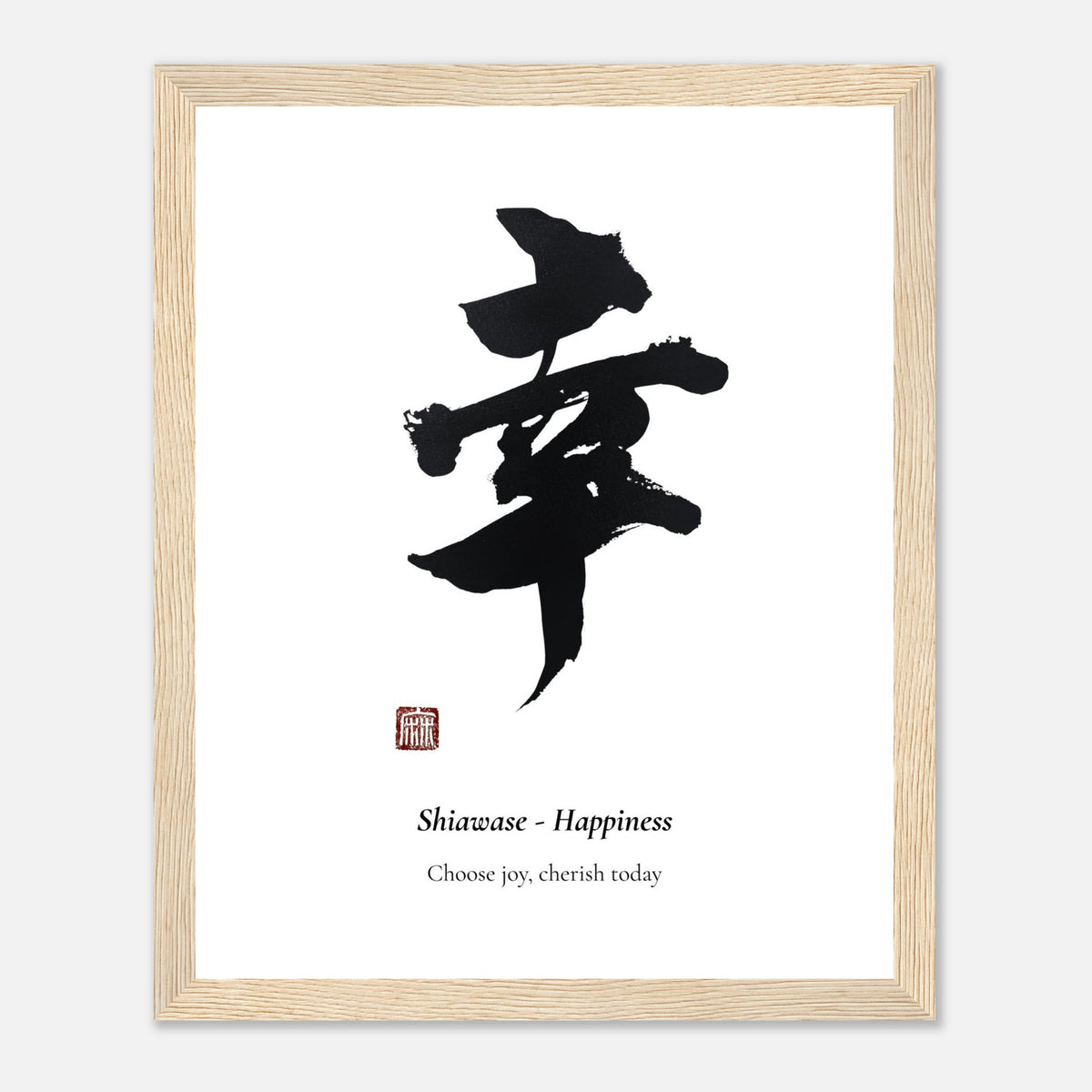
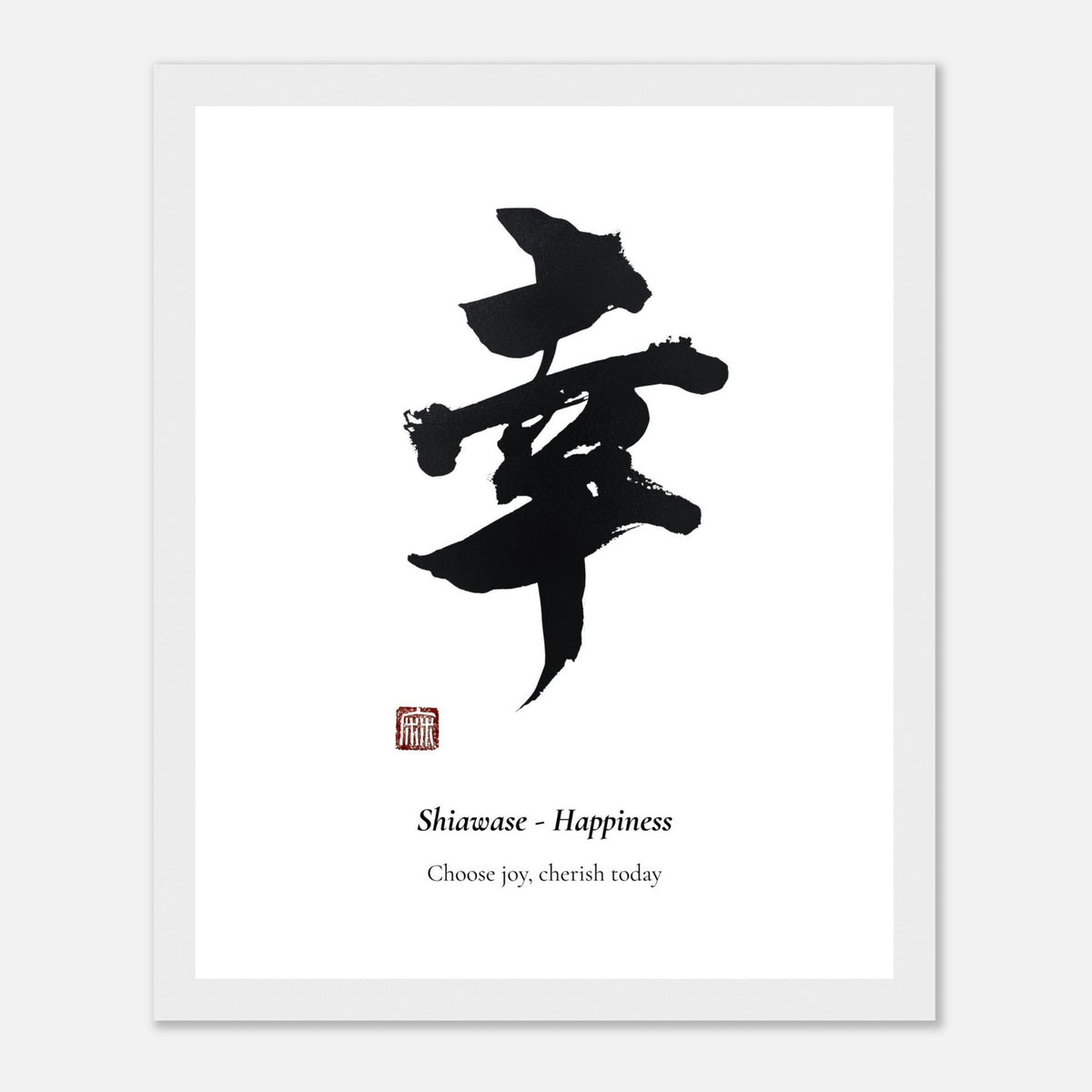
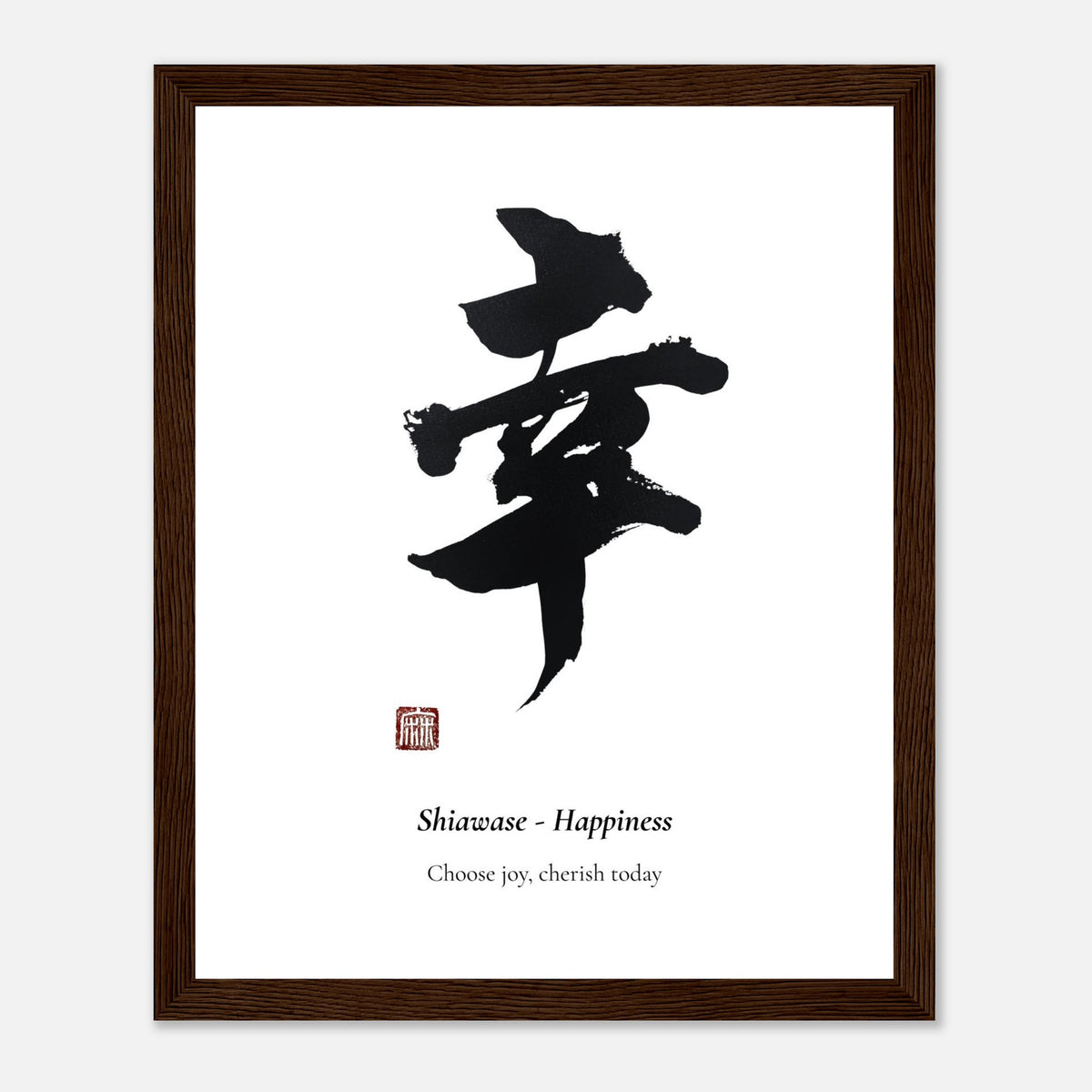
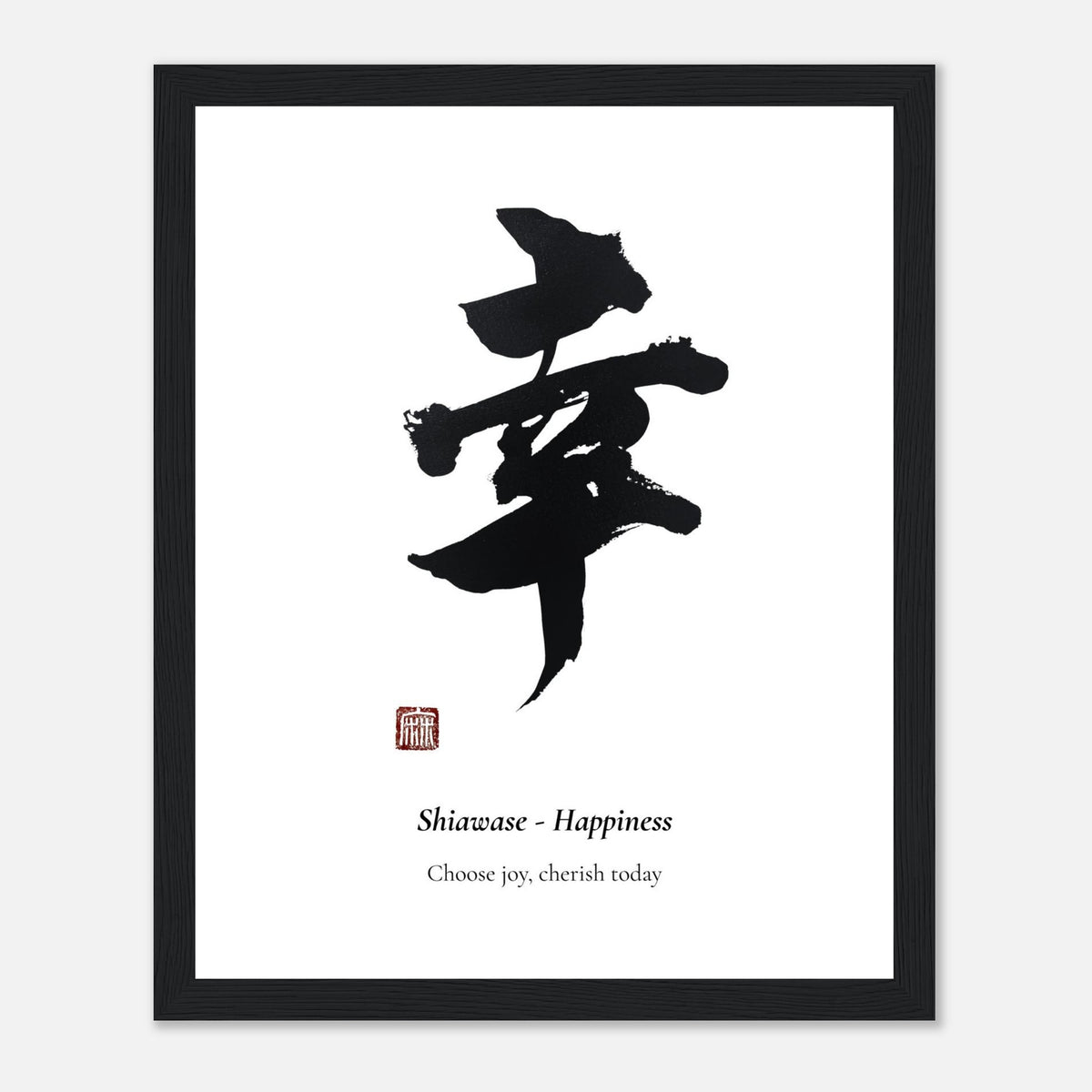
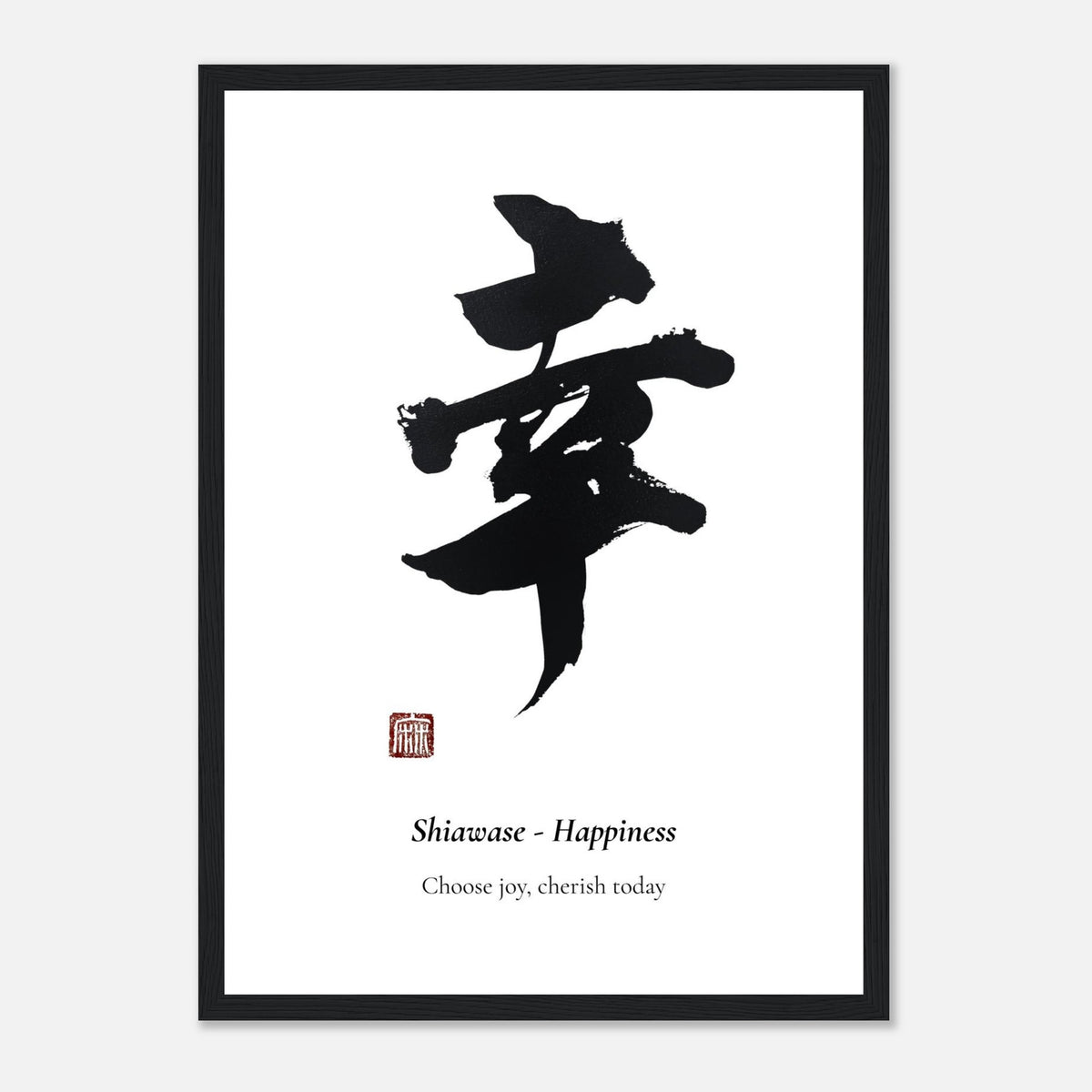
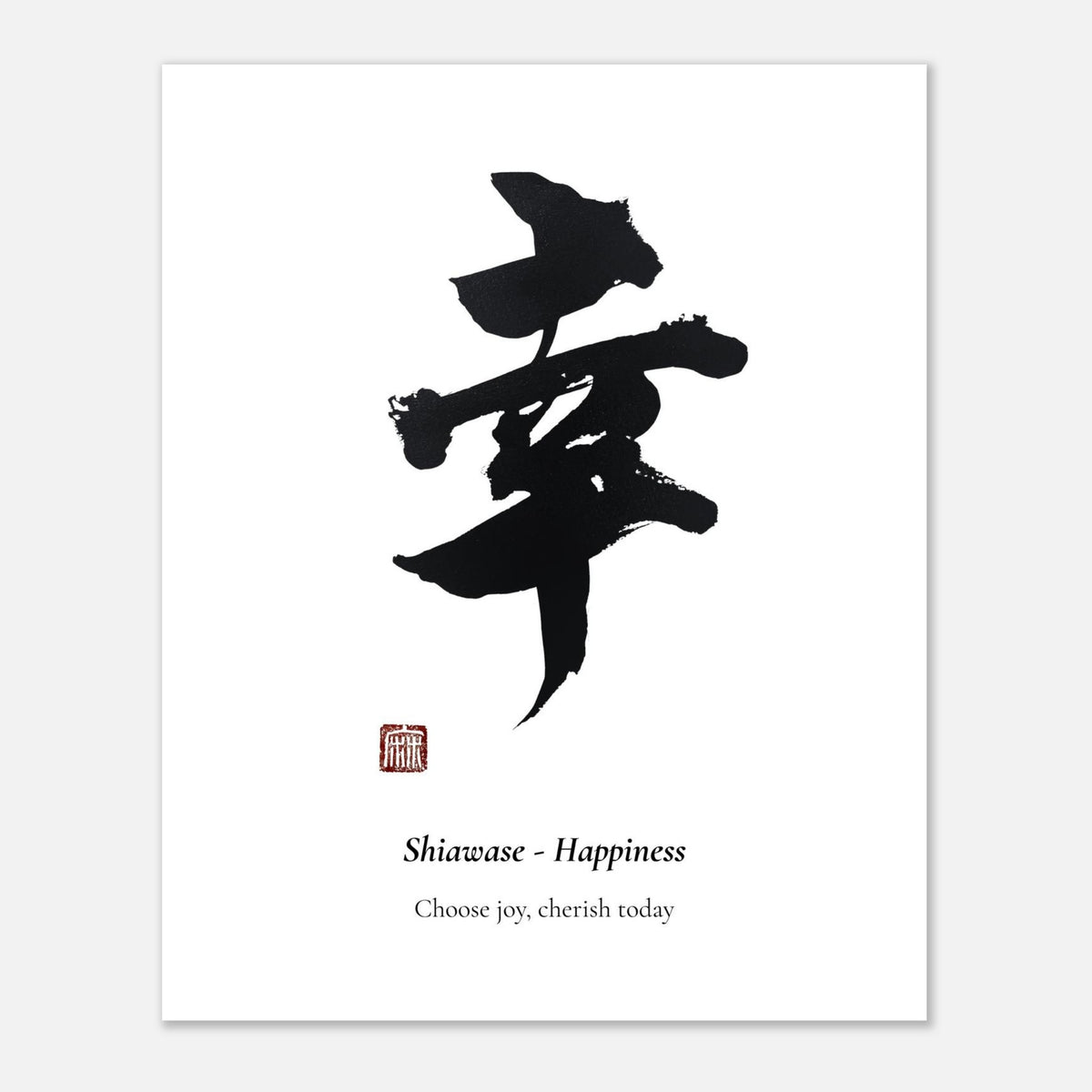
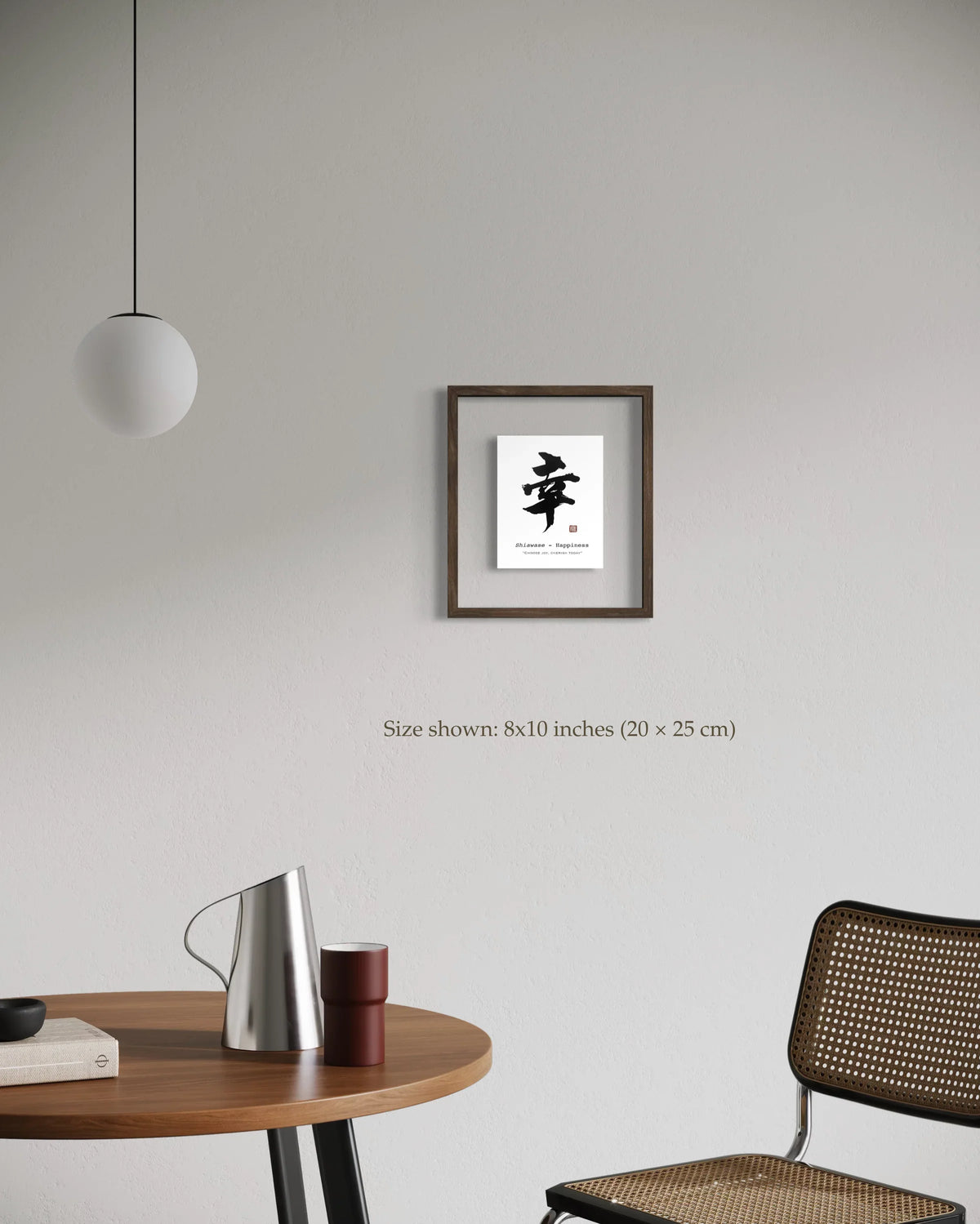
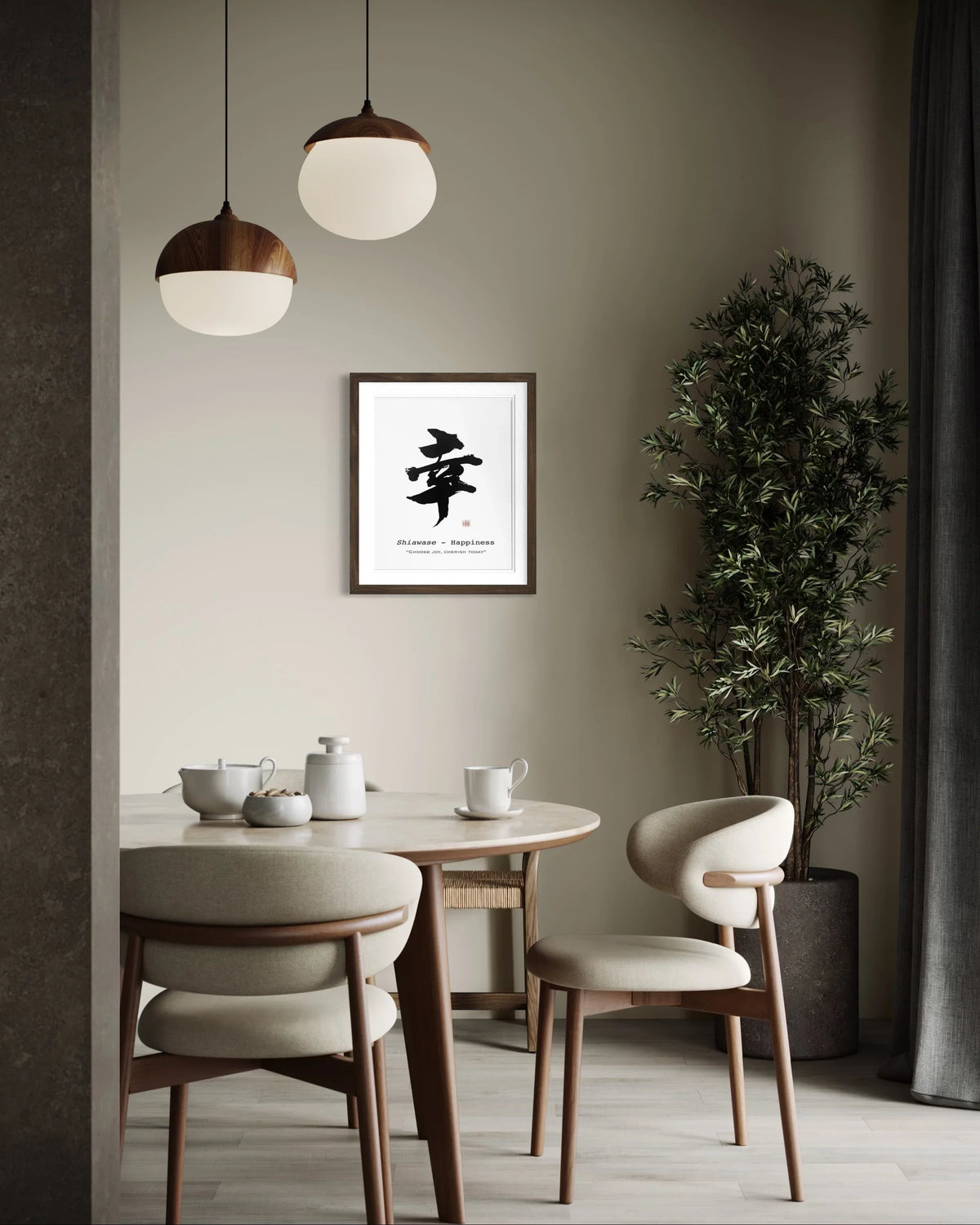
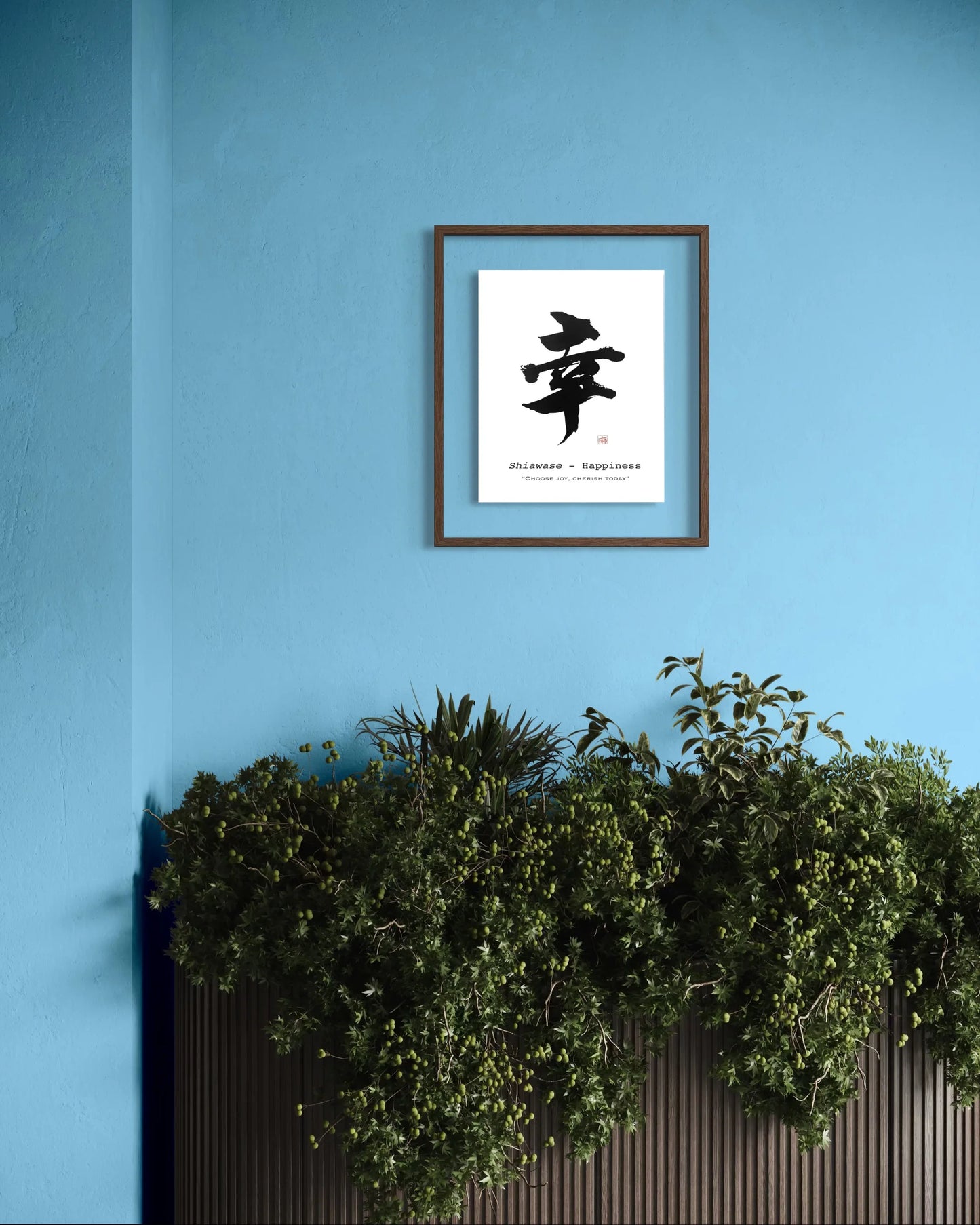
幸 Shiawase, happiness
Happiness and good fortune, the quiet kind that is found in ordinary days. A warm character for a kitchen, an entryway or a new home. See the 幸 Shiawase print.
希 Nozomi, hope
Hope, and a wish held close. The character also carries a sense of rarity, as if hope were something precious to be kept. See the 希 Nozomi print.
夢 Yume, dream
Dreams of sleep and dreams of the future. A soft place for the eye to rest in a bedroom or a creative corner. See the 夢 Yume print.
縁 En, serendipity
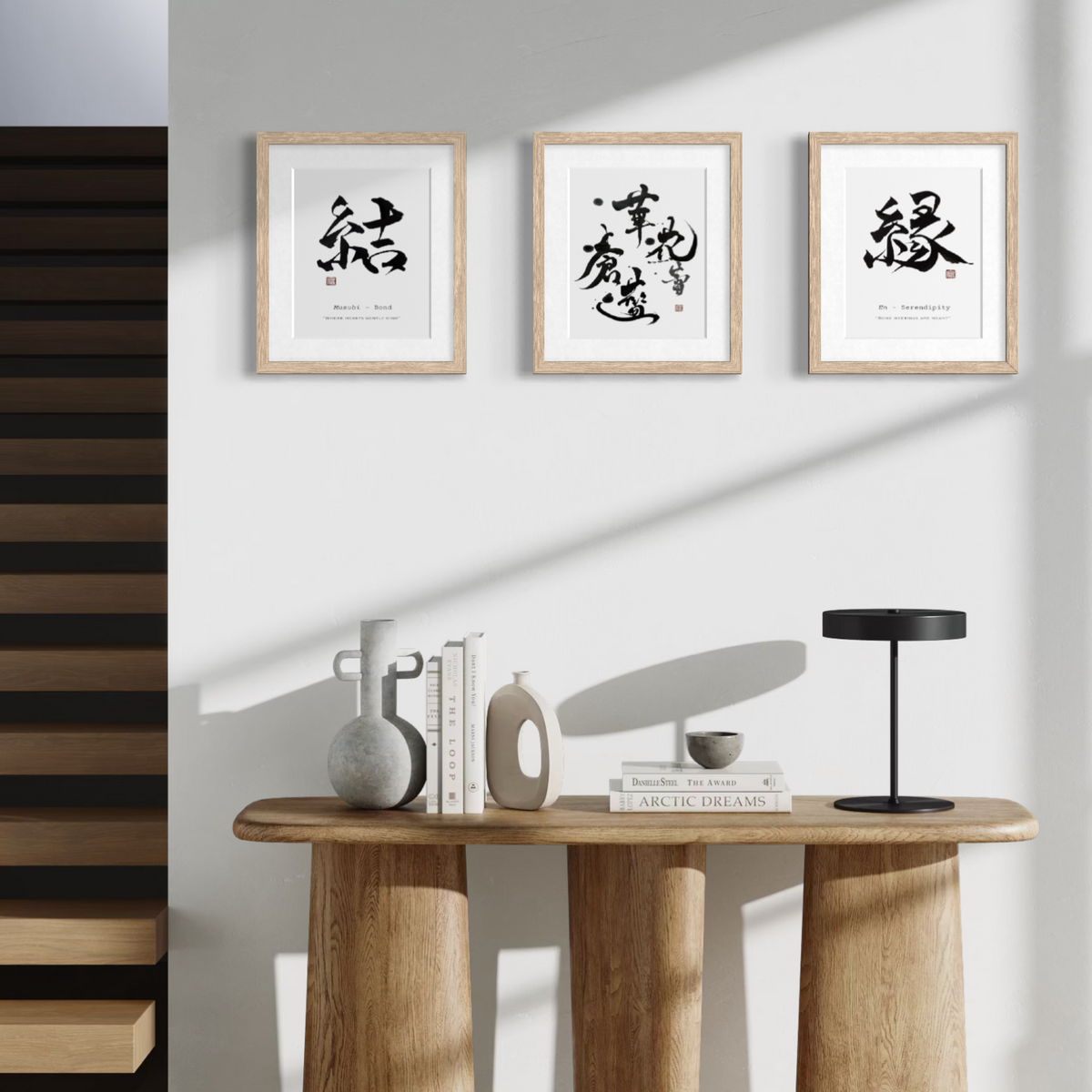
The connections that seem meant to be. En is often described as the unseen ties that bring people and moments together. See the 縁 En print.
空 Kū, emptiness
The same character means sky. In Buddhist thought, read kū, it points to emptiness, an openness rather than a lack. See the 空 Kū print.
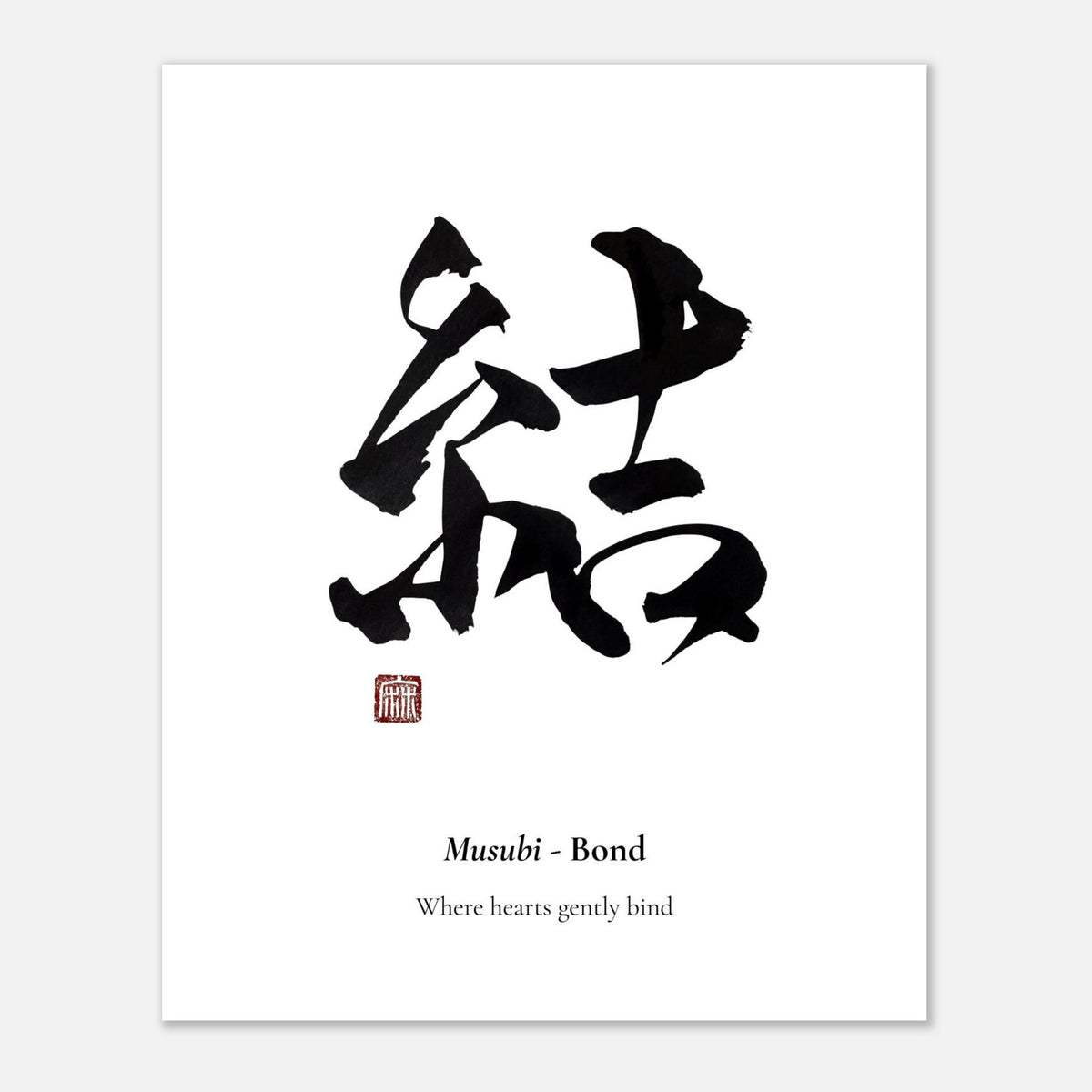
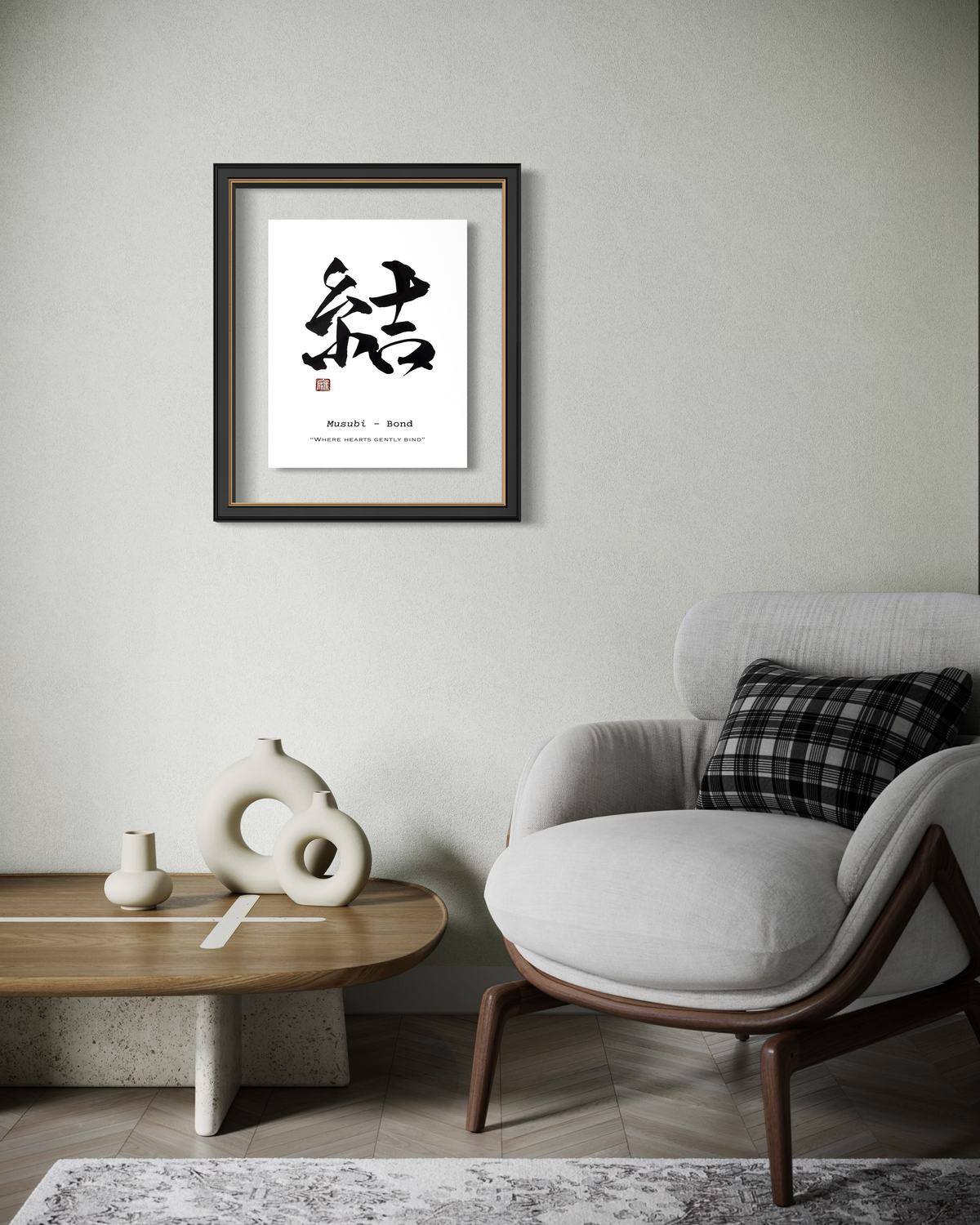
結 Musubi, bond
To tie, to bind, to join. Musubi is the bond that forms when two things come together. The same character begins 結婚 (kekkon), marriage. See the 結 Musubi print.

和 Wa, harmony
Balance and peace between people and place. The same character appears in words such as washi (Japanese paper) and washoku (Japanese food). See the 和 Wa print.
心 Kokoro, heart and mind
Heart, mind and spirit held in one word. A quiet reminder to return to what you feel beneath what you think. See the 心 Kokoro print.

想 Omou, reflection
To think of someone, to hold them in mind. The character joins 相 with 心, heart, below it, and many people read it as thought that rests in the heart. See the 想 Omou print.
笑 Warai, laughter
Laughter and smiles. A light, open character for rooms where people gather. See the 笑 Warai print.
創 Sou, create
To create, to begin something new. A character for studios, desks, and anyone at the start of their own work. See the 創 Sou print.
旅 Tabi, journey
A journey, near or far. Tabi can mean a trip across the world or the longer journey of a life. See the 旅 Tabi print.
翔 Tobu, soar
To soar, to fly high. You can see 羽, feathers, within the character, which makes it a fitting gift for graduations and new beginnings. See the 翔 Tobu print.
蕾 Tsubomi, bud
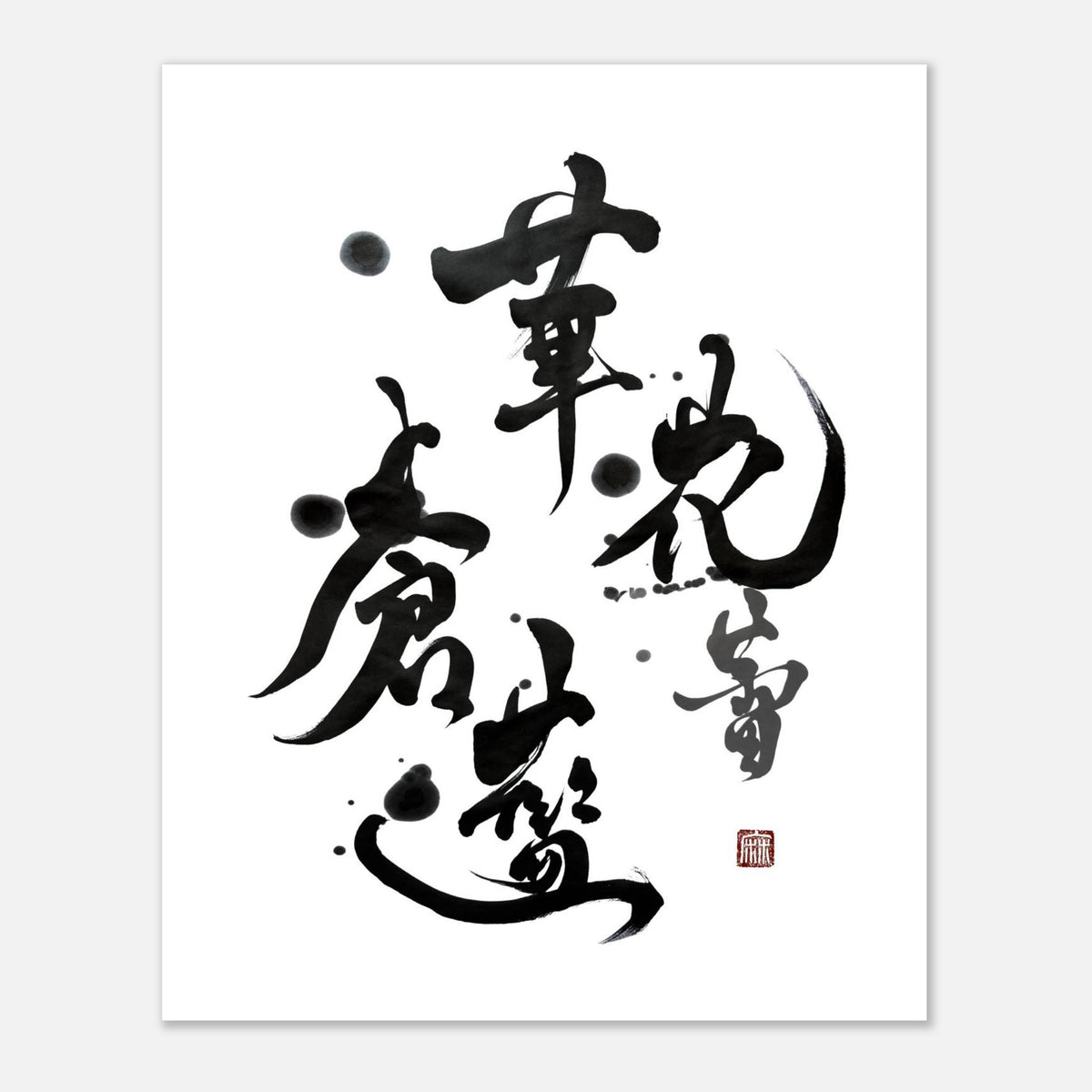
A bud, not yet open. Our Tsubomi print surrounds an ensō with five characters, 藍 蒼 華 花 蕾, brushed in fading ink, like a slow return to the beginning. See the 蕾 Tsubomi print.
How to Choose the Right Character for You
Do not choose with your eyes first. Read the meanings, sit with them, and notice which one pulls at something in you.
The best kanji art is not the one that looks right in the room. It is the one whose meaning you want to wake up to — the quality you are cultivating, the value you want your space to hold, the word that has been following you.
Then trust the brushstroke to carry it.
The character chooses you as much as you choose it. Listen for which one you already know.
Questions people ask
What is kanji art?
Kanji art is a single Japanese character, or a short phrase, brushed by hand and hung for its meaning as much as its form. It grows from shodō, the way of writing, which you can read more about in what is Japanese calligraphy.
How do I choose a kanji for my home?
Begin with meaning rather than shape. Choose the quality you want to live with, then think about the room it will hang in. Our guide to choosing a size and frame can help with the practical side.
Which kanji makes a meaningful gift?
Characters such as 愛 Ai, 縁 En and 結 Musubi suit weddings and anniversaries, while 翔 Tobu and 創 Sou suit new beginnings. Our guide to meaningful Japanese gifts pairs each character with a moment.