Too Many Worries? What Matcha Actually Teaches Us — And Why Japan Has Known It for 500 Years
Too many worries?
Matcha fixes most of them.
It sounds like a joke. A bumper sticker. The kind of thing you put on a kitchen print because it makes people smile and nod and feel seen.
But spend a little time with the actual history of matcha in Japan, and the joke starts to feel less like a joke and more like a very compressed piece of wisdom.
Matcha does not fix your problems. It does not clear your inbox or resolve your relationships or make the difficult things less difficult. What it does — what it has always done, for five hundred years before it became a latte — is create a moment of such complete, unhurried attention that worry, briefly, has nowhere to stand.
That is not a small thing.
What Matcha Actually Is in Japan
In most of the world right now, matcha is a flavour. A colour. A signal of a certain kind of lifestyle — health-conscious, aesthetically considered, vaguely Japanese.
In Japan, matcha is a practice.
茶道 (Sadō) — the Way of Tea — is one of the oldest and most refined cultural traditions in Japanese history. It was shaped into its modern form in the 16th century by Sen no Rikyu, a tea master who stripped the ceremony of its elaborate Chinese influences and rebuilt it around four principles:
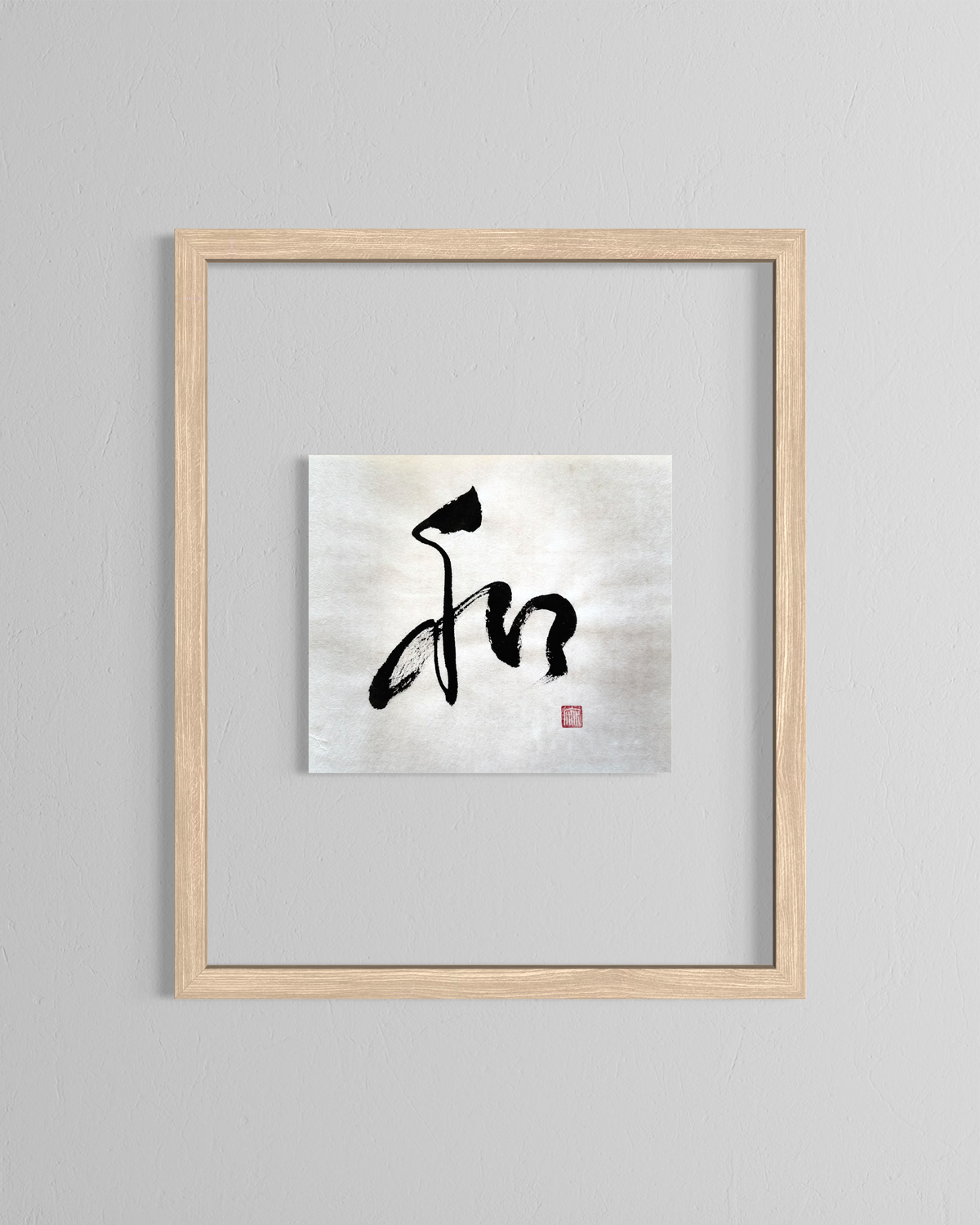
和 (Wa) — harmony
敬 (Kei) — respect
清 (Sei) — purity
寂 (Jaku) — tranquility
These are not decorative values. They are structural. Every element of the tea ceremony — the temperature of the water, the angle of the chasen, the silence between movements, the way the bowl is turned before it is offered — exists to embody these four things in real time.
You do not think about harmony during a tea ceremony. You practice it, with your hands, in a room that has been designed to make everything else irrelevant.
Sen no Rikyu is also the person who said: "The Way of Tea is nothing but this: first you boil water, then you make the tea, then you drink it."
Simple. And yet a lifetime of practice.
Why the Ritual Matters More Than the Drink
Here is the thing that most matcha content does not tell you.
The drink is not the point.
The preparation is the point.
Making matcha properly — sifting the powder, heating the water to exactly 70–80 degrees, whisking in a specific motion until the surface is smooth — requires your complete attention. Not your divided attention. Not your multitasking attention. Your complete, unhurried, nothing-else-exists attention.
You cannot make matcha well while thinking about something else.
That constraint is the entire practice.
In a world designed to fragment attention into smaller and smaller pieces, matcha offers a task that cannot be rushed or automated or done while scrolling. It demands presence as a precondition. And presence, it turns out, is the thing worry cannot survive.
Worry lives in the future and the past — in the what-ifs and the should-haves. Presence lives in the exact moment of right now. The weight of the bowl in your hands. The sound of the whisk. The colour of the tea.
For the duration of that preparation, worry does not exactly disappear. It simply has nowhere to stand.
That is the fix.
Matcha and 間 — The Art of the Meaningful Pause
There is a Japanese concept that connects all of this.
間 (Ma) — the art of negative space, of meaningful pause, of the interval that gives everything around it its shape.
In music, Ma is the silence between notes. In architecture, it is the empty room that makes the inhabited rooms possible. In conversation, it is the pause that allows something true to be said.
In daily life, Ma is the moment you choose not to fill.
Matcha is a Ma practice.
It inserts a deliberate pause into the middle of a day that would otherwise run continuously from the moment you wake until the moment you collapse. Five minutes. Ten minutes. The time it takes to heat the water, prepare the bowl, whisk the tea, and drink it with enough attention to actually taste it.
That pause does not solve anything. It does not produce anything. By modern standards, it is entirely inefficient.
But the quality of everything that follows it changes.
This is what Sen no Rikyu understood. This is what the 茶道 tradition has been practicing since the 16th century. And this is what the matcha trend, in its best moments, is pointing toward — even if most people who order a matcha latte have never heard of Ma or Sadō or Sen no Rikyu.
The intuition is correct. The depth behind it is available to anyone willing to go further.
Why This Is on Your Wall
The 抹茶 print was not made to teach you Japanese tea philosophy.
It was made to hold a feeling you already know.
The feeling of a morning that started with something slow and deliberate before the world asked anything of you. The feeling of ten minutes that belonged entirely to you. The feeling of a worry that lost its grip, briefly, because your hands were busy with something that required your full attention.
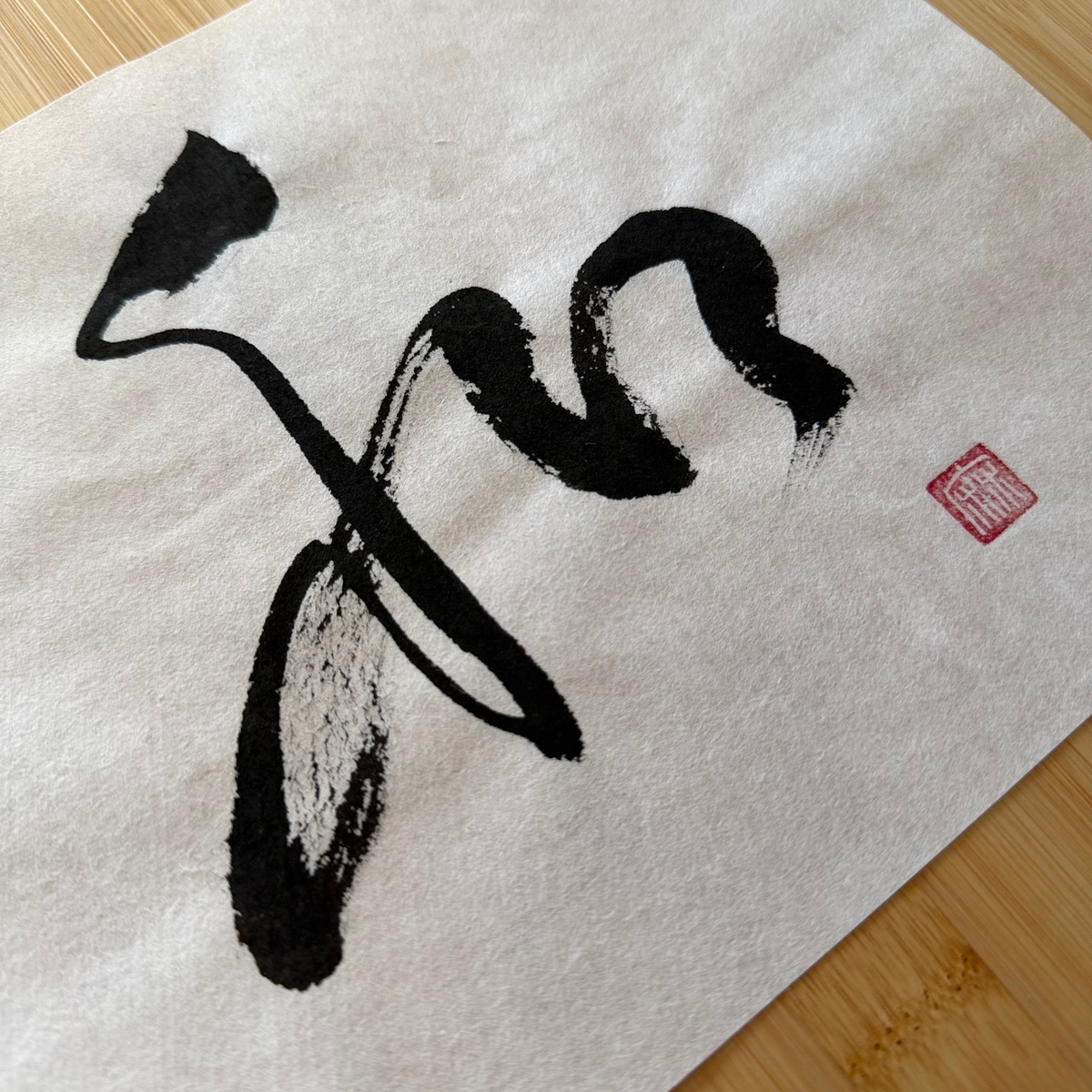
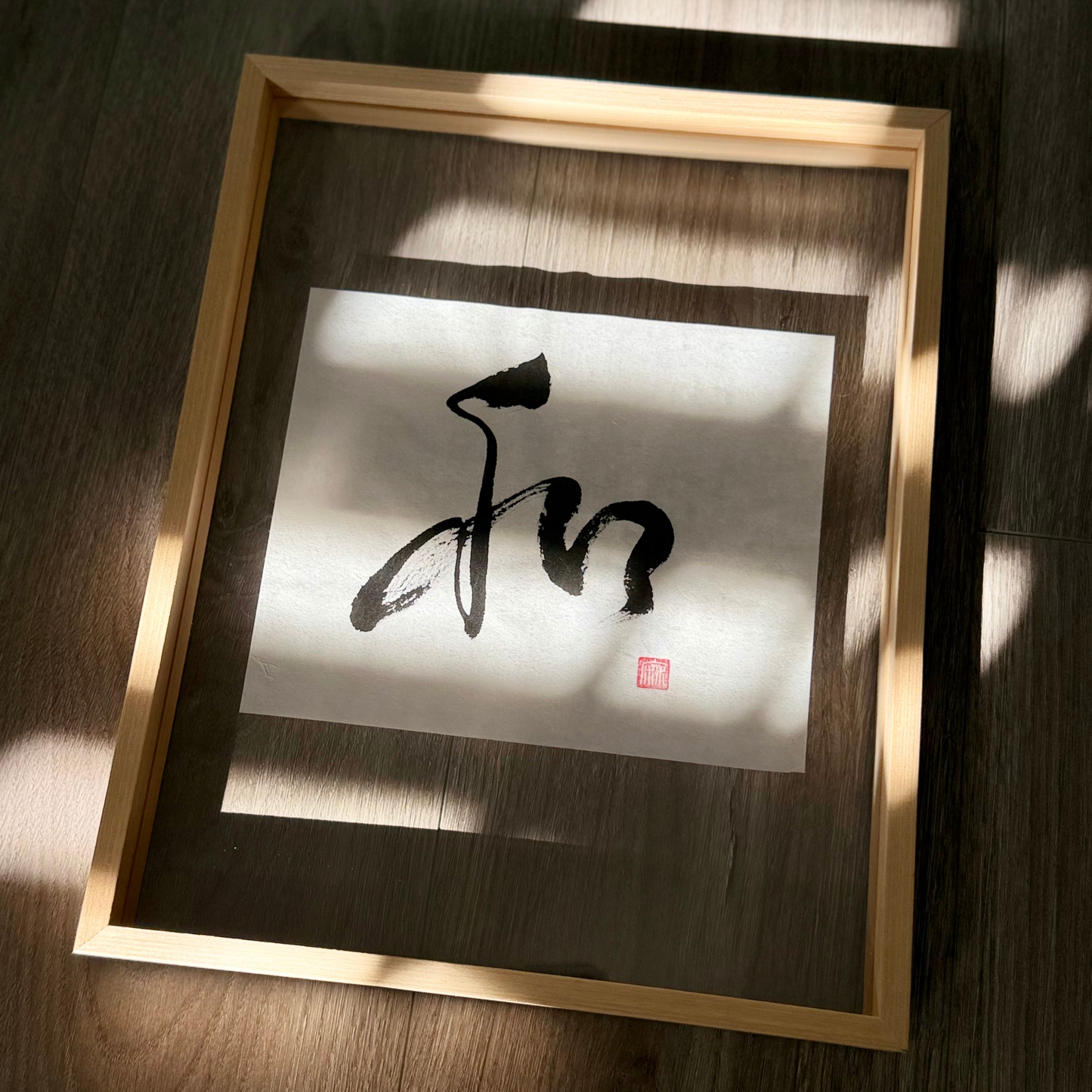
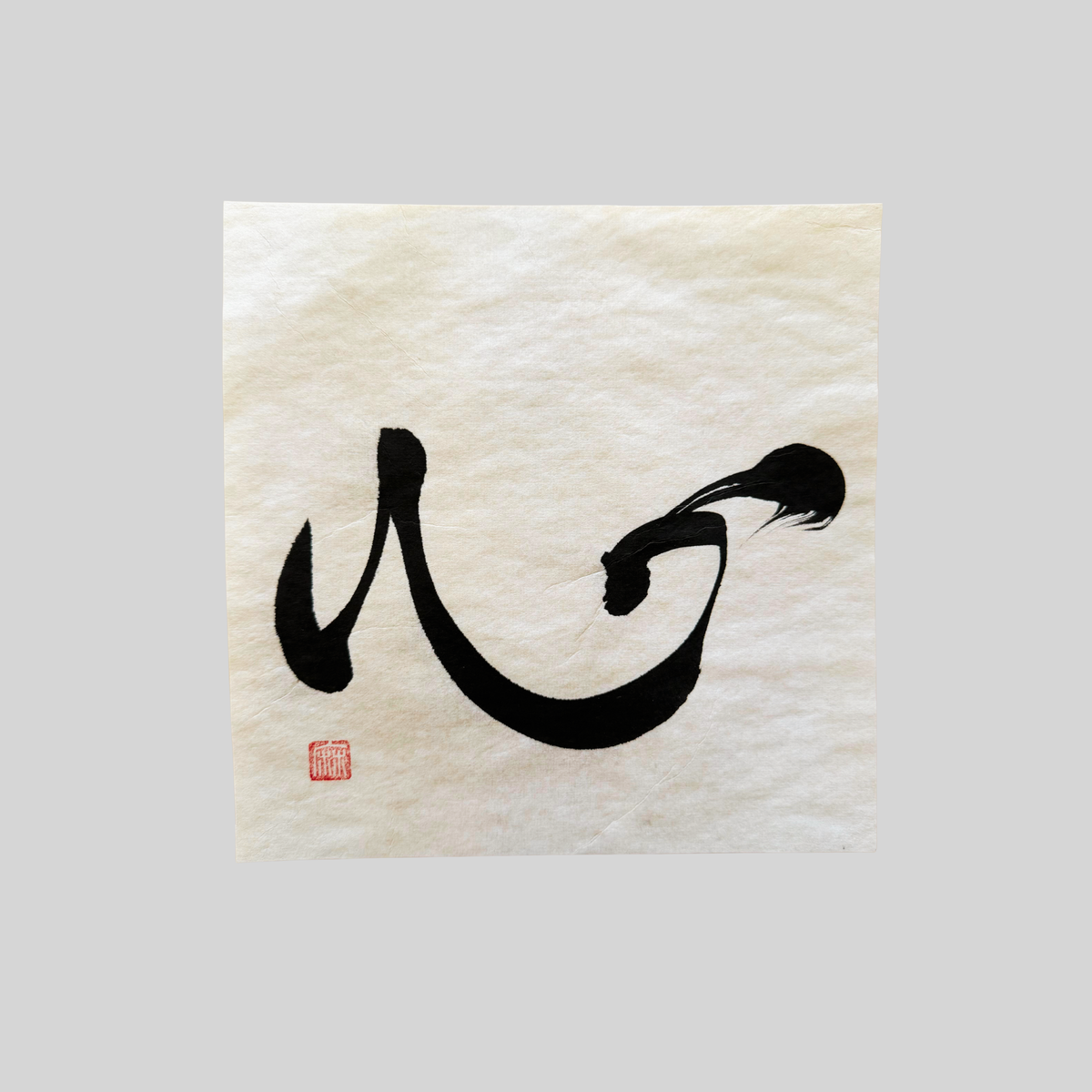
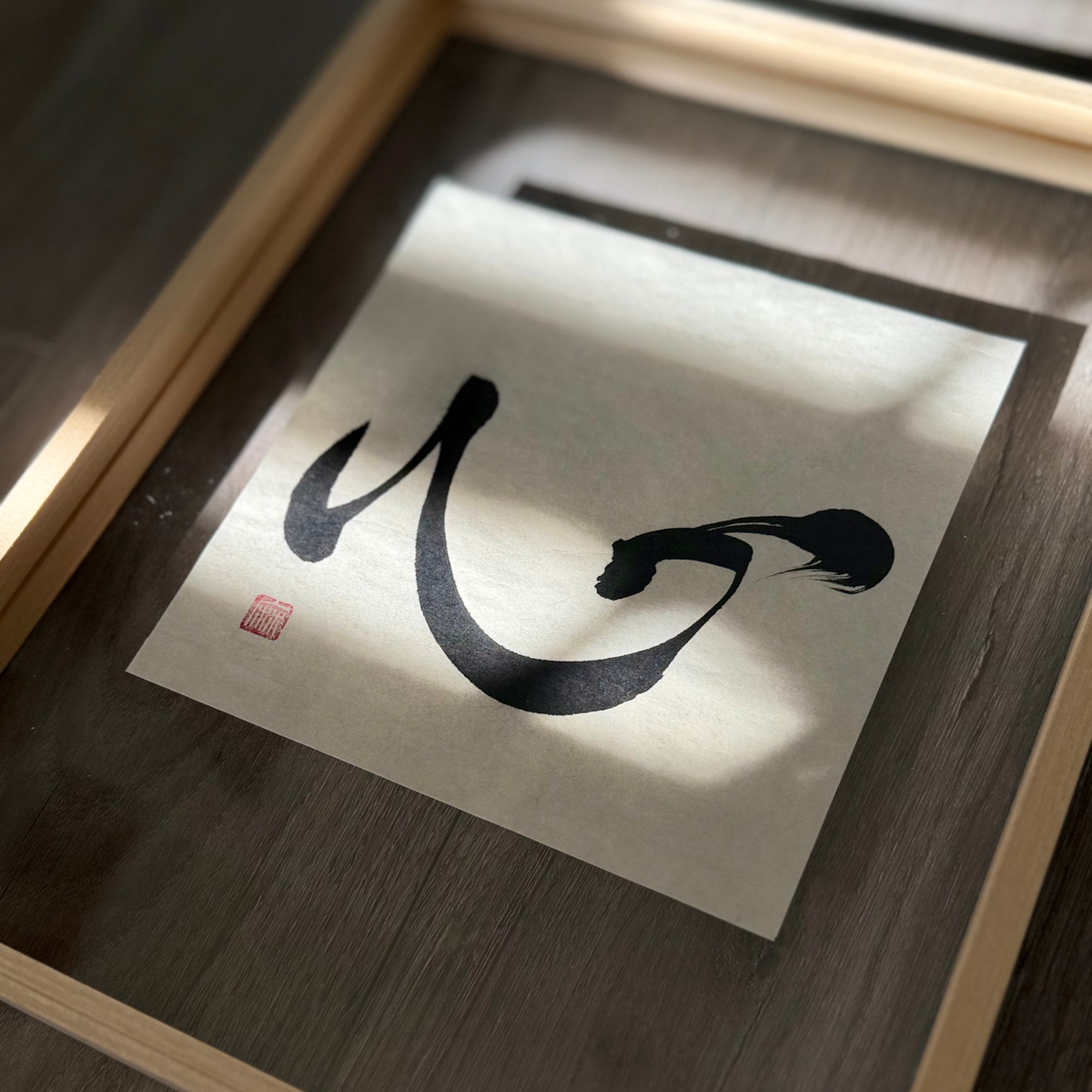
The brushwork at the top of the print is genuine Shodō — hand-brushed 抹茶 in the traditional calligraphic style. The strokes are fast and direct, the kind that require the same quality of presence the ceremony itself asks for. You can see the kasure — the places where the ink thins and the paper shows through — evidence that this was made in a single committed movement, without hesitation.
Below it, the quote.
Too many worries? Matcha fixes most of them.
Not a solution. A practice. A reminder, every morning when you see it, that you already know what to do.
The Trend Will Pass. The Practice Won't.
Matcha is everywhere right now. Matcha lattes, matcha croissants, matcha everything. The green colour has become shorthand for a certain kind of wellness aspiration, and like all trends it will eventually peak and recede.
茶道 will still be there.
It has survived five centuries of Japanese history, two world wars, rapid modernisation, and the complete transformation of daily life. It survived because it addresses something that does not change — the human need for a moment of genuine stillness in the middle of a life that keeps moving.
A print that holds the philosophy rather than just the aesthetic will outlive the moment it was made in.
That is the difference between a trend piece and a piece worth living with.
The 抹茶 Matcha print is available in the BrushForma Contemporary Prints collection. Hand-brushed Shodō calligraphy on museum-quality archival paper. For the kitchens, the slow mornings, and everyone who already knows what to do.